
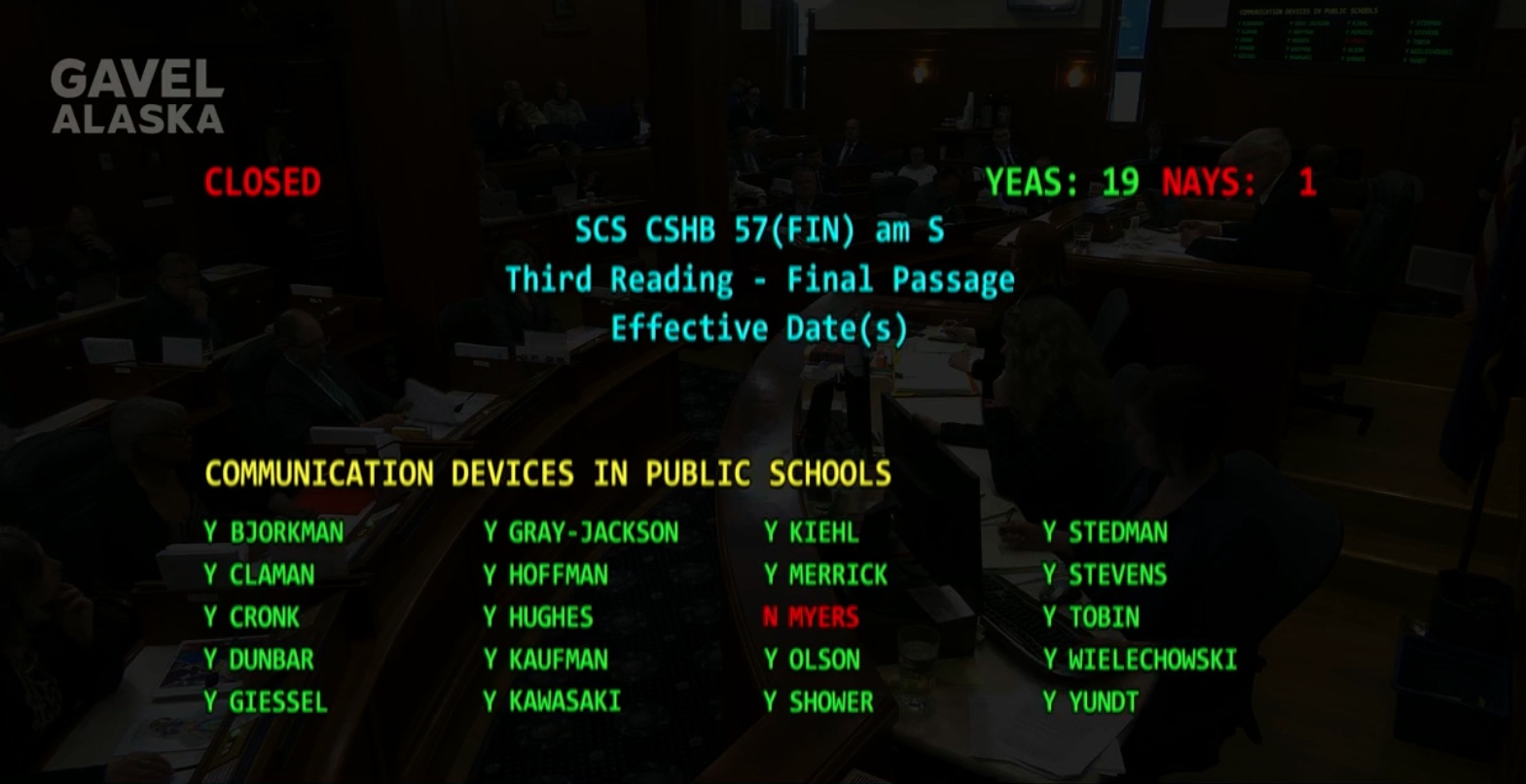
An Alaska House of Representatives bill that was originally about cell phone use in schools has passed the Senate after being decorated with numerous amendments having nothing to do with cell phones.
One of those amendments to House Bill 57 has the State of Alaska tracking Alaska high school graduates for 20 years — until they are 38 years old.
That amendment came from the Senate Finance Committee last week. For many Alaskans, it means the State of Alaska will be tracking them and collecting data on them for half of their natural lives.
Sen. Jesse Kiehl reassured the Senate that the information would be kept strictly confidential, a claim that was disputed by Sen. Mike Shower, who said data leaks happen all the time and with greater frequency; it wasn’t that long ago that election files were hacked and the state had to issue credit repair benefits to thousands of Alaskans.
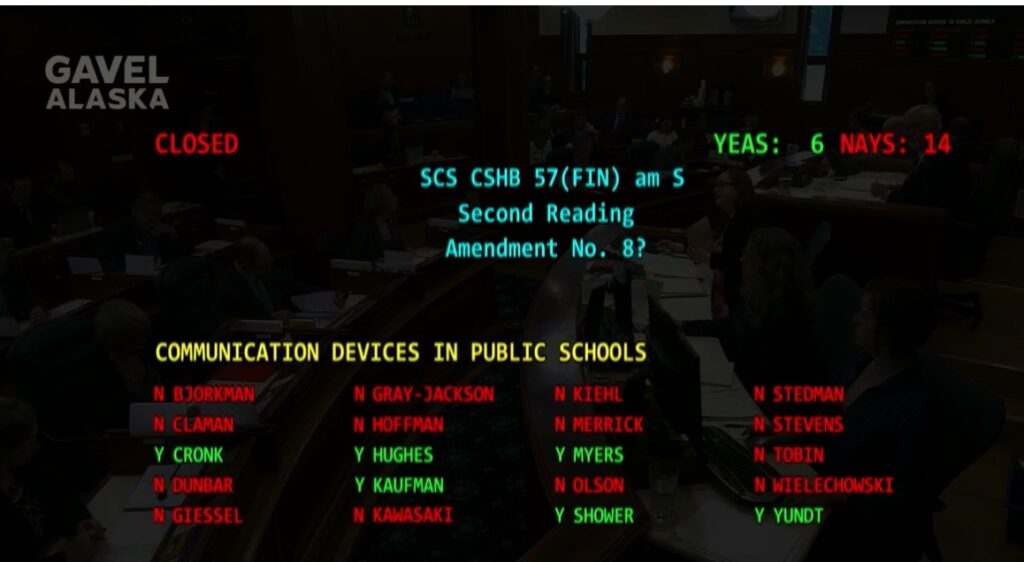
Sen. Shelley Hughes, a Republican from the Mat-Su, tried to reduce that tracking of Alaskans to three years, out of concern for people’s privacy, but the Democrat-led majority voted her idea down.
Here’s how the vote went on Hughes’ amendment to reduce the amount of data-gathering that the state would conduct on its citizens:
Nearly all the amendments offered by Republicans on Monday to improve the bill were rejected.
In addition to monitoring Alaskans for 20 years after high school, the bill adds about $184 million in funding for schools, including an additional $700 per student to the Base Student Allocation.
The Base Student Allocation additional funding would become an ongoing expense into future years, locking legislatures into an automatic increase.
Senate Education Committee Chairwoman Loki Tobin said that it’s not the entire answer for the funding needs, and indicated that the Democrats will be back for more next year.
The bill also expands, ever so slightly, the ability of charter schools to get approved by local school boards.
The bill will now return to the House for concurrence.


