
There is a practical side to the Nov. 8 congressional election that most Alaskans never consider: No matter who wins the at-large U.S. House of Representatives seat for Alaska, they’ll be starting at the bottom in seniority.
Just how far down at the bottom depends on whether Alaska votes in a Democrat who will be the starting at the bottom of the barrel in a Republican-led House.
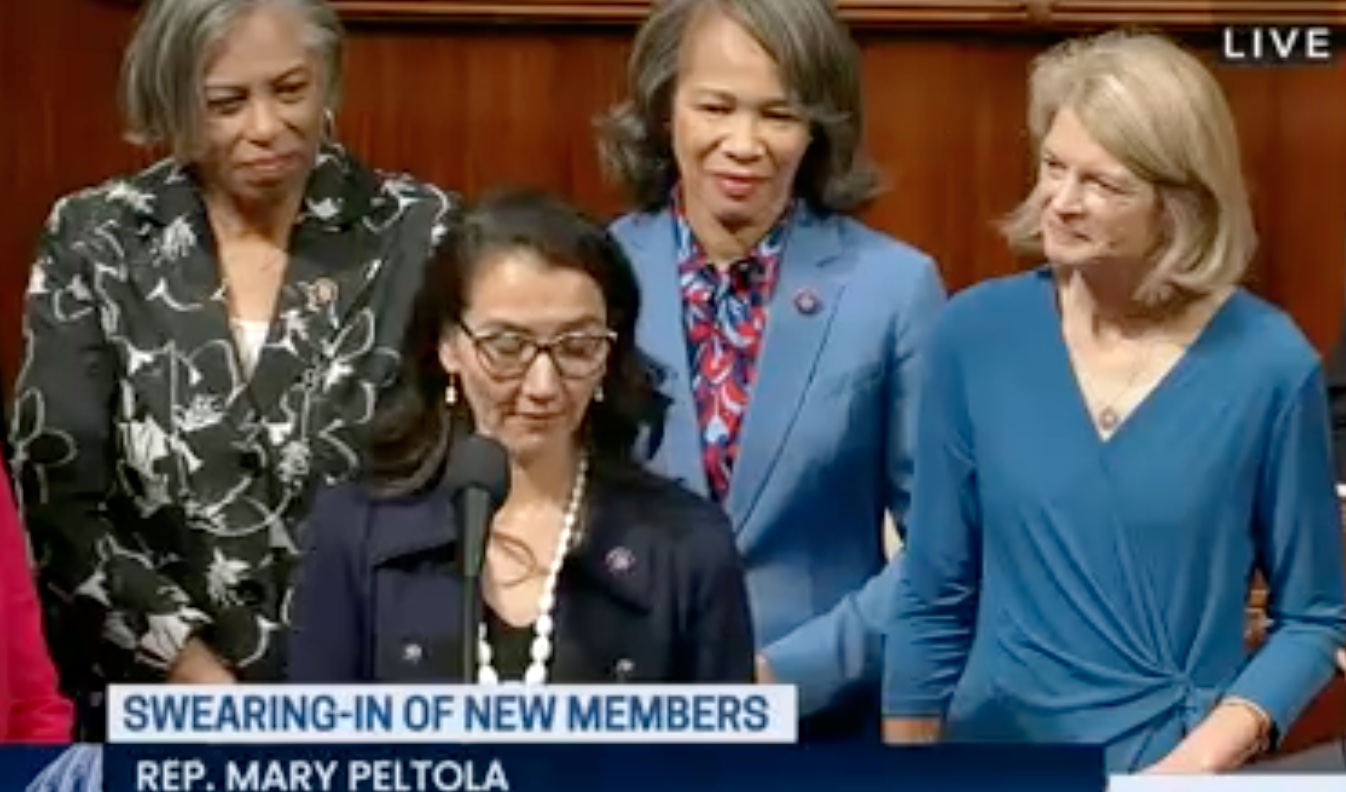
With the death of Congressman Don Young in March and the temporary seat filled by Mary Peltola, Alaska dropped from first to nearly last in seniority in the U.S. House.
How seniority is calculated is key: Members of the House are arranged by the number of terms they have served, before being ranked by the beginning date of their most recent continuous service. In instances where members have served the same number of terms and have the same date of service, they are arranged alphabetically by last name.
Thus, a “ranking minority” member on a committee would be the minority member with the most seniority. They don’t have any real power on the committee, but they have a title.
The calculation for how long members have served has its own clock, which starts from the time they are elected. In Alaska’s ranked choice voting, compliments of Ballot Measure 2, the results will be some of the last to be known in the United States. Being further west, our “time elected” starts on the election certification date — Nov. 29.
Peltola is, at present, ranked 430 among 432 members of the House. As a Democrat in a Nancy Pelosi-led majority, she enjoyed the advantage of being given the courtesy of filling out the term of Don Young, and thus was awarded to finish the term in some of his committee seats.
That will change in January, when the new members are sworn in and Republicans take over.
This is an aspect that Sen. Lisa Murkowski knows well. She is going to be as high as 15th in seniority in the Senate, and if the Senate moves into Republican leadership, she will enjoy her top ranking.
And yet, Murkowski, who knows the importance of seniority for Alaska’s only congressional seat, has endorsed Peltola. Murkowski would rather see Peltola powerless in the House than see a Republican who can get things done in the majority.
Political pundits say that Peltola won’t stay in the House, because the Democratic National Committee will tap her to challenge Sen. Dan Sullivan in three years. Sullivan comes up for reelection in 2026.
Such a scenario, with Murkowski pulling for Pelosi and Biden with her endorsement of Peltola, makes for an awkward dynamic in the Alaska delegation.
Ballot Measure 2, with its open primary and ranked choice general election, has put Alaska in a weak position in the U.S. House. It has also created a difficult timeline for governance in the Alaska Governor’s Office. It was designed by Murkowski supporters expressly for the reelection campaign of Sen. Lisa Murkowski, and it remains to be seen if it will work as it was intended in that race.


