
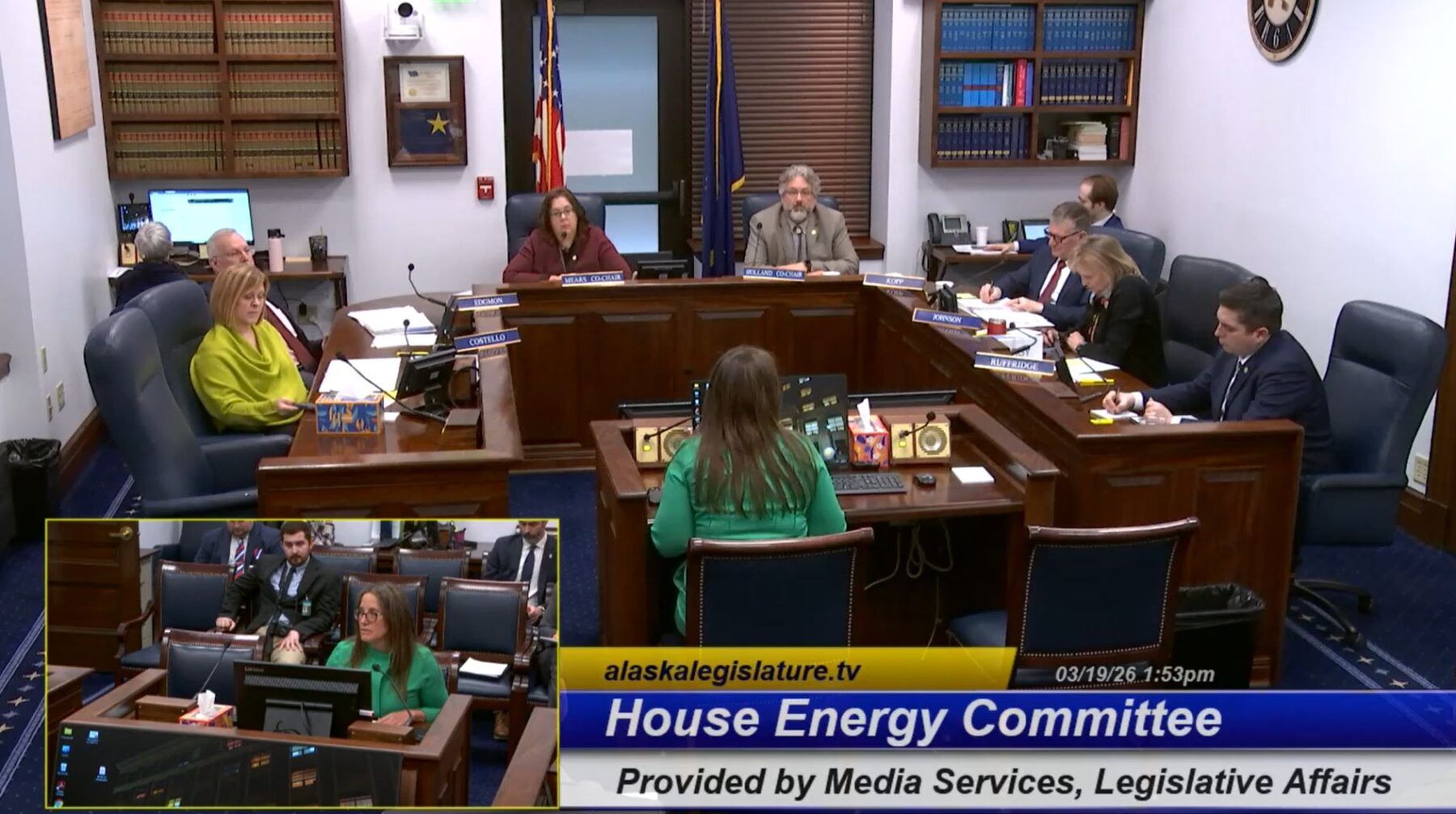
The House Energy Committee took a significant step forward on energy policy today, formally adopting the committee substitute for HB 369 (Version G) as its working document. The omnibus legislation, sponsored by Rep. Ky Holland (NA-Anchorage), seeks to update Alaska’s energy framework with provisions on wildfire mitigation and liability, diversified portfolio standards, small project approvals, and legislative intent for efficiency and affordability. While the adoption moved the bill ahead, testimony from key Railbelt utilities highlighted deep concerns about expanded utility authority beyond existing rights-of-way, potential cost increases passed to ratepayers, and risks to private property rights.
Co-Chair Rep. Donna Mears (D-Anchorage) opened the session by adopting the substitute after a brief discussion. Rep. Holland described Version G as the product of extensive stakeholder input, including utilities, the Railbelt Reliability Council, and committee members. He noted the bill incorporates refined language from HB 252 on utility wildfire liability while removing sections on plug-in solar and economic development rates deemed better suited for other vehicles. The substitute simplifies the Diversified Portfolio Standard multipliers and shifts certification of low-emission projects to third parties to ease burdens on the Department of Environmental Conservation.
Tim Treuer, staff to Rep. Holland, provided a detailed section-by-section review. Key wildfire provisions in Sections 2 and 3 establish a presumption of non-negligence for utilities that adopt and comply with a written wildfire mitigation plan filed with the Department of Natural Resources. Plans must be updated every three years, assess risks both inside and adjacent to rights-of-way, and include procedures for vegetation management and emergency response. Utilities gain authority to remove vegetation posing an “imminent risk of fire,” even outside their right-of-way, but liability is capped at replacement value for unnecessary removals. Public comment periods and notifications to adjacent landowners are required.
The committee engaged in substantive discussion on liability and property rights. Rep. Chuck Kopp (R-Anchorage) appreciated the “softer tone” but raised sequencing concerns with the Integrated Resource Plan. Rep. Mia Costello (R-Anchorage) invoked foundational principles of private property, questioning how utilities would define “imminent threat” and whether they possess the expertise to act beyond easements. Rep. Justin Ruffridge (R-Soldotna) expressed alarm at language allowing immediate removal “without notice,” asking if a utility identifying but not acting on a threat would still face liability. He observed that no other state explicitly grants private companies such authority over adjacent private land.
Co-Chair Holland acknowledged the 300-foot adjacent inspection zone in the draft was “too much” and committed to narrowing it significantly—focusing only on vegetation that could physically contact lines. He emphasized the goal was to share hazard information without inadvertently creating new utility obligations or shifting costs. Co-Chair Mears noted the need for a formal legal opinion on property access boundaries and potential impacts. Rep. Kopp referenced the common law doctrine of necessity, suggesting urgent fire risks might already justify limited action without new statutory overreach.
Invited testimony from Railbelt utilities amplified these concerns. Julie Estey, Chief Strategy Officer at Matanuska Electric Association, stated MEA “will be unable to support the bill if these sections remain intact.” She described the proposed 300-foot zone as exceeding legal authority, infringing on member property rights, and requiring significant staffing increases beyond MEA’s current 12-person vegetation management team and $4.5 million annual budget. Estey stressed utilities already maintain robust danger tree programs through voluntary landowner contact and proactive outreach. Expanding liability beyond easements, she warned, would drive up costs inevitably passed to the cooperative’s 58,000 members. She advocated an aggregate limit on small projects to prevent “gaming the system” and a reliability exception in preapproval criteria.
Rob Montgomery, Chief Operating Officer at Homer Electric Association, echoed these points, noting HEA serves only 13 members per mile across 2,600 miles of line. He argued extending responsibility outside rights-of-way increases liability and costs without corresponding control. Montgomery supported moving the Diversified Portfolio Standard deadline to 2040, applying multipliers to battery storage, and lowering or eliminating the 100-megawatt threshold for qualifying projects to better suit smaller utilities.
The committee set the bill aside for further refinement, with Co-Chair Mears committing to seek legal analysis on access boundaries. No final vote occurred, but members signaled openness to amendments addressing utility concerns while preserving wildfire risk reduction goals.
The debate highlighted tensions between ambitious policy goals and operational realities—core considerations for policymaking that prioritizes affordability, reliability, and limited expansion of authority.


