
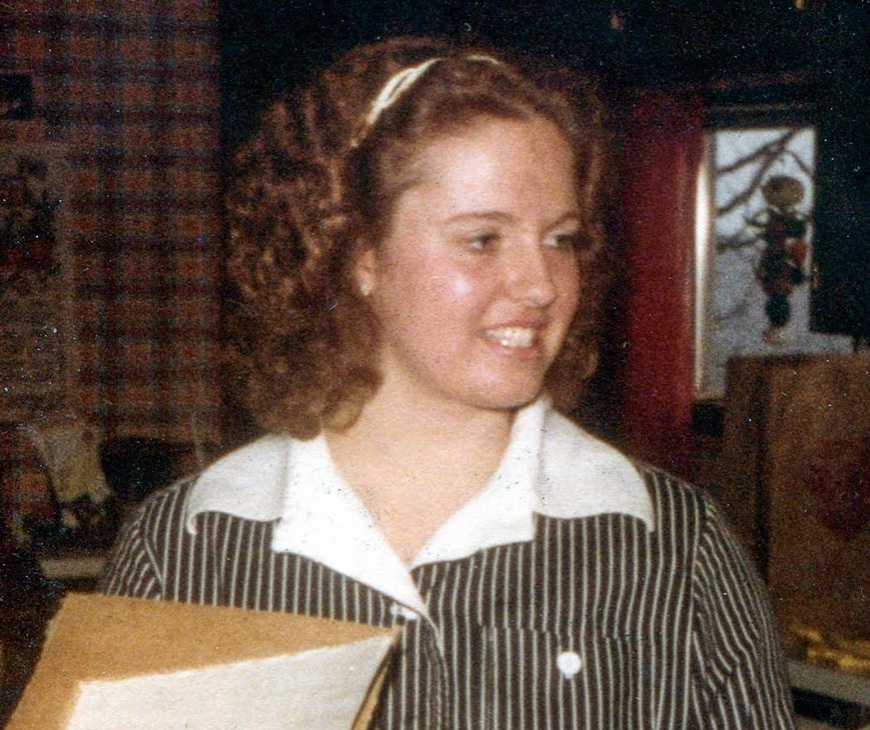
The Alaska Bureau of Investigation Cold Case Investigation Unit recently launched another attempt to identify the remains of one of serial killer Robert Hanson’s victims, a young woman who has been called Horseshoe Harriet for 37 years. Her name is Robin Pelkey.
In August 2021, a new DNA profile for the victim was generated and uploaded into a public access genealogy database. Utilizing several close matches, a family tree for the victim was constructed. Genealogy research by Parabon Nanolabs and ABI indicated that the victim might be Pelkey.
Pelkey had been born in 1963 in Colorado. Additional research identified a few potential relatives of Pelkey’s that reside in Alaska and Arkansas. Records indicated that she had been living in Anchorage in the early 1980s when Hansen was active as a killer of young women. Pelkey would have been 19 at the time of her murder and no record was found reporting her missing.
The Alaska Bureau of Investigation contacted the Arkansas State Police and requested their assistance. They contacted a very close relative of Pelkey’s and obtained a DNA sample. The sample was sent to the State of Alaska Scientific Crime Detection Laboratory in Anchorage. Kinship DNA analysis completed in September 2021, confirmed that “Horseshoe Harriet” is in fact Robin Pelkey.
In October 1983, Alaska State Troopers arrested suspected serial killer Robert Hansen, who became known as the Butcher Baker. At the time, he was suspected of murdering four women, whose bodies had been discovered in Southcentral Alaska between 1980 and 1983. In February 1984, Hansen agreed to plead guilty to the four murders and several other felony crimes. Hansen eventually admitted to murdering a total of 17 women and accompanied investigators on a helicopter flight where he pointed out the grave sites.
He had hunted down his victims and killed them with a high-powered rifle. Some of the women were exotic dancers and sex workers who came to Alaska during the boom era of the building of the Trans Alaska Pipeline, when Anchorage was attracting oil workers, construction workers, and a big vice industry.
“I would like to thank all of the troopers, investigators, and analysts that have diligently worked on this case over the last 37 years. Without their hard work and tenacity, the identity of Ms. Pelkey may have never been known,” said Alaska Department of Public Safety Commissioner James Cockrell. “The Alaska Department of Public Safety will leave no stone unturned in our efforts to solve major crimes in our state, hold anyone that violates our laws accountable, and bring closure to a victims’ family.”
In the past few years, genetic genealogy has developed into a powerful forensic tool for identifying both the perpetrators of unsolved homicides and, as shown in this case, their unidentified victims. The Alaska Department of Public Safety has used genetic genealogy in the 1978 Shelley Connolly homicide, 1993 Sophie Sergie homicide, and 1996 Jessica Baggen homicide.
The surviving next of kin of Pelkey has requested that they not be contacted directly while they come to grips with this heartbreaking news, DPS said. The department has purchased a new grave marker identifying the final resting place of Pelkey at the Anchorage Memorial Park Cemetery.


