

CLAIMING THEY WERE NONPOLITICAL EMPLOYEES
In what could shape up to be a landmark case, three former at-will employees have filed lawsuits against Gov. Michael Dunleavy, his chief of staff, and the State of Alaska. It’s unclear if they want their jobs back, but they want to exact a price from the Dunleavy Administration for releasing them from their jobs.
The case could decide whether a governor really is in charge, or whether the deep state extends even to assistant attorney generals, who simply cannot be released from their posts.
Shortly after taking office, Dunleavy’s transition team asked for the resignation letters from all at-will employees. This is the normal course of action during a change in administrations and is happening across the country.
The requests for resignations didn’t cherry-pick employees in a targeted way, but were sent as a blanket notice to all who are in the politically appointed category called “exempt.” That means when they are hired they sign a form that says they will submit their letters of resignation when asked. They are not covered by union contracts.
The governor accepted some of the resignations, but retained most of the exempt employees.
One Dunleavy didn’t retain is a Juneau celebrity blogger, Libby Bakalar, whose stock in trade is writing saucy commentary on her life and politics.
A former assistant attorney general, she is a prolific writer and unabashed liberal provocateur, and most recently was known to travel to Washington to lobby against the confirmation of Supreme Court Justice Brett Kavanaugh. The judge was ultimately confirmed, but without the support of Sen. Lisa Murkowski, who caved to the anti-Kavanaugh protests.
Others suing Dunleavy are two doctors of psychiatry at the troubled Alaska Psychiatric Institute. Dr. Anthony Blanford was the director of Psychiatry and Dr. John Bellville was a staff psychiatrist at the institute. Neither of them actually resigned, and thus were dismissed because they didn’t send in their letters saying they wanted to work for the new administration.
Blanford, in particular, took his complaints to the Anchorage Daily News, penning a bold rebuke of the new governor in an opinion that was published in December.
The three are saying their free speech rights have been violated and that their firing was retaliation.
BAKALAR, POLICY, AND PRIVILEGE
Libby Bakalar says she was never in a policy-making role as an assistant attorney general.
But she was involved with reviewing and advising decision makers on the Stand for Salmon petition in 2018, which led to a costly initiative on the recent November ballot.
The petition for the initiative, which was defeated by voters, was initially deemed to be unconstitutional, but rather than simply deny the petition, Bakalar and her boss, former Attorney General Jahna Lindemuth, allowed the group a “do over” and even coached them in rewriting the language so the petition could be deemed constitutional.
Eighteen days before former Lt. Gov. Byron Mallott had to make a decision on the petition, the Law Department sent the petitioners a detailed letter, describing the constitutional deficiencies of their petition, explaining that it was not likely to pass legal muster, and giving them ample time to remedy it.
[Read: Department of Law nixes petition but lets group have a do-over]
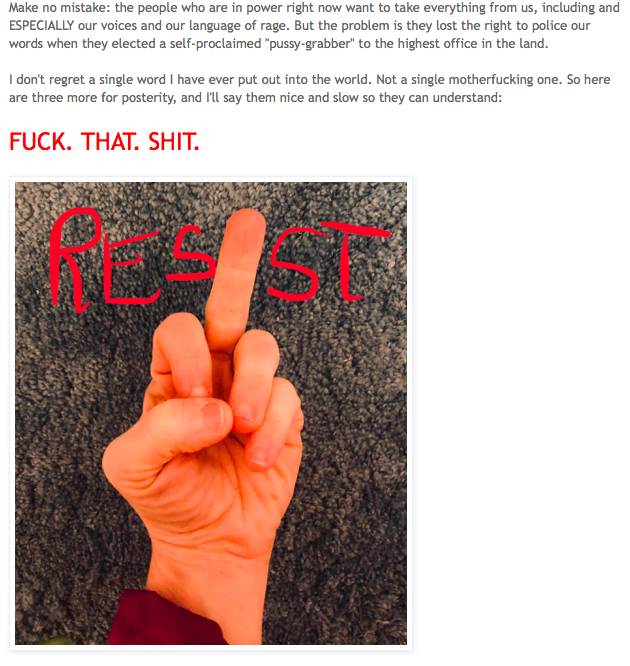
But the ACLU says the matter is all about political retaliation for Bakalar’s outspoken views on her blog, which is widely read throughout the Juneau liberal intelligentsia and government establishment, and which uses the F-bomb repeatedly, such as in this recent posting:
She also was a legal staffer to former Lt. Gov. Byron Mallott’s election policy task force.
That policy group was making and deliberating policy changes that extended far beyond the choice of voting machines. They discussed moving Alaska to a mail-in ballot, and forcing the Alaska Republican Party to pay for its own primary, since it has a semi-closed ballot available only to voters not registered with another party.
In other words, the election policy group was deliberating topics that could have broad consequences in elections.
The ACLU says that Bakalar submitted her resignation under protest and says the acceptance of her resignation was because of her blog, although it offers no evidence.
As for the psychiatrists, they refused to resign, and refused to say if they wanted to stay with the new administration, and so they were terminated. They are claiming that amounts to an oath of political loyalty.
The ACLU will have a tough case to make. When Bill Walker became governor, his firings reached far and wide, and included an assistant working in the Department of Military and Veterans Affairs. Why? She was married to a Republican lawmaker.
Ironically, the attorneys at the Department of Law who will have to defend the governor will be doing so against their former colleague.


