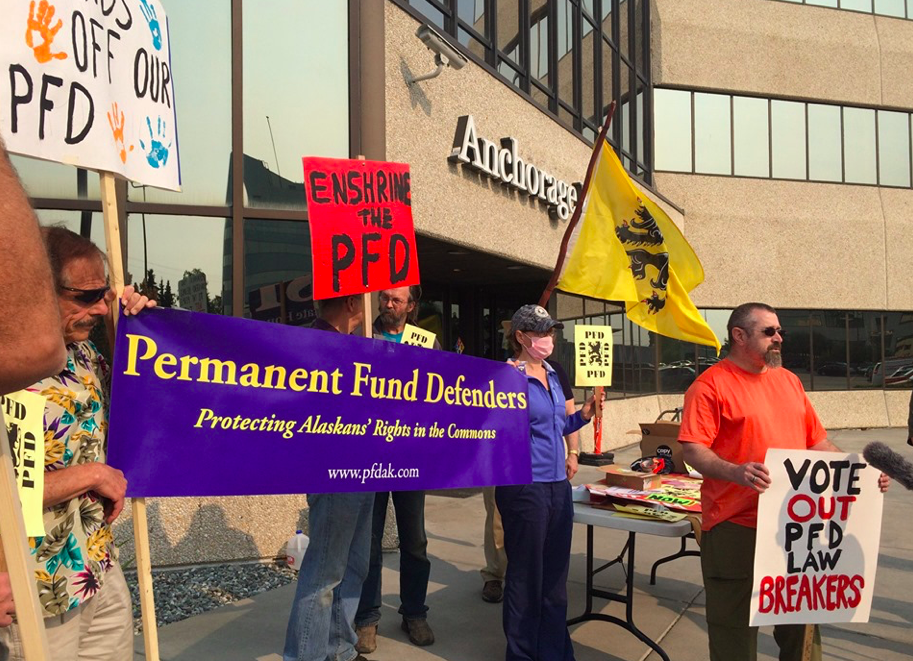
The 2020 Permanent Fund dividend check will hit the pocketbooks of Alaskans starting tomorrow. Some 90 percent of eligible Alaskans will get the funds deposited directly into their bank accounts. The rest will see the funds mailed to them later in July or as their eligibility is determined.
Some of the checks will be garnished and go directly for past child support payments or other debts.
This year’s oil royalty check will be $992, one third of what is should have been under the statutory calculation, but all that the Alaska Legislature’s majority members could give, since they needed the rest of the Permanent Fund dividend dollars to pay for government programs.
July 1 isn’t just when the dividends will start arriving — it’s the beginning of the 2021 fiscal year. And the budget that was approved for the coming year is already going to come up short.

The Alaska Department of Revenue forecasts a budget deficit of several hundred million dollars next year. In fact, even if Alaskans don’t get a Permanent Fund dividend next year, the budget will still be short on cash, due to precipitously dropping oil prices.
For the coming year, Unrestricted General Fund (UGF) revenue, before accounting for the transfer from the Permanent Fund Earnings Reserve, is forecast to drop from $1.6 billion in fiscal year 2020 to $1.2 billion in FY 2021.
The revenue for the UGF portion of the budget is expected to be less than $0.7 billion from oil and gas, and less than $0.4 billion for other sources.
The Permanent Fund is expected to transfer $2.9 billion to the General Fund in FY 2020 and $3.1 billion in FY 2021. These amounts include funds for both payment of dividends and general government spending.
But while the revenues are in tough shape, due to global economic forces, the State Legislature has approved $5.3 billion in spending for FY 2021.
Legislators are going to be in a tough spot next year. While Gov. Mike Dunleavy asked for significant cuts during his first year in office, the public and many in the Legislature took that as an affront, and a recall campaign began against him.
This year, he took a softer approach, although he did veto $210 million in unrestricted general funds (UGF) spending approved by the Legislature. He didn’t veto so much as to attract a veto override, as legislators are now beginning to realize the gravity of the state’s financial situation. The shortfall in the 2021 budget is believed to be another $200 million or more.
With low oil prices and production, the revenue-to-spending ratio has only worsened, and the Constitutional Budget Reserve has been nearly drained.
As of May 31, the balance of the Constitutional Budget Reserve was $1.93 billion, which will not be enough to make up the difference for the 2022 budget, especially if any of the funds are needed to patch up the 2021 budget this fall.