
By WAYNE HEIMER
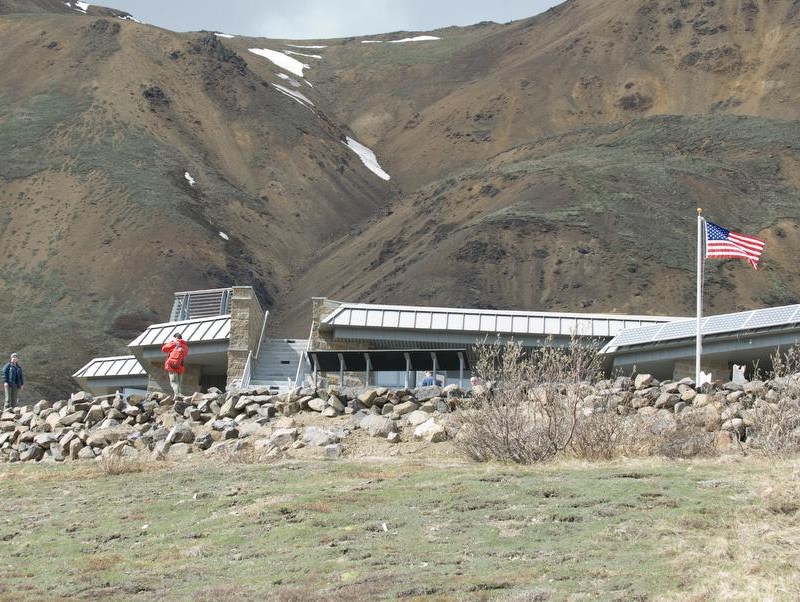
I haven’t made the kerfuffle about the U.S. flag flapping in Denali National Park the focus of my life. I know what’s been reported, what I’ve heard on the street, and what folks “in the know” have told me.
Not surprisingly, the story changed over time. The issue of how and where the flag is flown is less important than what it means in terms of Alaskan and American freedom under law, and tolerance of tradition.
Regardless of “what the park superintendent knew and when she knew it,” the issue speaks more to zealousness, and perhaps impractical loyalty to some arbitrarily inferred “park values,” as differentiated from common sense.
This is not the first time “park values” have arbitrarily trumped practicality or expanded beyond legal mandates. “Park values” are typically cited when federal land managers want to push the limits of congressionally authorized regulatory power. Citing “park” or “wilderness” values was a less common occurrence in the past.
“Park values” are an emerging justification for arbitrary rules and actions these government functionaries create and then cite as justification for administrative restrictions. They drift into the personal side of policy, popping up whenever righteous protectors personally perceive their “stewardship mandate” as greater than what is codified law when it comes to what they feel is ideal.
In my “tribe” we’ve long-referred to this arbitrary personal (or agency) interpretation of legal guidelines as federal overreach. Federal overreach began the moment President Jimmy Carter’s signature hit the Senate version of the Alaska National Interest Lands Act (ANILCA) in 1980. Here’s why:
ANILCA was the product of that era’s environmental hysteria. The findings and policy sections in Title VIII are an example. The dire predictions from 1979 have not materialized in the last 45 years. Nevertheless, federal overreach has proliferated.
Formerly, federal overreach was held in relative check by politely organized resistance from the State of Alaska. Back then, Alaska had a hedge against expansion of arbitrary federal values inferred from ANILCAs antecedent, House Resolution (HR 39). HR 39 was extreme, but eventually went on to become ANILCA when the Senate passed a highly modified, more reasoned version in 1979. That meant the federal protection/agency lobby didn’t get everything it wanted in the final ANILCA law.
Consequently, the zealous protectionists in the Department of Interior began to implement the Senate-nullified intent of HR 39 via administrative fiat justified as “park values” etc.
Alaska’s check on this administrative overreach was the Citizen’s Advisory Commission on Federal Areas. CACFA reviewed all sorts of federal proposals and overreaches (which went beyond those specified in ANILCA as federal law).
CACFA’s polite “AHEM!” put the feds notice when they were overreaching. Sometimes it helped the feds respect the actual scope of ANILCA, and sometimes “Alaska’s AHEM!” was ignored. CACFA members were unfailingly professional, and politically polite to the point that I often chided my commissioner friends for being too respectful, given the myriad of federal encroachments on Alaska’s traditional freedom.
I didn’t rate CACFA as particularly effective in limiting overreach, but it did provide a moderating influence when the feds were headed over the line with agency-inferred values. CACFA reached its effective zenith with publication of “ANILCA PROMISES MADE AND BROKEN” (circa 2015). This document is an easy, but infuriating reading at this link.
For reasons that were alleged to be financial, the Alaska Legislature stopped funding CACFA, thus stifling “Alaska’s AHEM!” about the same time as extra-administrative actions by the federal land management agencies increased. Overreaching by the National Park Service was legally certified in the Jim Wilde case, and John Sturgeon cases.
Other examples include the Noatak airstrip delay, in which today’s Denali National Park superintendent was a major player. Superintendent Brooke Merrill was the environmental compliance officer for NPS who forbade overland transport of equipment necessary to build a better airstrip for Noatak. She blocked crossing Cape Kruzenstern National Monument, suggesting a 150 mile detour, rather than allow crossing of the monument on an established, traditional trail, between Noatak and Kotzebue. The Noatak airstrip project is still on the drawing board.
Overreach was shown in the banning of traditional Native subsistence harvests of wolves in the Arctic. That overreach was subsequently overturned through Congressional Review.
Today there’s nobody officially watching the small day-to-day overreaches, like banning American flags because they are apparently inconsistent with a lesser Denali official’s understanding of “park values.”
The real question here is: “Who defines extra-legal values?” Is building a road, which requires heavy machinery, consistent with “park values?” If so, what harm is there in an American flag flown flappingly during the process? The American flag has flown in other places where “values” were in conflict — D-Day Normandy, and Iwo Jima come to mind.
We’ve heard calls for tolerance on the part of the banned “flag flying fanatics,” but no calls for tolerance on the part of the “park values” people. Why?
Wayne E. Heimer began comparing state and federal management and ADF&G conflicts before ANILCA. He has concluded that management is intervening in any established system to reach a pre-defined benefit. He wonders where the mandate and the benefit lie here.


