FIRST, THE WAGE TAX, NOW THE UNEMPLOYMENT TAX
Like Gov. Bill Walker’s claim that an income tax will be an economic stimulus because taxes put money back into the economy, Rep. Chris Tuck has an idea about how to grow jobs: Increase unemployment benefits for those not working, and put automatic annual increases into the unemployment formula.
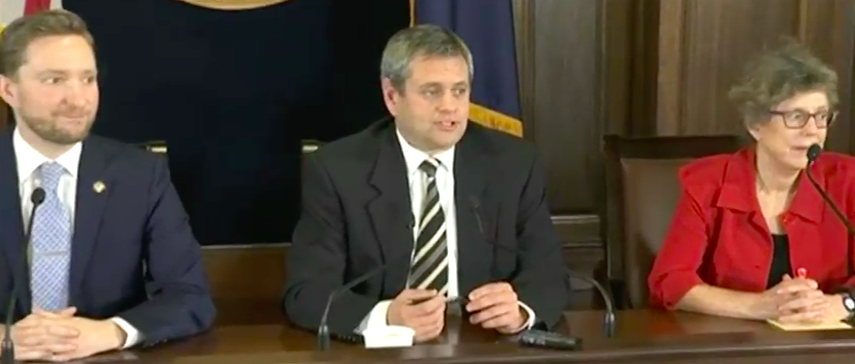
Tuck used the last five minutes of a House Majority press availability on Feb. 20 to tell reporters about HB 142, his bill that would increase unemployment benefits from an average of $375 per week to $510 per week.
That’s a 36 percent increase, and brings a typical unemployment benefit to $26,592 per year, up from $19,500.
“Alaska is one of the most seasonal states that there is. Whether it’s construction, mining, oil and gas, tourism, it’s very seasonal up here. And we need to be able to sustain families and communities, especially with the tough economic times right now, so we don’t have some of those skilled workforce leave the state of Alaska. So when things pick up they’re ready and available to go back to work.

“As I have gone through this, I googled the economic benefits of unemployment insurance. And I was surprised to learn that the Number one economic stimulus package for economic recovery is mass transportation projects, infrastructure. Number 2 is unemployment benefits.” – Rep. Chris Tuck
Tuck described how much better unemployment benefits were for stimulating the economy than, for instance, tax cuts.
“For every dollar that goes into unemployment benefits, there’s a return on investment of $1.68. When you … compare that to a tax cut, for every dollar in tax cut, that creates 10,000 jobs nationwide. For every dollar in unemployment increase, that’s 19,000 jobs. So it’s almost double that, due to the fact that when people are on unemployment, ….keeping money in the economy, keeping things flowing and keeping goods and services happening. Trying to maintain a good flowing economy,” Tuck said.
“So this is part of our economic stimulus that we’re trying to do for this State of Alaska. Trying to help maintain property values. And that’s why this coalition was put together was to again, to save the economy and protect jobs.”
Tuck’s review of economic stimulus analyses is selective. Some economists believe that making unemployment benefits more lucrative reduces the incentive for the unemployed to find or accept work, thus dampening and delaying an economic turnaround.
For reasons he did not explain, Tuck’s bill was pulled from the House calendar and sent back to Rules for work. Even more remarkable is that it has no fiscal impact. The fiscal note is 0 — meaning that it will cost the State of Alaska nothing to collect. That’s because it is a tax on the private sector, not the self-insured State of Alaska.
HB 142 would be retroactive to Jan. 1. By the time it is signed into law, that would be a six month windfall for unemployed Alaskans and a significant and unexpected cost to employers.