
COMMITTEE SQUABBLES, THEN ROLLS CHAIRMAN, MOVES MONEY
A billion dollars that had been held up for weeks by the chairman of the Legislative Budget and Audit Committee was released to be distributed throughout Alaska as part of the COVID-19 disaster response.
The funds include $568 million for communities, $100 million for fishers and fishing businesses, and $289 million for Alaska’s smaller businesses — those with under 50 employees, specifically those that have not been able to get any of the millions in federal dollars that have been made available through the Small Business Administration.
The Alaska Housing Finance Corporation received $10 million to help prevent homelessness, and airports will get $52 million to help them pay the bills while air travel continues to be depressed.
The committee discussed — sometimes heatedly — for hours whether it was proper to simply approve the governor’s spending plan, which all seemed to think was basically acceptable, or whether the entire Legislature should convene to discuss the plan. That was the position argued by LB&A Chair Chris Tuck, and two members, Reps. Andy Josephson and Ivy Spohnholz, along with alternate member Sen. Bill Wielechowski. They seemed to want more money spent on preventing homelessness and less for small businesses. But Sen. Natasha von Imhof explained to them, with what seemed like controlled patience, that by helping small businesses pay their workers, they would be helping those workers pay rents and mortgages.

The Legislature’s attorney said the committee was on shaky legal grounds and advised the entire matter could end up in court.
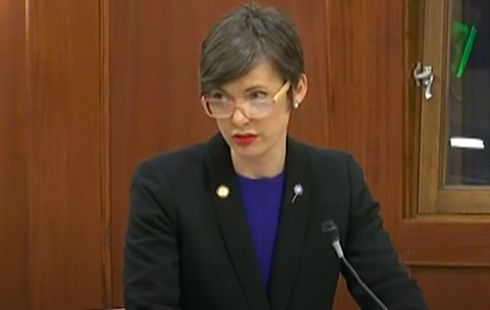
“We could have had our cake and eaten it too,” Spohnholz said, expressing disappointment that the Legislature was ceding its appropriation authority to the governor, who she has worked to remove via a recall election. It was about power and whether the governor should have that much power in a system where he already has a lot of power. She was arguing that the Legislature could have gotten credit for the appropriation, rather than the governor.
“It’s a precedent, a paved pathway for him to work around,” in the future, Spohnholz said.
Senate President Cathy Giessel, a member of the committee, was having none of that.
“We’re worried about whether the legislature gets to eat cake? Or fighting for power while communities are suffering? We are not giving up any appropriation authority. We have offered the administration, in many of these (budget items) revisions,” she said.
The governor has taken revisions suggested by the small business community. Instead of using $300 million for forgivable loans to small businesses suffering from the COVID economy, he agreed to make it a grant program, in recognition that many small businesses may never be able to pay back loans at this stage of the economic meltdown.
But three of the committee members and Sen. Bill Wielechowski, an alternate member of the committee argued that someone might sue over the constitutionality of the committee signing off on an appropriation that large. They also didn’t think some communities will spend the money wisely.
Josephson went on to say it was not the Legislature that was delaying the funds, but the governor.
“It’s the Dunleavy Administration who is dawdling.” Josephson said. “We are abrogating our legal authority.”
At one point, Sen. Lyman Hoffman and Committee Chair Tuck began talking loudly over each other after Tuck sputtered, “I am not going to play stupid to get along with people.” He soon called for an at-ease to cool off, and later clarified that he did not consider any other committee member to be stupid, but Hoffman was apparently offended, saying it came across that way.
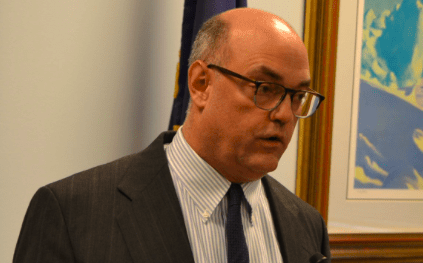
The arguments from Tuck, Wielechowski, Josephson, and Spohnolz continued, even though they clearly did not have the votes to change the outcome. They were trying to convince the committee majority to force the entire Legislature to Juneau to debate, under the threat of a lawsuit.
“Carpenters work with wood. Cooks work with food. Legislators appropriate. That’s what we do,” Josephson, who is an attorney, said.
In the end, the vote was 7-3; Wielechowski is not a voting member of the committee and only participated in the debate.