FLAT BUDGET, FULL PFD CAUSE SENATE FINANCE CONCERN
The proposed State budget for Fiscal Year 2021 may look flat, but that’s only part of the story.
The FY21 budget totals $4.532 billion Unrestricted General Funds, $969 million Designated General Funds, $760.3 million other State funds, and $3.9 billion federal funding. Added together, the spending package is $10.2 billion.
The governor’s plan also provides for a full Permanent Fund dividend, fully funds K-12 education, and increases funding for public safety through the Department of Public Safety, the Department of Corrections, the Department of Law, and the Alaska Court System.
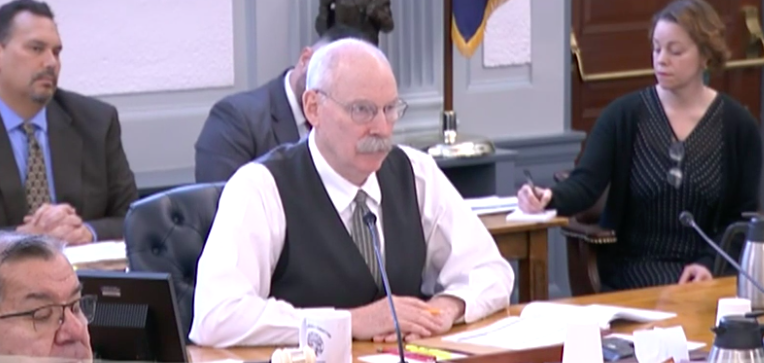
However, the flat budget is being gobbled up by the built-in increases in salaries of state employees, said Senate Finance co-chair Bert Stedman today during a presentation by the Office of Management and Budget. Wages and merit increases will soon push the cost of government upward again.
The deficit in the budget as it stands now will essentially drain the Constitutional Budget Reserve, and it won’t be able to be replicated with next year’s budget, said OMB Director Neil Steininger.
“There’s not enough money in the CBR to do that,” Stieninger said. He suggested that some of the statutory pressures on the programs need to be changed through legislation.
“If there’s only $500 million left in the CBR (at the end of the FY21 cycle), next year, we’re going to be a billion short,” Stedman said. “Where does it come from?”
“Just as a general note, I think I want to be working with OMB not on a 10-year plan but on a three-year survival plan,” Stedman told Steininger. “Because the time horizon is getting extremely short.”
Steininger agreed: “We need solutions that last for more than one year. And those aren’t solutions that can be made just in a budget bill.”
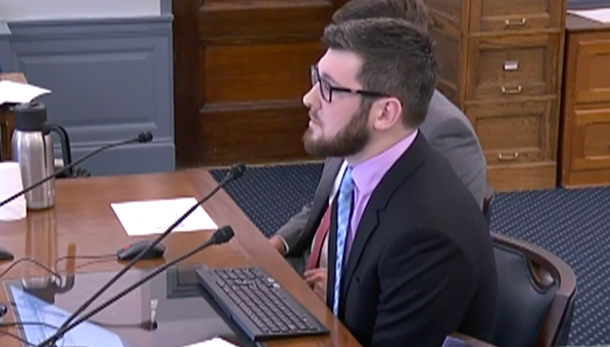
“The solution to this problem goes beyond the operating budget,” Steininger said.
Although the number of Executive Branch employees has remained stable at over 15,000 state workers (excluding Judiciary, Legislature, and University), the cost of employing those workers goes up year after year. Stedman was making the point during Finance Committee that even a flat budget is hard to replicate year after year without one of those levers moving.
EDUCATION – 30 PERCENT OF BUDGET
Senate Finance heard today that K-12 education takes up 30 percent of the State budget, and the base student allocation (how much the state spends per student) has increased by 42 percent in recent years, while enrollment in schools in Alaska has remained essentially flat since 2004.
MEDICAID COVERS 35 PERCENT OF STATE POPULATION
Medicaid now covers the medical bills for 35 percent of the state’s population — roughly 255,500 people. That’s double the number of Alaskans enrolled in Medicaid back in 2004, and it is one of the biggest cost drivers for the state’s budget. The increase in the State’s Medicaid budget has grown by $414 million between 2004 and 2021, and is now $644.3 million.

National Association of State Budget Officers (NASBO) found that for FY 2018, states’ Medicaid accounted for 20.2 percent of total state general fund spending, second only to spending on elementary and secondary education (35.8%).
Alaska’s Medicaid entitlement spending is at 25 percent of the state’s general fund budget, and more will be added in this budget. Meanwhile, the state’s population has dropped and is at the lowest level since 2012, at 731,000.
Co-chair of Finance Sen. Natasha Von Imhof said that the per-individual cost of Medicaid is down, even while the enrollment population has doubled.
For comparison, California has the most people on Medicaid, but it’s only one in four residents. In Wyoming, only 10 percent of the state’s 567,000 residents are Medicaid recipients.
In the governor’s budget, the constitutional budget reserve would have just $452.4 million left at the end of FY21. Over $16 Billion in budget reserves have been spent from the state’s reserves since 2013 to make up for budget revenue shortfalls.

The largest item in the governor’s proposed budget is the statutorily calculated Permanent Fund dividend. The Legislature has not used the legal calculation for the dividend for several years, however, but has been choosing an amount each year that they believe is politically palatable. The governor has said he’s willing to change the statute, but so long as it’s in law, he believes in following the law.