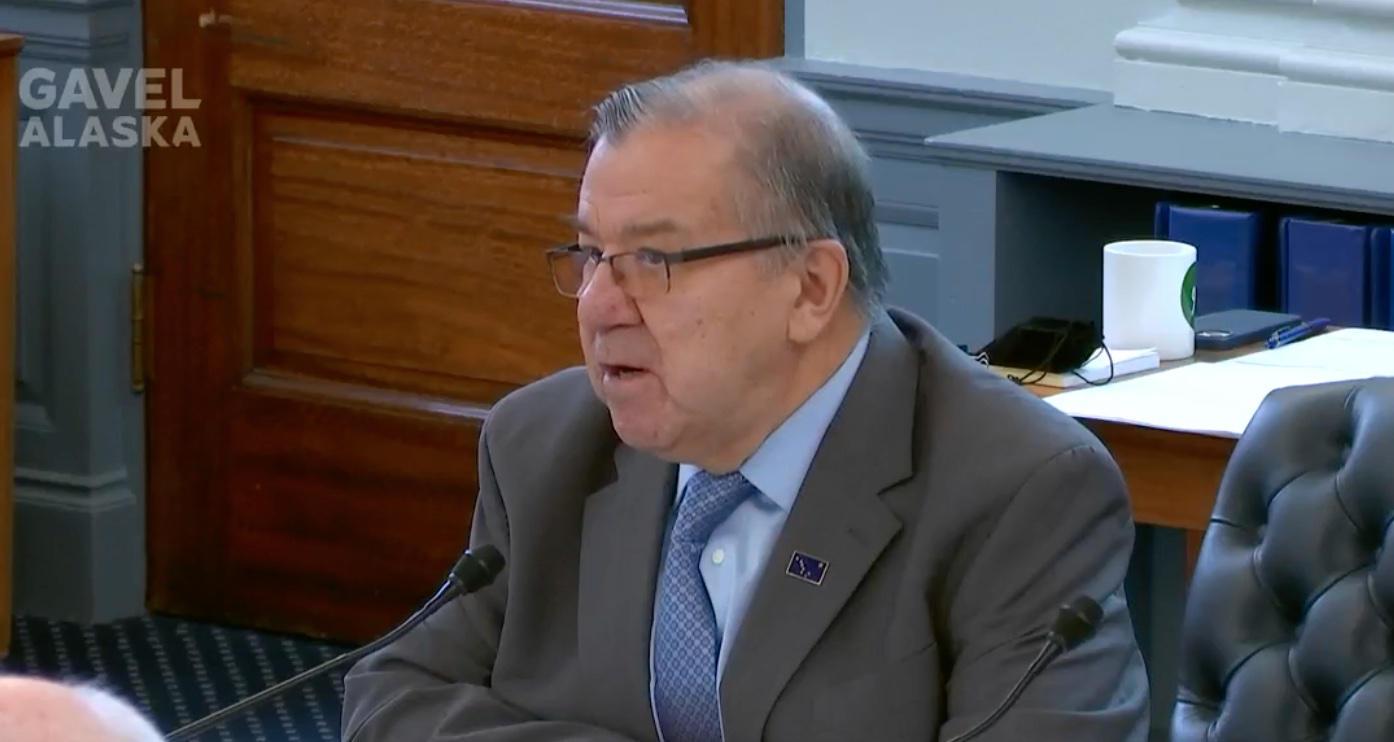
The Alaska’s Senate Finance Committee has proposed amending an existing law that the Legislature hasn’t followed in years for determining the Alaska Permanent Fund dividend.
In 2018-2019, the Legislature adopted by statute a mechanism called the “percent of market value,” in which the Permanent Fund earnings are used not just to pay dividends, but to also contribute to state government under a split set by formula.
But that calculation, called POMV for short, conflicts with a prior law that gave Alaskans 50% of the oil wealth in the way of dividends. The two laws have been in conflict, and the matter was never resolved.
The dividend is calculated by taking the average net income of the Permanent Fund over the past five years, applying the most recent statutory percentage to that amount, then dividing it by the number of eligible applicants in the state. The exact formula also includes things like past year obligations and the expenses of running the program.

Senate Bill 109, proposed by Sen. Lyman Hoffman of Bethel, gives Alaskans 25% rather than the 50% of the earlier statute, which hasn’t been followed since Gov. Bill Walker vetoed half of the dividend in 2015.
The new bill modifies the management and distribution of the Alaska Permanent Fund, including changes to how income is calculated, appropriated, and used for dividend payments.
Key provisions include:
- Fund Income Calculation: The bill updates the method for determining the Permanent Fund’s net income, basing it on generally accepted accounting principles while excluding unrealized gains and losses.
- Appropriation Limits: The annual amount available for appropriation is set at 5% of the fund’s average market value over the past five years, ensuring withdrawals do not exceed available reserves.
- Dividend Formula Adjustment: The allocation to the Permanent Fund Dividend (PFD) is reduced from 50% to 25% of the income available for appropriation.
- Inflation Protection: The legislature may appropriate funds from the earnings reserve account to offset inflation’s impact on the fund’s principal.
- Amerada Hess Settlement Funds: Income from the settlement remains in the fund but cannot be appropriated for general use, dividends, or inflation-proofing, instead going to the Alaska Capital Income Fund.
- Mental Health Trust Fund Exclusion: Earnings from this trust fund are not included in the Permanent Fund’s available income calculations.
- Repealed Provisions: Sections AS 37.13.145(e) and (f), which contained previous rules on fund transfers and allocations, are repealed.
Although the Legislature has been taking 75% for government, this year the Democrat-led majorities in the House and Senate want to add hundreds of millions of dollars in spending for education and pensions.
Even with 75% going to the state, there isn’t enough left. The current delta between spending demands and available revenues is estimated to be $500 million or more, according to the Legislative Finance Division.
The Yundt Tax may allay some of that deficit. Sen. Rob Yundt has proposed taxing Hilcorp, the company that manages the fields on the North Slope.
The Alaska Permanent Fund Dividend program began in 1983, when the Alaska Permanent Fund Corporation started distributing a portion of the fund’s earnings to Alaska residents. The PFD is paid out annually to all qualifying Alaska residents.