
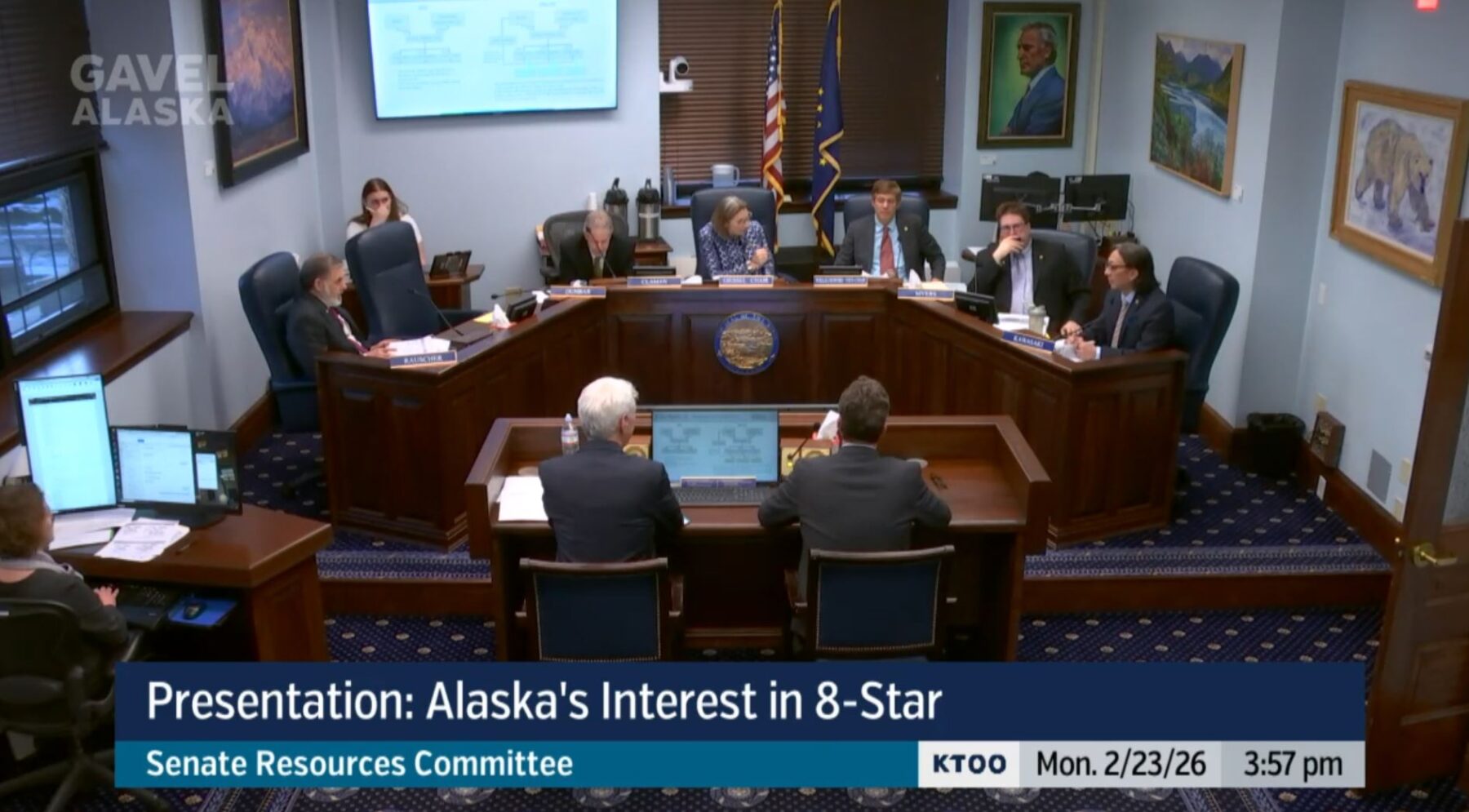
In a tense and probing session yesterday afternoon in Juneau, the Alaska Senate Resources Committee scrutinized the state’s evolving role in the 8 Star Alaska LLC for the Alaska Gasline and LNG project, a multi-billion-dollar endeavor aimed at monetizing North Slope natural gas. Chaired by Senator Cathy Giessel (R – Anchorage), the meeting highlighted lawmakers’ frustrations over limited access to governance documents and the project’s shift from public-led to private-developer control. Presenters from the Alaska Gasline Development Corporation (AGDC), including President Frank Richards and Commercial Director Matt Kissinger, defended the structure as a strategic pivot to attract private investment while preserving state benefits, but faced sharp questions on control, valuation, and timelines.
The hearing focused solely on Alaska’s interest in 8 Star Alaska LLC, reflecting the project’s significance amid Alaska’s energy challenges. AGDC, established in 2010 and bolstered by legislation in 2013 and 2014, was tasked with maximizing North Slope gas for local and global markets. Richards traced the project’s history: from an equity partnership with major producers like Exxon, BP, and ConocoPhillips, which faltered, to a 2016 restructuring recommended by consultants Wood Mackenzie. This led to a tolling model and project finance approach, culminating in federal approvals from FERC and other agencies.
A pivotal change occurred in March 2025 when AGDC transferred 75% of 8 Star LLC—a subsidiary holding permits, engineering, and rights-of-way—to Glenfarne Group, LLC, for an in-kind commitment to advance the project to Final Investment Decision (FID), valued at around $150 million. AGDC retains a 25% stake, with transition completed by July 1, 2025. Kissinger detailed the series LLC structure: a “TopCo” (8 Star Alaska LLC) oversees three subprojects—Arctic Carbon Capture (8 Star ACC, LLC), the 800-mile pipeline (8 Star Pipeline, LLC), and the LNG terminal (8 Star LNG, LLC) in Nikiski—allowing specialized investor participation while centralizing authorizations.
Lawmakers pressed on governance and control. Senator Bill Wielechowski (D – Anchorage) questioned the state’s diminished influence, noting Glenfarne’s majority board seats. Kissinger countered that minority protections, including unanimous consent on key matters, provide influence beyond voting. However, when Giessel demanded redacted operating agreements to verify these safeguards—citing over $1 billion in public investment since 2014—Kissinger cited confidentiality, requiring Glenfarne’s approval. “We’re unable to share those agreements… they are confidential,” he said. Giessel insisted on disclosure, emphasizing fiduciary duties under statute to deliver “maximum benefit” to Alaskans.
The discussion delved into the integrated project’s scope: removing CO2 via ACC for liquefaction, transporting gas south, and enabling exports of up to 20 million tonnes per year (MTPA). Senator Scott Kawasaki (D – Fairbanks) clarified ACC’s necessity, while Wielechowski probed ownership flows. AGDC owns 25% of the parent LLC, receiving distributions from retained subproject equity post-sell-down, with an optional “back-in” right for 5-25% direct investment within six months of FID—no obligation to fund to maintain the parent stake.
Phasing emerged as a flashpoint. Phase 1 prioritizes the pipeline for in-state gas delivery, estimated at $10.8 billion, with full build-out adding $33 billion for ACC and LNG. Richards expressed high optimism for Railbelt utilities facing supply shortages: “I put my confidence level at 98 percent” that the line will be built, alleviating needs for LNG imports. This confidence stems from milestones like gas supply agreements with Exxon, Hilcorp, ConocoPhillips (in principle), and Pantheon; letters of intent with Enstar and Donlin Gold; FEED completion by Worley; and two-thirds of pipe supply contracted.
Pricing projections varied: $16 per MMBtu for Phase 1, dropping to $5 at full volume due to economies of scale. Senator Myers (R – North Pole) noted Fairbanks’ current $24 rates would benefit, while Anchorage might see increases from $10, though Kissinger warned Cook Inlet contracts are rising to $16-20 anyway.
Transparency dominated closing remarks. Vice Chair Senator Matt Claman (D – Anchorage) lamented limited state access compared to private investors under NDAs. Giessel challenged the project’s alignment with Senate Bill 138 (2014), arguing it “morphed into something materially different.” She reiterated demands for documents, noting a similar request to Glenfarne’s Adam Prestidge.
The session adjourned with clear action items: AGDC to seek redacted disclosures and justify refusals.
This hearing underscores Alaska’s push for energy independence amid global LNG demand, but highlights tensions between commercial sensitivity and public accountability. With FID and pipe-laying possibly by December 2026, the project could transform the state’s economy—creating jobs, securing supplies, and generating revenue—yet lawmakers demand proof it serves Alaskans first.


