
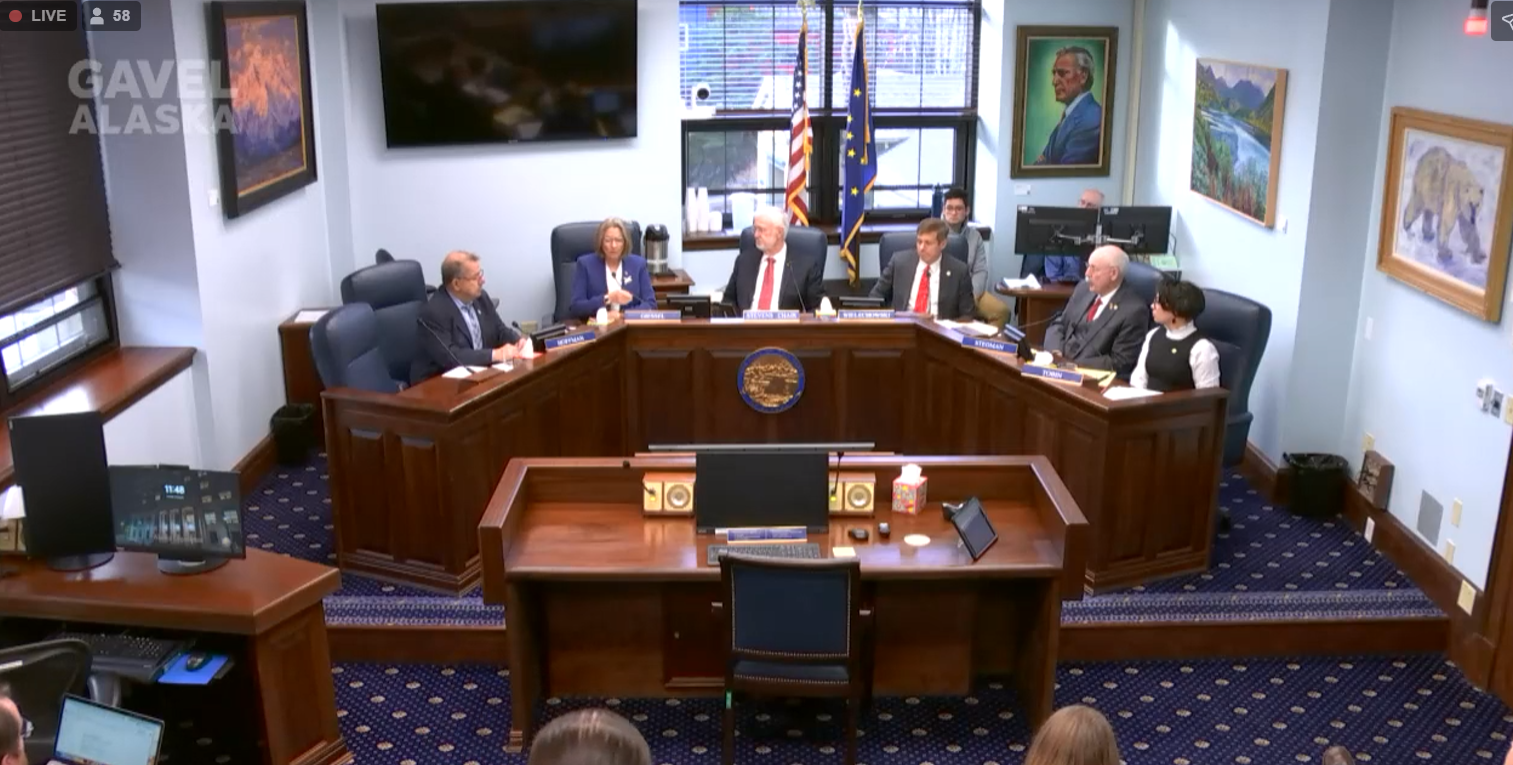
At 11:30am today, Jan 20, the Senate Majority met with the press to discuss priorities for the second regular session of the 34th Alaska State Legislature, which will gavel in at 1pm today.
Senate President Gary Stevens (R-Kodiak) began the meeting by emphasizing that the State has “tighter revenue constraints than ever before.” He stated the session will focus on fiscal discipline, continuing essential services for Alaskans, and making decisions that Alaskans can afford now and in the future.
Senate Finance Chair Lyman Hoffman (D-Bethel) stated Governor Dunleavy has proposed a full Permanent Fund Dividend, which will be a center of discussion this session. Hoffman warned that a full dividend will cause a $1.5 billion deficit for the State. He also highlighted $200 million worth of items not addressed by the Governor’s budget.
Senate Finance Chair Bert Stedman (R-Sitka) emphasized the lack of maintenance funding for K-12 school facilities, court buildings, universities, and DOT infrastructure in the proposed budget. “We have to maintain our infrastructure… the dam is going to break,” he stated.
Then the conversation turned toward education with Senate Education Chair Löki Tobin (D-Anchorage) speaking on actions taken by the Education Task Force. The task force has met with schools and students across the state and will hold several meetings this session, the first being this Friday.
Senate Rules Chair Bill Wielechowski (D-Anchorage) highlighted efforts regarding election integrity. He stated that Alaska is the hardest state in the nation to conduct elections due to its unique geographical challenges. Several concerns need to be addressed: 1) there is 106% more registered voters in Alaska than there are adults in Alaska and 2) a high percentage of rural, military, and assisted living home residents’ votes are thrown out over technicalities. Wielechowski seemed hopeful of passing non-partisan changes to the election system to better this year’s election integrity.
Other priorities discussed during the meeting regarded the LNG pipeline project, disaster relief funding, and public pension.
Readers can watch the full recorded meeting here.


