
After the latest batch of ballots were counted by the Alaska Division of Elections on Tuesday, it still appears that ranked-choice voting may be going away in Alaska. But the margin is very thin, not that different from the vote that installed the messy voting scheme that frustrates voters.
As of Tuesday night, 142,511 Alaskans are in favor of repealing ranked-choice voting, and 139,670 are opposed. The split is along party lines, with Democrats favoring the novel system of choosing political leaders — a system that in Alaska favors Democrats.
Although about 20,000 early and absentee ballots are still to be counted, there’s a drop-off of voting toward the end of the ballot. While 295,806 ballots have been counted so far, some 282,181 people voted on this particular ballot measure, about a 5% drop in the votes on number of ballots received. In the Trump-Harris race, for example, 293,515 votes were cast, more than 11,000 more than were cast in Ballot Measure 2.

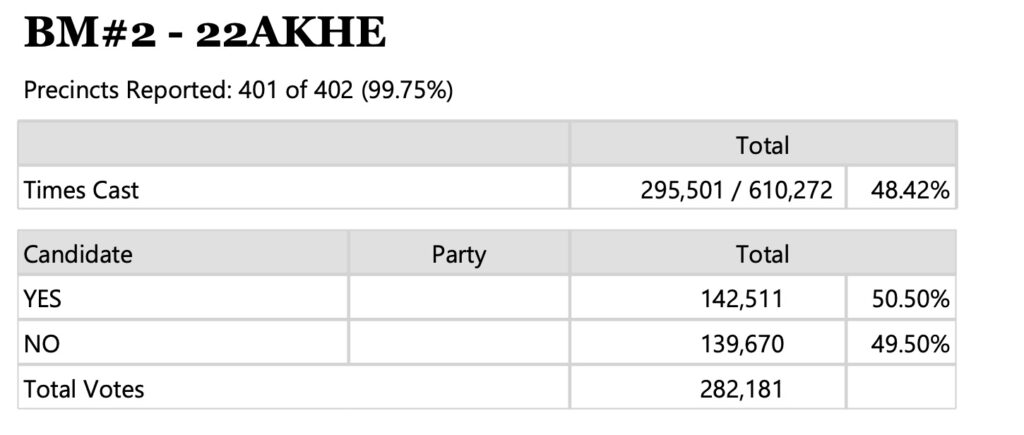
The No votes have gained slightly in the latest count released. In the Nov. 8 count, the Yes votes were ahead 50.83%, and have slipped a bit to 50.50%.
Just 2,841 votes separate the Yes and No ballots.
Ranked-choice voting was installed by allies of Sen. Lisa Murkowski, who was unable to compete in another Republican primary election after her work to defeat President Donald Trump.
With the use of Outside money from liberal billionaires, the proponents convinced Alaskans they would have more choice in elections. But voters haven’t enjoyed the new scheme and, in fact, elections seem to be less secure, with results not being announced for 15 days after all votes are cast, embarrassing the state, which doesn’t seem to be able to run elections efficiently.
The people who want to retain it — mostly Democrats — have had over $14 million in dark money this cycle to defeat the repeal. They have fought hard, even telling people that if they don’t pass Ballot Measure 2, they won’t be able to have an abortion.
Meanwhile the repeal proponents have had less than $100,000 to work with, and have had to fight off multiple lawsuits and threats from ranked-choice advocates like lawyer Scott Kendall.