
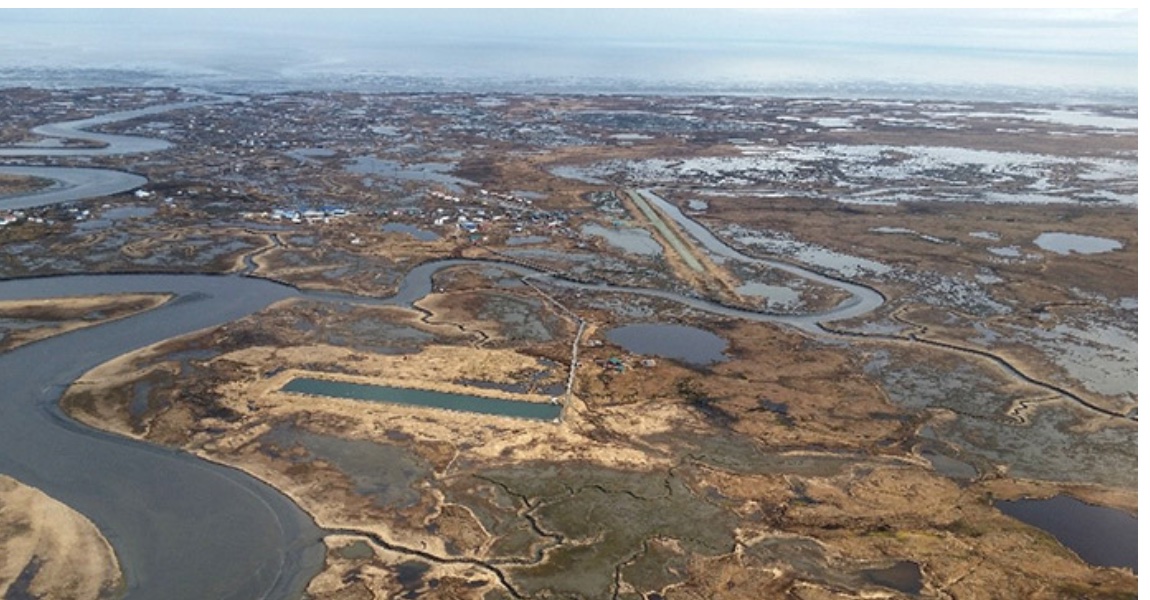
On Sunday, President Joe Biden declared that a major disaster exists for the Village of Kwigillingok, in the Yukon-Kuskokwim Delta.
Biden ordered federal aid to supplement what he labeled the “Tribal Nation’s efforts in the areas affected by a severe storm and flooding from August 15 to August 18, 2024.”
Tribal nation?
Why Biden decided to call the village and federally recognized tribe, with a population of under 400, a “Tribal Nation,” is a matter of deliberate choice of symbolic words that have meaning to the tribal sovereignty movement. It’s a legal and political genuflection to an ideology of balkanization, with no particular legal consequence. It’s just politics influenced by people like Sec. of Interior Deb Haaland.
Kwig, which is 100% English speaking and nearly 99% Native, is among the 574 federally recognized tribes. The official list is here. It doesn’t appear to have a strong history, first showing up on a national census in 1920. It may have been a seasonal fishing or hunting camp set up right in the middle of a flood plain.
At an elevation of three feet above sea level, Kwig is located in a marshy area on the western shore of the Kuskokwim Bay near the mouth of the Kuskokwim River, 77 miles southwest of Bethel and 388 miles west of Anchorage. The flood plain and has seen an increase in erosion and flooding in recent years, flooding which appears to now be an annual occurrence. The Kuskokwim River, as with other rivers, changes course through time.
Its population was historically a preliterate group of hunters and fishers who moved around with the food supply. But a nation it was not.
According to the Department of Agriculture, “Tribal Nations are recognized as sovereign nations and that have inherent power to govern all matters involving tribal members and issues in Indian Country. In the United States there are 573 federally recognized Indian Nations (also called Tribes, Nations, Pueblos, Native Villages, Communities, and Pueblos) as well as a number of Tribal Nations recognized by states within the United States.”
The Department of Agriculture separates “nations” from “tribes” in its description. Biden lumps them as one.
Through the disaster order, federal funding is now available to the Village of Kwigillingok and unnamed private nonprofit organizations on a cost-sharing basis for emergency work and the repair or replacement of facilities damaged by the severe storm and flooding, that took place in August.
Other communities in the region experience the same regular flooding in this era of warmer climate.
In October, for example, a storm rolled in and flooded parts of Kotzebue, Shishmaref, and Nome, leading Gov. Mike Dunleavy to declare a state disaster in Kotzebue on Oct. 21.
The federal government is in the process of moving the village of Newtok to a new site called Mertarvik, nine miles away, due to erosion, flooding, and what climate change activists point to as a result of manmade climate change. Newtok, population 324, is moving at a cost of $100 million. Newtok is seen as a test case for how succesful the government can be in moving villages away from flood zones.
A 2024 report by University of Alaska Fairbanks graduate student Richard Buzard found that 22% of structures in 46 of 55 analyzed coastal communities are in flood plains.
“Sea level rise projections suggest the percentage will increase to 30–37% by 2100,” his report says. Read more about his report at this University of Alaska Geophysical Institute report.


