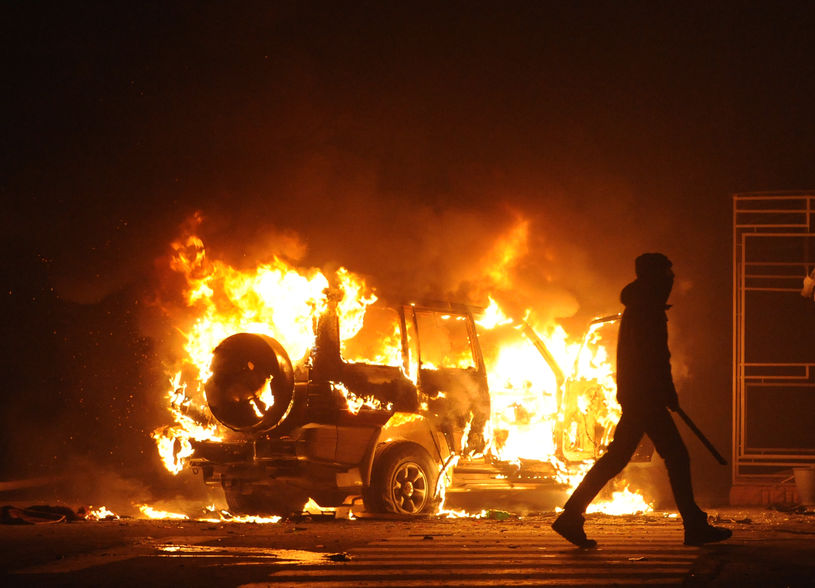
About half of voters polled by the Rasmussen Reports company expect violence to occur when the election results are revealed after Nov. 5.
In a quick poll conducted by Must Read Alaska on X/Twitter, 89% of respondents said they think Democrats will riot and ransack cities if Trump wins. That is not a scientific poll, however.
In the Rasmussen Reports national telephone and online survey, 51% of likely voters believe it’s likely there will be a violent reaction if Vice President Kamala Harris is elected president, including 26% who say such a reaction is Very Likely.
However, 47% also think a violent reaction is likely if former President Donald Trump wins, including 23% who say violence is very likely to follow a Trump victory.
To see survey question wording, click here.
The survey was conducted among almost 3,000 voters on Oct. 17, and 20-21.
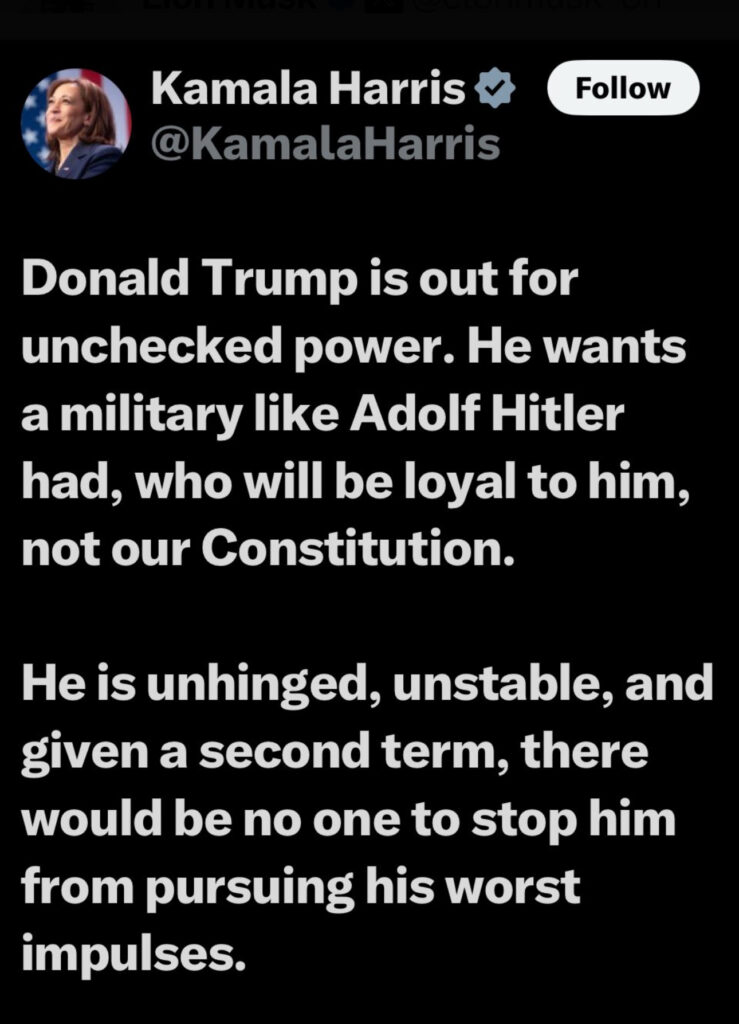
Voters have strong feelings about this election with both presidential candidates evoking emotional responses from people. Those who do not like Donald Trump have severe reaction to him, known as Trump Derangement Syndrome. Already in this campaign cycle, at least two known assassination attempts have been made on Trump, and Kamala Harris continues to compare him to Hitler, stoking deep emotional responses from Trump-haters and providing cover for a violent reaction to his election.

This week, President Joe Biden said it is time to lock up Trump, before he bumbled his way into explaining he meant something different.
Trump Derangement Syndrome is a term traced back to the late political writer Charles Krauthammer, who first came up with the phrase “Bush derangement syndrome” in 2003.
Krauthammer, who was no fan of Trump’s, said Trump Derangement Syndrome is like a “general hysteria” that resulted in an “inability to distinguish between legitimate policy differences and signs of psychic pathology” in Trump’s behavior.
Later, others have noted that the hatred some people have of Trump impairs their judgment.
“Signs of TDS can be observed along a continuum of reactions, ranging from verbal expressions of intense hostility toward President Trump to overt acts of aggression and even violence against anyone supporting or anything symbolizing him. The recent assassination attempt on Trump’s life provides compelling evidence of the volatility and potential dangers of TDS if left unchecked,” writes psychologist Alex Pattakos Ph.D. in Psychology Today. “In the case of TDS, “Donald Trump,” broadly defined to include anything associated with him, has come to represent such an unconditional stimulus. As such, it triggers what appears to be an automatic response or reaction.”