
On March 14, math nerds and pie lovers of the world celebrate the number pi, written π or 3.14. Pi is such a revered number that it has a national day named in its honor: Congress made Pi Day official in 2009, an annual fete of the mathematical constant.
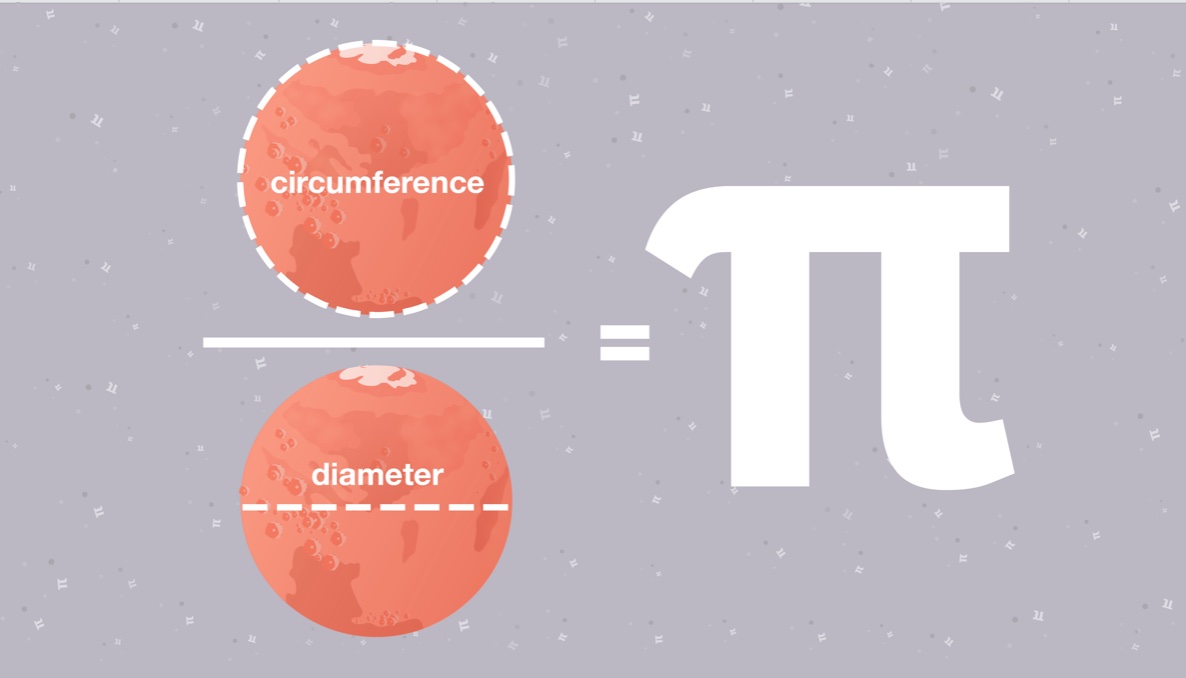
Why March 14? It is numerically 3.14, which are the first three digits of pi. The digits of pi, which is the ratio of a circle’s circumference to its diameter, always end up as 3.14, and so pi can answer questions about circles, spheres, and space itself. Pi, in reality, has an infinite number of digits, as far as anyone has determined. In 2021, researchers at the University of Applied Sciences of the Grisons (Switzerland) calculated 31.4 trillion more digits, bringing the total to 62.8 trillion decimal places, without any discernible repeating patterns.
Pies of any sort are great object lessons for explaining how the 3.14 is arrived at. You take a string or piece of yarn and measure around the pie. Then you take a ruler or tape measure and measure the string to get the circumference number. Then measure the length across the pie, going across the middle, or diameter. Now divide the circumference by the diameter and you will get 3.14. If you want to calculate the area of the pie (the circle), you use the formula “pi r squared,” or pi times the radius (a straight line from the center to the circumference of a circle) squared.
After you’ve conquered the calculation, Must Read Alaska recommends you reward yourself with a slice of pie — at 3:14 pm, preferably. And if not pie, then pizza and a pint. And if not pizza and beer, then a slice of pineapple. You’ll figure it out.


