
By LISA REIMERS
Many people have speculated that the Alaska Natives Claims Settlement Act, or ANCSA, was an experiment in federal Indian policy.
In 1971, Congress authorized Alaska Natives to select and receive title to 44 million acres of public land and $962 million dollars as a settlement of their aboriginal claim to land in the State of Alaska.
The ANCSA framework was unique because it mandated the creation of for- profit corporations – both at the regional and village level – to be the legal vehicle by which the government would compensate Native people in Alaska as well as return ownership of their land.
There has always been a negative connotation surrounding the idea of corporate ownership. Federal Indian policy prior to ANCSA involved settlements and treaties that created the reservation system– which meant that the land and assets were held in trust by the federal government and were therefore controlled by the Bureau of Indian Affairs.
While ANCSA corporations are for-profit corporations, the mission and guiding principles by which they operate is ultimately influenced by the Alaska Native values of their shareholders.
This means that ANCSA corporations are the ultimate decisionmakers when it comes to deciding if and how their land and natural resources should be managed to achieve economic prosperity for their shareholders. That is why I do not view ANCSA as an experiment. Instead, I view it as the ultimate framework for self- determination.
I say this because of the insight I have received from people who actually took part in the implementation of ANCSA. I am an original shareholder of Iliamna Natives Ltd. (INL), which is a village corporation that formed following the enactment of ANCSA. INL was conveyed 69,000 acres of land in and around the village of Iliamna.
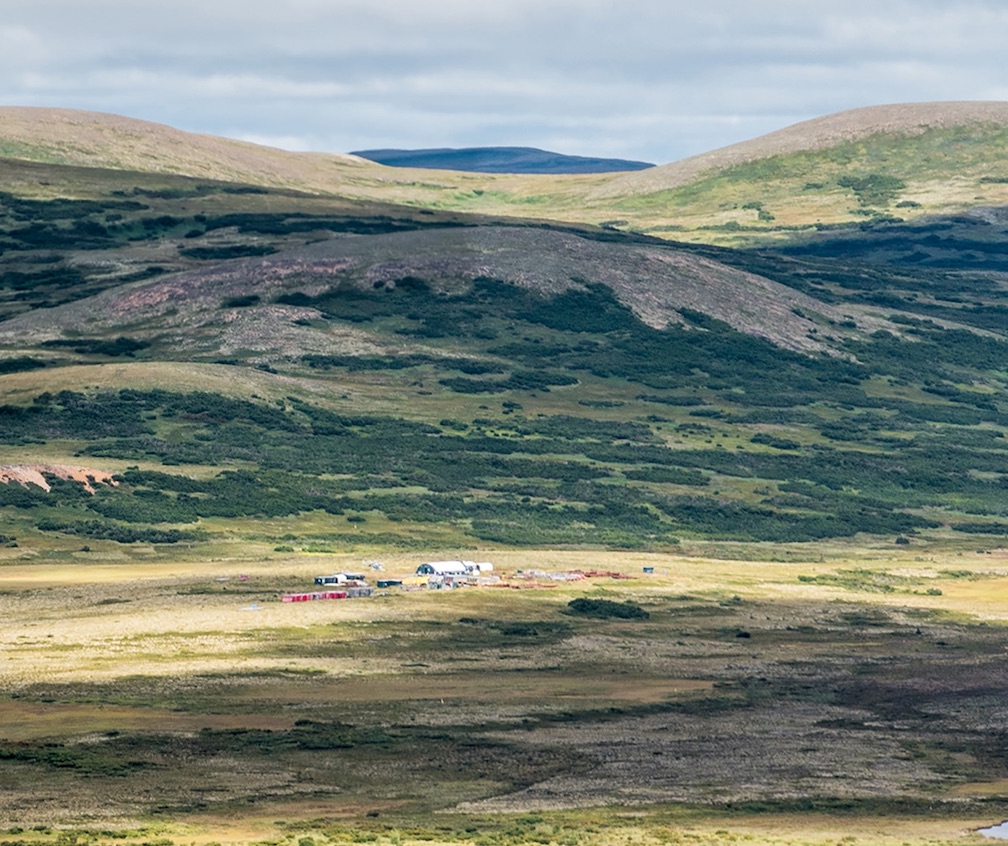
Obviously, we are one of the closest landowners near the Pebble Project. My parents were one of the original founders of INL who decided that INL land should be protected until there is a project that we can use to leverage our land for the good of our shareholders.
A project didn’t come along until 2004 when Northern Dynasty approached us with the plans they were working on and they asked my parents to form a subsidiary of INL that could partner with Pebble to provide jobs to our shareholders in the region. That is when we formed the Iliamna Development Corporation (IDC), a wholly owned subsidiary of INL. I have spent the last 16 years of my life as a sitting board member of both INL and IDC, as well as working as the CEO of IDC.
I am still proud to say that IDC – because of the work we accomplished with Pebble – went on to hire hundreds of employees from the region. At one point, IDC was the single largest employer in the Lake and Peninsula Borough. The pride I felt stems from the fact that I believed this project was the opportunity we needed to fulfill the intentions of ANCSA for our shareholders. That is why INL signed a rights-of-way agreement with Pebble in 2019, allowing them the right to build a transportation corridor on our land.
INL submitted a comment asking the U.S. Army Corps to select an alternative that put the transportation corridor on our land. INL carefully selected the route for the transportation corridor because it avoided three things: culturally sensitive areas, subsistence use areas, and critical salmon spawning habitat. INL did this not only with our shareholders in mind, but also the general public’s interest. When the Army Corps announced their record-of-decision (ROD) for the Pebble Project, INL shareholders were shockedto read that the Corps denied the permit because “the proposed project is contrary to the public interest.”
I believe this statement is contrary to the core principles of ANCSA, which transferred decision the making authority regarding resource and land development to the corporations and their shareholders. Who is to say that the Army Corps won’t use public interest to deny a project on ANCSA land in the future?
Lisa Riemers is CEO of Iliamna Development Corporation.


