Saturday, October 17, 2026
Home Blog Page 94

A Subtle Revolution: Anchorage School District Places “We Do Not Endorse” Disclaimer on U.S. Constitution and Declaration of Independence 

85

Editor’s Note: This story was updated 11/10/2025 to reflect that Kathrine Hardy’s friend (not daughter) discovered the disclaimer pasted on the pamphlet of American founding documents.

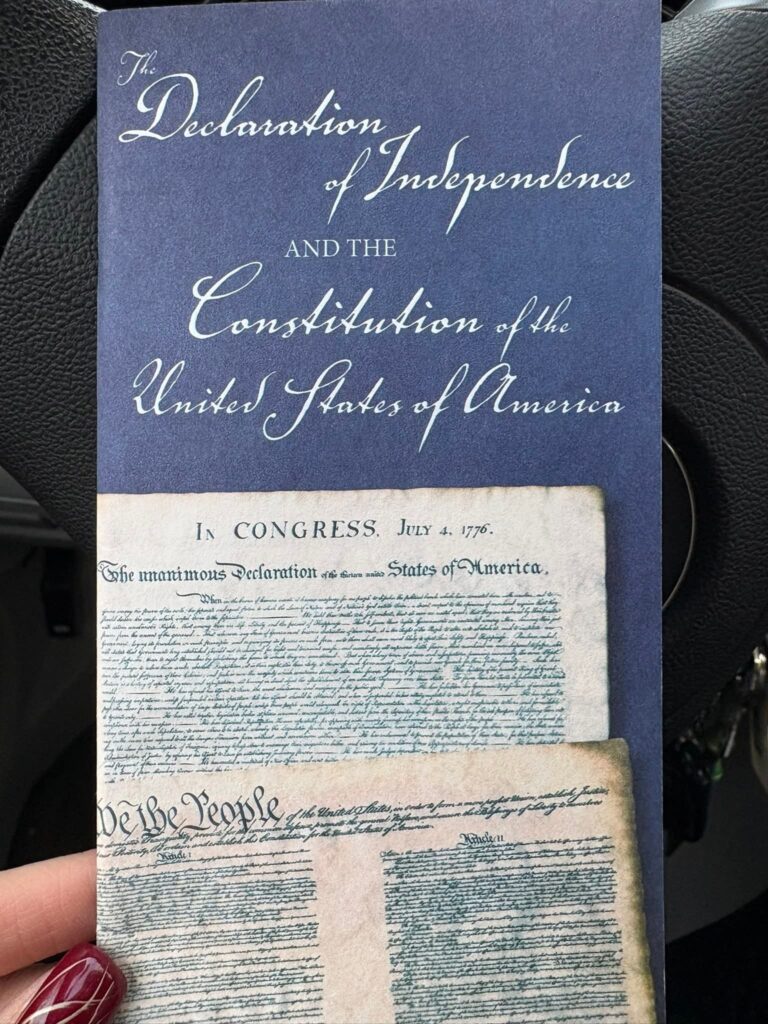
What does it mean when a government-funded institution refuses to endorse our country’s Supreme Law of the Land and the documents forming the basis of our national identity? Not only did Anchorage School District refuse to endorse the American Constitution and Declaration of Independence but took pains to sticker an “Anchorage School District does not endorse the materials or viewpoints expressed in them” disclaimer on the documents. Such a blatant attack on our most foundational documents which detail America’s most dearly held values and shapes the American identity requires explanation.  

Which viewpoints contained in the Constitution and Declaration of Independence does ASD take umbrage with? As one of our most powerful societal institutions, American public education represents America’s principles and has a sacred duty to train future generations in those values.  

MRAK was informed of ASD’s anti-American disclaimer by Kathrine Hardy, whose friend discovered the disclaimer pasted on a pamphlet of the U.S. Constitution and Declaration of Independence sent home with school kids.  

Kathrine’s friend shared the following post on Facebook: 
Today my daughter brought home a pamphlet with the Declaration of Independence and the U.S. Constitution. On the back was a sticker saying that the Anchorage School District “does not endorse the materials or viewpoints expressed in them.” 
 
I was honestly stunned. These aren’t controversial documents, they are the foundation of our country and what our students are supposed to be learning about. Why would a school need to distance itself from the very principles we are built on? 
 
I fully support transparency in education and just want to understand this policy better. Parents deserve clarity. If outside materials are being sent home, especially involving American founding documents, the messaging should be thoughtful and not confusing to families. 
 
I’ll be asking the district for an explanation.

ASD must answer for this action. ASD staff spent American taxpayer money to print the stickers and apply the disclaimer to America’s founding documents. Why? 

Kathrine Hardy has also informed staunch Constitution-defender Hillsdale College of the situation. She stated in an email to MRAK: “These are our founding documents, and this needs to be shared.” 

Alaska’s Permanent Fund: The Great Debate Part VII

6

The People of Alaska vs. The Legislature

Part VII: The People’s Constitutional Covenant and the Quieting of Title

By Michael Tavoliero

The Alaska Constitution begins with a simple but foundational truth: all political power is inherent in the people. Government exists only because the people consent to it, and it remains legitimate only so long as it protects the rights that precede it. These rights, the ability to think, choose, act, work, and build a life, come not from the State, but are God-given. The Constitution does not grant them; it recognizes them. 

From this foundational principle flows Alaska’s unique system of natural resource ownership. Article VIII establishes that Alaska’s land, waters, and resource wealth are held in public trust. The State is the trustee; the people are the beneficiaries. The Permanent Fund, and the earnings it generates, are therefore not state property in the private sense; they are public inheritance, held and managed for the maximum benefit of the people. 

The Permanent Fund Dividend (PFD) arose as the practical means by which the trust obligation is fulfilled. When the state created the PFD in 1980 and began distribution in 1982, it did so on the clear understanding that the people were not passive recipients, but beneficial owners entitled to share directly in their commonwealth. For more than forty years, the State has repeated that recognition annually, publicly, and without interruption. Through this long practice, the people’s relationship to the PFD has taken on the character of possessory right. It is a right confirmed by participation, continuity, and reliance. 

A Covenant Formed Through Practice and Trust 

A covenant is more than a promise. It is a mutual obligation that gains strength through continuity and trust. The PFD has become exactly that. Four decades of open and repeated practice have woven the dividend into the fabric of civic life. The PFD is a component of family budgets, local economies, school clothing and heating oil, savings and debt payments, investments and stability. The people built their expectations not on speculation, but on the State’s own unwavering conduct. 

In Alaska law, this matters. Courts recognize that when people rely on consistent and affirmative government action, the State cannot reverse its position without causing injustice. This principle is known as equitable estoppel. The Alaska Supreme Court has applied it to government conduct where: 

  1. The government has made a clear and repeated representation, 
  1. People have relied on it in good faith, 
  1. That reliance was reasonable, and 
  1. Harm would result if the government were allowed to repudiate it. 

Every year since 1982, the State has affirmed the PFD. Every family, every household, every child who has grown up in Alaska has relied on it. To now treat the PFD as a mere fiscal option instead of a recognized civic share breaks the covenant the State, itself, established. 

The shift to the Percent of Market Value (POMV) draw was not a reform of the Permanent Fund itself, nor was it a constitutional amendment. It was a budgetary device adopted by a legislature which allowed elected officials to relabel the people’s share as a revenue source for government, reframing a trust distribution as discretionary spending. In doing so, the State reversed its own decades-long acknowledgment that the people are beneficiaries, not dependents. The device did not change the nature of the right; it merely moved the line on paper while leaving the constitutional obligation unaltered. 

To allow the POMV to justify withholding the dividend is to treat mismanagement as authority and to confuse temporary fiscal convenience with rightful ownership. The covenant has already been lived. The people’s share has already been possessed. The right stands whether the legislature balances its books or not. 

Practice Matures into Right 

Alaska’s legal history reinforces this idea: longstanding and unchallenged practice carries legal weight. 

  • In Ravin v. State (1975), the Alaska Supreme Court held that the right to privacy in the home was not given by government but recognized because Alaskans had long exercised it. 
  • In Pierce v. Society of Sisters (1925), the U.S. Supreme Court held that parental authority over education was a fundamental liberty because it had been continuously exercised and socially affirmed. 
  • In Sturgeon v. Frost (2016, 2019), the U.S. Supreme Court reaffirmed Alaska’s sovereign possession over its navigable waters because the State had openly and continuously exercised that authority. 

These cases share one principle: rights openly lived and broadly recognized become rights the State must respect. 

The PFD is no different. For more than forty years, Alaskans have received it openly, continuously, publicly, and with the State’s affirmation. This is the very pattern by which a civil right becomes established in constitutional practice. 

Quantifying the Right: The Importance of the Formula 

A right must have a boundary to be secure. For a possessory right, that boundary is the formula; the method that determines the amount of the dividend. The original PFD formula was not dependent on annual legislative discretion. It did not say, “if convenient.” It operated automatically once earnings were realized. 

A right that can be withheld at will is not a right; it is a dependency. A share that can be diluted without consent is not ownership; it is allowance. 

Thus, to preserve the people’s beneficial interest, the formula must be restored and protected. This is the constitutional equivalent of marking the boundary line around property already possessed. It is not to gain something new, but to secure what has long been held. 

Quieting Title in the People’s Name 

In property law, a quiet title action is used to formally confirm ownership after long, uncontested possession. It does not create the right; it recognizes and protects a right that already exists. The court declares: 

This belongs to the one who has held it in fact. 

The PFD has reached that stage. The people have held their share of the Permanent Fund’s earnings in fact, continuously, openly, and with the State’s acknowledgment, for over forty years. The right has matured. It has passed the threshold of mere policy and entered the realm of civic title. 

To “quiet title” to the PFD is to recognize the people’s long-held beneficial ownership interest and protect it from future political erosion. It is not radical. It is restorative. 

Conclusion: The Covenant Stands 

The PFD was never meant to be a temporary program or a discretionary subsidy. It was designed, and practiced, as a continuing share in the commonwealth, rooted in the Constitution’s command that resources be managed for the maximum benefit of the people. 

For over four decades, Alaskans have possessed that share in practice, in reliance, and in mutual trust. That possession has matured into a civic right, one confirmed by the State itself through its consistent conduct. 

To secure that right, now, is not to invent or grant anything. It is simply to recognize and protect what already belongs to the people. 

Check out previous articles in The Great Debate: The People of Alaska vs the Legislature: 

Part I: Inflation-Proofing: Where’s the Problem?  

Part II: Follow the Money 

Part III: The 49 Forward Plan Takes the Permanent Fund Backwards   

Part IV: The PFD and the Search for Wisdom

Part V: Ghost Busting: Dispelling Anti-PFD Phantoms

Part VI: The People’s Possession: Alaska’s Ownership of the Permanent Fund Dividend 

Federal Appeals Court Overturns USDA’s GMO Labeling Loophole for Ultra-Processed Foods

4

In a significant win for consumer advocates, the U.S. Court of Appeals for the Ninth Circuit has partially overturned federal regulations on labeling bioengineered foods, ruling that the U.S. Department of Agriculture’s Agricultural Marketing Service (AMS) unlawfully excluded highly refined products like sugars and oils from disclosure requirements if modified genetic material was undetectable. The court opinion, issued on October 31, 2025, stems from a lawsuit filed by grocery retailers and public interest groups, including Natural Grocers and the Center for Food Safety, challenging the AMS rules under the Administrative Procedure Act.

The court found the “detectability” standard erroneous, as it confuses the absence of genetic material with the limitations of testing methods, potentially leaving consumers in the dark about ingredients in up to 70% of genetically modified foods. The court remanded the issue to the district court for reconsideration by the AMS, which may lead to broader labeling mandates. The panel also invalidated regulations allowing QR codes and text messaging as sole disclosure options, deeming them inadequate and inaccessible, especially for those without smartphones, and ordered a prospective vacatur after party input. However, the court upheld the use of the term “bioengineered” over more common phrases like “GMO,” finding it aligned with statutory language and reasonable to avoid preemption conflicts.

The ruling could raise compliance costs for small food manufacturers, who may need to verify and relabel highly refined items, though the prospective vacatur allows time to clear existing inventory. For families, it promises clearer on-package disclosures, empowering informed choices amid ongoing debates over food transparency. George Kimbrell, legal director for the Center for Food Safety, hailed it as a “landmark victory for the public’s right to know what they eat and feed their families.”

Industry groups, including agriculture intervenors, had defended the rules, but the decision adds pressure on the USDA to revise them swiftly.

Rising Tide of Transnational Crime: Mexican Cartels Fuel Drug Surge in Alaska

7

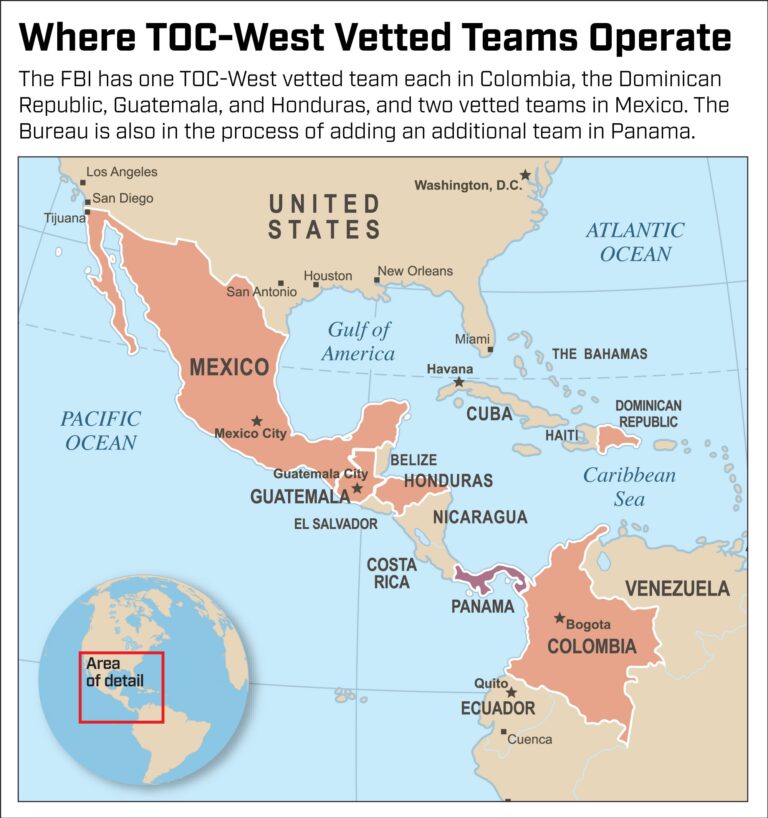
Transnational criminal organizations (TCOs), predominantly linked to Mexican cartels like Sinaloa and Jalisco New Generation, are intensifying their grip on Alaska’s illicit drug trade, importing fentanyl, methamphetamine, heroin, and cocaine from Mexico and the lower 48 states. Recent operations reveal a web of active networks according to official databases from the FBI, DHS, and Alaska Department of Public Safety (DPS). For instance, Operation Take Back America led to charges against 39 defendants in 2025 for drug trafficking tied to transnational groups, while a 2024 bust indicted 54 individuals in a large-scale ring. Smaller operations, such as a 10-defendant group in 2023 and a seven-person network trafficking from California in 2025, underscore fragmented but persistent activity.

“The FBI, HSI, and our partners in Alaska are using a whole of government approach to protect Alaskans from transnational criminal organizations and the scourge of violent crime and deadly drugs they bring to our communities,” said Special Agent in Charge Rebecca Day of the FBI Anchorage Field Office.

Over the past five years (2020-2024), TCO operations have trended upward, mirrored by escalating drug seizures and enforcement actions. Alaska DPS reported a 76% spike in total drug seizures from 324,766 grams in 2023 to 572,536 grams in 2024, with methamphetamine jumping 89% to 148,316 grams and fentanyl rising 13% to 93,853 grams. Arrests reached 175 unique individuals in 2024, fueling 497 court cases. FBI indictments have grown, from groups of 10-53 defendants in 2023-2024 to the 39 in 2025’s operation, aligning with national synthetic opioid trends.

TCOs are lured to Alaska by lucrative profits: drug prices soar several times higher than in the contiguous U.S. due to remoteness and transport hurdles, amplified by high demand in urban centers like Anchorage (78% of seizures) and rural areas. Alcohol bans in 96 “local option” communities spawn smuggling parallels, with seizures surging 400% to 8,504 liters in 2024.

These groups expand by leveraging mail parcels, air travel, and encrypted apps for coordination, recruiting local couriers via social media fakes, and adapting routes through cross-border networks and money laundering. The 2025 launch of the Homeland Security Task Force (HSTF) in Alaska aims to dismantle them through multi-agency efforts.

For more information on the Homeland Security Task Force, visit FBI Anchorage.

Breaking News: DOE Receives Signatures from Over 48,000 Alaskans Fed Up with Ranked-Choice Voting

29

Today, November 5, Repeal Now make a special delivery to the Division of Elections on behalf of Alaskans taking a stand against ranked-choice voting. Although initiative sponsors only needed to gather a minimum of 34,098 signatures, the number of signatures delivered to DOE exceed 48,000. This means approximately 12-13% of registered voters want Alaskans to reconsider rank-choice voting in the 2026 election.

Alaska is one of two states that operates rank-choice voting for state-wide elections. Maine was the first to implement the new voting mechanism in 2018. Alaska followed suit in 2020. 12 additional states plus the District of Columbia have authorized the use of RCV for specific types of elections, but not for state elections.

48,000 Alaskans believe removing RCV and returning to a straightforward voting system will improve election integrity, increase voters’ trust, and improve our great state. What do you think? Let us know if you agree or disagree in the comments below.

Mat-Su Borough Election Results: More Republican Leadership, Less Taxation 

5

Preliminary election results for the Mat-Su Borough are in! On Tuesday, Mat-Su voters decided who would fill 2 assembly seats and 4 school board seats. 5 candidates ran as Republican (1 won assembly, 4 won school board), 2 candidates ran as Nonpartisan (1 won assembly, 1 lost school board), and 3 candidates ran as Undeclared (2 lost assembly, 1 lost school board). No candidates ran as Democrat. 

Additionally, Mat-Su residents voted on four propositions. 89% of voters supported lowering property tax burdens for seniors and disabled veterans. 70% of voters rejected the addition of a 7 cent per gallon tax on fuel. A close majority of voters (56%) agreed to the annexation of existing properties in the service area to Meadow Lakes Road Service No. 27. Proposition No. 4 received zero votes either yes or no. 

Here are the candidates who won and what they stand for: 

Assembly District 1 

Republican Michael Bowles wins 64% of the vote.  

Bowles promises to promote fiscal responsibility, combat unjust property code, and generate industry growth. He expounds his three focuses: 

“1. Conservative approach to government. This means ensuring fiscal responsibility rather than new taxes and debt as well as ensuring ethical conduct, transparency, and accountability is the culture throughout all Borough entities.  

“2. Protect personal liberty and fight infringing property code. I will guide the Borough to utilize or reform existing code as needed to ensure personal liberty is protected for all residents and stop infringement on property owners.  

“3. Support industry growth and robust infrastructure by guiding the growth of a healthy economy through private investors, not more government. A healthy economy, not taxes, builds strong infrastructure.” 

Assembly District 2 

Nonpartisan candidate Stephanie Nowers wins 71% of the vote.  

Although Nowers did not run as either Republican or Democrat, she lists her top values as fiscal conservatism and pro-growth.  

“My focus is to keep government lean, taxes low, and investments strategic, looking for smart ways to grow our economy without sacrificing the beauty, space, and freedom we love about the Valley,” Nowers states. 

Assembly District 4 

Republican Maxwell H. Sumnner ran uncontested and won 92% of the vote. 

He lists his three main priorities:  

“Fiscal Responsibility: I will work to ensure your tax dollars are spent wisely, prioritizing essential services and infrastructure while keeping spending in check. 

“Property Rights: Government is meant to serve the citizens, not regulate them. 

“Economic Growth: We have immense potential for growth, but we need smart policies that foster job creation, support local businesses, and attract industry.” 

School Board District 2 

Republican Kendal W. Kruse wins by 62%. 

Kruse promises to prioritize fiscal responsibility, expansion of school choice programs, and parental rights. “Together, we can build a stronger, more inclusive, and forward-thinking school district that prepares all students for a bright future,” states Kruse. 

School Board District 5 

Republican Brooks Pitcher ran uncontested and won 92% of the vote. 

Brooks focuses on expanding Career and Technical Education, protecting parental rights, promoting American fundamentals and values, ensuring fiscal responsibility, and strengthening school safety. 

“At the end of the day, I’m a parent, laboring to ensure all the students of our district are safe, well taught, and ready to succeed,” states Brooks. 

School District 7 

Republican Lorie A. Colee wins 60% of the vote. 

Colee emphasizes collaboration with parents, school transparency and accountability, and “Alaska’s values of hard work, responsibility, and respect for one another.” Colee states: “My priority is to put students first by keeping the focus on strong academics, teamwork, and fostering both personal and social growth.” 

Alaska’s Permanent Fund: The Great Debate Part VI

6

The People of Alaska vs. The Legislature

Part VI: The People’s Possession: Alaska’s Ownership of the Permanent Fund Dividend 

By Michael Tavoliero

When Alaska became a state, it inherited not only the laws of property, but the deeper moral logic behind them that ownership carries stewardship, and rights are rooted in participation. Under the Alaska Constitution, the people are the true owners of the state’s natural wealth, and the government serves as their trustee. The Permanent Fund Dividend (PFD) is not a grant of benevolence but the continued fulfillment of that trust; an acknowledgment that the people, as beneficiaries and sovereigns, share directly in the management and benefit of the resources held in their name. 

The Moral Foundation: Possession as Legitimacy 

From Roman law to American common law, possession has long been the first evidence of right. The one who holds and uses property openly, continuously, and responsibly acquires a moral title that law eventually recognizes. This is not merely technical doctrine; it reflects an ancient sense of justice. Those who actively tend, improve, or sustain something become, in time, its rightful stewards. 

Alaska’s people have done precisely that. For over forty years, they have received and relied upon the PFD; a tangible, recurring acknowledgment of their participation in the state’s sovereign wealth. The PFD is more than an annual payment; it is an act of civic recognition, reflecting the people’s beneficial possession of Alaska’s resources. Each year’s distribution reaffirmed a living relationship of mutual trust, open acknowledgment, and shared stewardship between citizen and State.  

Adverse Possession and Its Civic Analogy 

Under Alaska law, adverse possession (AS 09.45.052) allows title to property to transfer to someone who has used and occupied it openly, continuously, and without interruption for the statutory period. The purpose is practical and fair: when real-world use has been settled and visible for a long time, the law eventually treats the possessor as the rightful owner. In short, use ripens into right. 

In the same way, Alaskans have openly and continuously received and relied on the Permanent Fund Dividend for more than forty years, with the full and repeated affirmation of the State. Every annual appropriation and distribution has reinforced that relationship. By any equitable measure, this long, public, and beneficial possession has matured into a civic ownership interest — not as a gift from government, but as a right confirmed through practice and trust. 

While AS 09.45.053 prevents adverse possession from transferring title to state land, the principle behind the doctrine remains firmly recognized in Alaska law: long-standing, open, and unchallenged use settles expectations and stabilizes ownership. As the Court explained in Alaska National Bank v. Linck, 559 P.2d 1049, 1052 (Alaska 1977), possession that is “continuous, uninterrupted, nonpermissive, hostile, adverse, exclusive, actual, open, notorious, and visible” matures into right. And in Shilts v. Young, 567 P.2d 769, 771 (Alaska 1977), the Court stressed that these conditions exist to bring disputes to rest— to quiet title and prevent governments or others from undoing what has long been settled. 

Quiet title simply means formally recognizing ownership where possession has already proven it. 

Thus, even though the statute does not allow adverse possession to transfer state land, the equitable rule remains: long, open, and acknowledged possession becomes a recognized right. The people’s uninterrupted, publicly affirmed experience with the PFD satisfies that principle— a right matured through continuity, reliance, and the State’s own long-standing acknowledgment. 

Extending the Principle Beyond Land 

The law’s logic extends beyond real property. The spirit of adverse possession, that enduring, visible, and beneficial use creates legitimacy, applies equally to other forms of rights that evolve through practice and public reliance. Alaska’s courts have repeatedly affirmed this concept. 

In Ravin v. State, 537 P.2d 494 (Alaska 1975), the Alaska Supreme Court held that the right to privacy in the home was not created by statute but was a long-exercised right possessed by the people and merely recognized by the Constitution, and that the State could not later reclaim what it had long acquiesced to. 

Likewise, in Pierce v. Society of Sisters, 268 U.S. 510 (1925), the U.S. Supreme Court recognized parental authority over education as a fundamental liberty beyond the reach of the State, because it had been continuously and deeply rooted in social practice. 

And in Sturgeon v. Frost (I & II), 577 U.S. 424 (2016); 139 S.Ct. 1066 (2019), the U.S. Supreme Court reaffirmed Alaska’s sovereign possession of its navigable waters, holding that long, open, and continuous state jurisdiction—grounded in historic entitlement and public use—could not be displaced by later federal claim, effectively confirming a form of sovereign title matured through uninterrupted possession. 

Together, these cases confirm a consistent jurisprudence: rights long exercised, openly affirmed, and never revoked become part of the constitutional fabric. Whether over land, liberty, or sovereignty, practice ripens into principle, and principle into right. 

The People’s Possession of the PFD 

The Permanent Fund Dividend is not land. It is a living expression of Article VIII of the Alaska Constitution, which directs that all natural resources “be utilized, developed, and conserved for the maximum benefit of the people.” It is the distributive mechanism through which that constitutional trust is fulfilled. The Permanent Fund itself is the corpus; the people are the beneficiaries; and the State is the trustee. 

For more than forty years, the people have received their share, actual, open, and continuous possession, and the State has reaffirmed that relationship through legislation, administration, and public communication. This reciprocal acknowledgment has given rise to a matured possessory right; a civic title formed through practice and reliance. 

In this light, the people’s relationship to the PFD mirrors the equitable foundation of adverse possession. The people have acted as continuous, beneficial possessors of their share of the Fund’s earnings, while the State, as trustee, has administered those distributions without interruption. In equity, such possession cannot be erased by later discretion or budgetary politics. The law of property, and the morality that underlies it, does not allow title to revert to neglect once the possessor has made it their own. 

The Equitable Claim and Civic Title 

Though the statutes of adverse possession do not apply to State assets, the doctrine’s spirit does. It teaches that law must reconcile with reality: that possession long exercised and openly acknowledged acquires the dignity of ownership. The Permanent Fund Dividend, sustained by four decades of public reliance and legislative affirmation, embodies that principle in practice. 

The people’s unbroken participation in the Fund’s earnings constitutes a de facto civic title, grounded in equitable reliance and constitutional trust. It is a right born not of grace, but of continuity earned by participation, affirmed by time, and held in the mutual stewardship of Alaska’s citizens. 

Just as courts have held that adverse possession “quiets” long-settled ownership, so too must the people’s possessory claim to the PFD be quieted. It is confirmed as part of Alaska’s constitutional covenant between the State and its sovereign citizens. The PFD is not a temporary policy but a recognized expression of the people’s beneficial ownership, protected by both law and equity. 

Conclusion 

The people’s relationship to the PFD reflects Alaska’s founding promise: that the wealth of the land shall remain the heritage of its people. Over forty years of continuous, open, and mutual recognition have transformed that promise into living title; a civic possession as legitimate and enduring as the land itself. The moral, legal, and constitutional principles that underlie adverse possession converge here, affirming that what the people have long held, the State may not justly reclaim. 

Check out previous articles in The Great Debate: The People of Alaska vs the Legislature: 

Part I: Inflation-Proofing: Where’s the Problem?  

Part II: Follow the Money 

Part III: The 49 Forward Plan Takes the Permanent Fund Backwards   

Part IV: The PFD and the Search for Wisdom

Part V: Ghost Busting: Dispelling Anti-PFD Phantoms

Chris Story: Property Tax – a Quiet Theft

31

The Ring: A Quiet Taking
A Parable by Chris Story

Margaret sat in her modest kitchen and wrapped her arms tightly around herself, as if holding her own shoulders might keep her upright. She let out a slow breath that had been trapped inside her since the letter arrived last week.

Today was the day.
Mayor Mathis was coming at 11:45 a.m.

Her eyes drifted to her left hand. The ring sat proudly on the third finger. Four carats of fire and light, handed down through generations. Her mother had received it from her grandmother, and Margaret always believed she would someday slip it onto her granddaughter Elise’s finger.

But that dream ended with a certified envelope from Borough Hall.

She had fallen behind in her diamond tax.

At first, she laughed when they created the Diamond Assessment Office. A new department, funded with public money, established to count and value every precious stone within the borough limits. Every household was required to report jewelry, heirlooms, even loose gemstones. The value, they said, was necessary to ensure fairness, revenue, and community benefit.

Margaret hardly noticed the early years of the tax. It began small, just a few dollars annually. Then it rose. Then it rose again. After the Ukrainian Revolution sent global diamond prices higher, the borough reassessed her ring and sent a bill she could not pay.

Now the ring that had survived wars, depressions, and a century of family celebrations would be confiscated by the government for failure to pay a tax on something she already owned.

The clock ticked across the quiet kitchen.

11:41.

She wiped down the oak table for the sixth time that morning. Birthday cakes, family dinners, grandchildren’s finger paintings, and her husband’s last breakfast all lived in that wood grain. She brewed a fresh pot of coffee and set two cups out of habit. Being gracious cost nothing.

A car door closed outside. Slow footsteps came up the porch.

There was a knock.

Margaret opened the door to find Mayor Mathis wearing a long wool coat and the kind of smile people use when pretending to be a friend. He stepped inside without waiting to be invited and glanced around the small, tidy kitchen.

“You always keep such a lovely home,” he said gently, his eyes drifting toward the ring. “May we sit?”

They did. He did not touch his coffee.

“As you know,” he began, folding his hands, “you have been behind on your diamond tax for eight months. Due to recent market fluctuations, the assessed value of your ring has increased substantially.”

“I know,” she whispered. “I had hoped for a payment plan. I have medical bills. I live on retirement income. I am doing the best I can.”

He nodded with the polite sadness of a man offering condolences after a funeral.

“The law requires that delinquent diamond taxes be settled. If payment cannot be made, the property must be surrendered as compensation. It is not personal. It is policy.”

Margaret removed the ring. Her hand trembled. A thin pale circle marked where something precious once rested.

Mayor Mathis pulled a velvet pouch from his coat. She placed the ring inside. He tightened the strings.

“There,” he said. “Your debt is satisfied.”

He rose, walked to the door, looked back at her with a soft smile, then left.

Margaret sank into her chair. The house felt larger and emptier than it ever had. A piece of her family was gone, not lost, not misplaced, not stolen. Taken.

Afterward

No one is literally coming for your ring. But make no mistake. You may have to sell your jewelry, drain your savings, or sacrifice family heirlooms just to pay a tax bill on something you already own. And if that is not enough, the government will take your home. This is not hypothetical. It is written into law in every state. Miss your property tax long enough and the very ground you paid for can be seized and sold.

A tax on property is not a tax on wealth. It is a perpetual rent you must pay simply to keep what is already yours. It punishes seniors on fixed incomes, families trying to stay afloat, and anyone whose home value has risen without their consent or participation.

Margaret lost a ring. Real people lose homes.

It is time to end all property taxation before more families lose what they have already earned, already paid for, and already own.

Disclaimer: The views and opinions expressed in this column are solely those of the author, Chris Story, and do not represent the views of Story Real Estate, its licensees, agents, or employees.

Our Children’s Future: Not the Government’s Job, Not the AI Industry’s Job, But Parents’ Responsibility 

6

Due to the rapid development of AI, people can accomplish everyday tasks with an unprecedented amount of ease. AI will write for you, check your spelling, help you develop ideas (aka thinking), compile research, create images and music, and even offer emotional support. Although AI is not intrinsically good or evil, the way individuals choose to incorporate AI into their lives does have moral consequences.

Mr. Keith Dobson recently wrote an opinion piece advocating for AI integration in the government to help citizens more easily access government data. The piece sparked robust conversation in the Must Read Alaska comments section. Mr. Dobson responded to concerned readers by agreeing that AI integration in the government could be harmful if done the wrong way. “Your caution is essential,” he wrote. “Concerns about system failure and dehumanization remind us that powerful tools can cause harm if misused.” 

Although Mr. Dobson’s proposal has merit, he also admits the caution necessary to prevent the misuse of AI. While we should continue dialogue about potential AI integration in the public sphere, we must also take time to reflect on how much are we are willing as individuals to allow AI to impact our personal lives and shape our children’s minds.

I could list numerous examples of dehumanization caused by individuals’ inappropriate use of AI: a teenage boy encouraged by his AI “friend” to take his own life, a woman celebrating her engagement to her AI “fiancé,” an alarming number of students submitting AI-written essays, etc. AI itself is not the root cause of these troubling stories. AI is a tool that can be used for good, but it can also be used as an echo chamber that furthers mental illness and leads to tragedy, an artificial replacement for genuine human connection, and a shortcut that stimies kids’ creativity and intellectual development.

What is the solution? The answer to that question begins with who is responsible for the solution. The foundation of a society is the family, not the government. Rather than calling for more government oversight or pushing AI producers to better regulate their product, parents need to play an active role in helping their children develop self-discipline. Parents must set an example of the principle that human beings have free will and the power of free will comes with great responsibility. We must actively train our wills to desire good things and moderate our appetites and desires.

Our world contains innumerable opportunities for children to weaken their minds, their bodies, and their souls. Brain rot fills every corner of the internet. Excessive sugar, highly processed foods, and the couch-potato mentality are cheap and accessible. What about our kids’ souls? In popular culture today, cheating on your homework means you are “getting ahead,” working “smarter” means choosing the easiest route, objective truth is often told to take a hike, love is whatever makes you feel good, and the individual is the center of the universe. 

It is not the government’s job to protect you or your children from making bad choices, whether with food or with the use of AI. The solution lies with parents. By modeling hard work, healthy friendship, genuine love, and the ability to choose what is good over what is easy, parents can cultivate self-disciple in their children and raise them to be capable individuals. AI is here and it is here to stay. The choice that remains is how much will we as individuals, not governing bodies, let AI imitate and replace human thinking, creativity, and relationships?