Sunday, December 21, 2025
Home Blog Page 41

Drug trafficking case shows how international cartel reaches from Mexico to remote Alaska towns

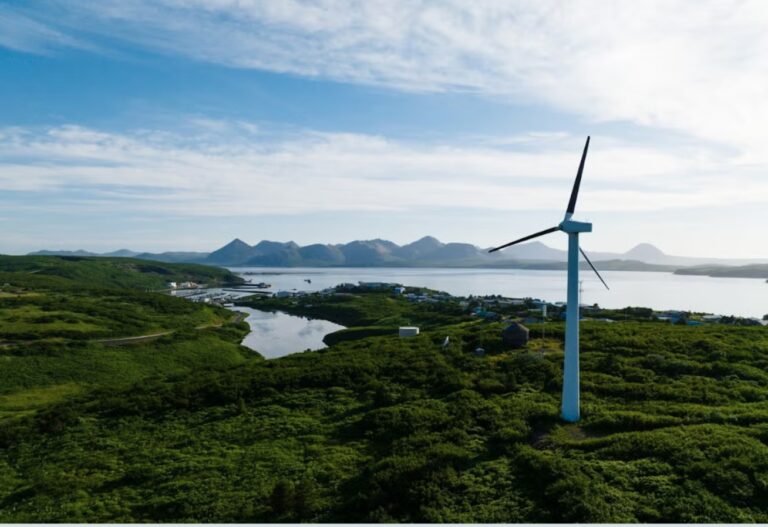
With fewer than 1,000 residents, Sand Point is the kind of place where people know each other by name, and where the rhythms of life are shaped by the sea. On Popof Island at the entrance to the Bering Sea, the community is home to the largest commercial fishing fleet in the Aleutians. Almost half its residents are of Aleut descent and summers bring an influx of workers when commercial salmon fishing is in full swing.

For a town this size, the arrival of thousands of fentanyl pills and other narcotics has devastating consequences. Yet according to federal prosecutors, Sand Point was one of several Alaska communities targeted by a drug trafficking ring that spanned from Mexico to Anchorage and through correctional facilities in Alaska.

Last week, Richard Frye, 36, of Anchorage, pleaded guilty to conspiring with others to distribute fentanyl, methamphetamine and heroin on behalf of the organization, allegedly run by a California inmate.

According to court documents, Frye and co-conspirators Tiffani Couch, 31, and Anna Petla, 25, of Dillingham, were intercepted in March 2023 while attempting to move thousands of fentanyl pills bound for Sand Point.

Petla was stopped at Ted Stevens Anchorage International Airport carrying nearly 3,000 blue fentanyl pills and more than 80 grams of methamphetamine in her backpack. Outside the terminal, law enforcement detained Frye and Couch in a vehicle where they discovered another 500 fentanyl pills and more controlled substances. It was enough to kill the entire town several times over.

In June 2023, Frye and Couch were stopped again by police in Anchorage, this time with roughly 1,400 fentanyl pills, other narcotics and loaded ammunition magazines. Authorities say Frye intended to distribute these drugs within Alaska as part of the trafficking enterprise.

Even incarceration did not stop Fry. Court records show he attempted to smuggle fentanyl and suboxone into the Anchorage Correctional Complex by ingesting packages of drugs wrapped in condoms and cellophane, with the intent of distributing them inside the facility. Days later, correctional officers caught him trying to carry in 70 suboxone strips.

Prosecutors say Frye also moved thousands of dollars in and out of Alaska through digital money transfers, linking him to others in the organization. He faces up to 20 years in prison at his sentencing scheduled for Nov. 13, 2025.

Co-defendants have also pleaded guilty: Couch on May 9, and Petla on June 4. Both await sentencing. Petla now has three hots and a cot at Hiland Mountain Correctional Center.

The Department of Justice says more than 50 people have been charged in the conspiracy, which moved fentanyl, cocaine, heroin and methamphetamine from Mexico through Oregon and California and into Alaska between February 2022 and July 2023. Drugs were allegedly distributed to Anchorage, Dillingham, Fairbanks, Goodnews Bay, Ketchikan, Kodiak, New Stuyahok, Palmer, Sand Point, Savoonga, Sitka, Togiak, Tyonek and Wasilla.

At the center of the ring, prosecutors allege, was 57-year-old Heraclio Sanchez-Rodriguez, a California inmate who directed operations using contraband phones inside prison. Authorities say he coordinated with suppliers in Mexico and associates in the Lower 48, while recruits in Alaska, including inmates at Hiland Mountain Correctional Center, helped distribute narcotics across the state.

Christina Quintana, 38, an inmate at Hiland Mountain during the entirety of the conspiracy, was known as one of Sanchez-Rodriguez’s “wives,” a title reserved for high-ranking members of the enterprise. Her role in the conspiracy was to recruit soon-to-be-released inmates from Hiland to be distributors of the drugs. Upon release, the newly recruited members received packages of drugs to distribute the drugs across Alaska. Quintana once shot the kneecaps out of a woman in Sitka over an unpaid drug debt.

Defendants in this case include:

1. Alison Giacullo, 40
2. Amber Young, 28
3. Amy Garcia, 32
4. Angela Jasper, 39
5. Anna Petla, 24
6. April Chythlook, 28
7. Ashley Northrup, 35
8. Catherine Phillips, 40
9. Christina Quintana
10. Cloe Sam, 26
11. Colleen McDaniel, 68
12. Della Northway, 28
13. Desiree Green, 45
14. Douglas Vanmeter, 32
15. Edward Ginnis
16. Elroy Bouchard, 58
17. Erika Badillo, a.k.a “Erica Madrigal,” 42
18. Erindira Pin, 44
19. Frieda Gillespie, 50
20. Gust Romie, 36
21. Heraclio Sanchez-Rodriguez, a.k.a “Charlie,” “Marco” and “Danny Sanchez”
22. James Schwarz, 41
23. Josi Sterling, a.k.a “Josi Philbin,” 35
24. Julia Brusell, 41
25. Kaleea Fox, 24
26. Karen Kasak, 51
27. Karly Fuller, 30
28. Kevin Peterson II
29. Khamthene Thongdy, 45
30. Krystyn Gosuk, 33
31. Larry Marsden, 41
32. Lois Frank, 64
33. Mario Klanott, 37
34. Michael Kohler, 35

35. Michael Soto, 33
36. Michelle Pungowiyi, 49
37. Naomi Sanchez, 39
38. Pasquale Giordano, 45
39. Patricia Seal-Uttke, 30
40. Pius Hanson, 40
41. Richard Frye, 35
42. Rochelle Wood, 38
43. Samantha Pearson
44. Sara Orr, 32
45. Shanda Barlow, 34
46. Shania Agli, 25
47. Stormy Cleveland, a.k.a “Stormy Powell,” 37
48. Tamara Bren
49. Tamberlyn Solomon, 25
50. Tiffani Couch, 30
51. Twyla Gloko, 36
52. Valerie Sanchez, 26
53. Veronica Sanchez, 49

Paul Bauer: Why Alaska needs to rethink agriculture’s place in government

By PAUL A BAUER JR.

Alaska Rep. Kevin McCabe and several Republican gubernatorial candidates have floated the idea of creating a stand-alone Department of Agriculture. It’s an idea worth debating, because the issue isn’t just about farming. It’s about how Alaska defines its priorities and manages its resources.

Currently, agriculture sits inside the Alaska Department of Natural Resources as one of six divisions, alongside Forestry, Geological and Geophysical Surveys, Mining, Land and Water, Parks and Outdoor Recreation, and the most prominent: Oil and Gas. Most of these divisions focus on managing and regulating natural resources that exist without human intervention, including timber, minerals, water, land, and energy.

Agriculture, by contrast, is different. It is not simply “discovered” in nature. It’s created. It’s the product of human labor, planning, and investment. Alaska’s Division of Agriculture works to open land for farming, finance farmers and processors, develop plant materials, educate on conservation, assist with marketing, and certify farm products. This is more akin to an economic development and marketing agency than a traditional resource-management division.

And that raises a key question: What is a natural resource? Most definitions agree that a natural resource is something that exists in the environment without human involvement—sunlight, water, soil, fish, forests, minerals. These resources are valuable because they are essential to life and economic activity, and they come in diverse forms. Agriculture uses these resources, but it is not one itself; it is a human-driven system that transforms those raw materials into food.

This distinction matters. Food and economic security are among Alaska’s most critical needs. Yet under the current structure, agriculture is housed within a department whose core mission and culture are focused on managing unaltered natural resources. The result? Agriculture risks being an afterthought, competing for attention and funding against the heavyweights of oil, gas, and mining.

Suppose we accept that agriculture is not merely a subset of natural resources but a vital pillar of Alaska’s economy and survival. In that case, it deserves its own seat at the table.

A Department of Agriculture would not be “just another bureaucracy.” It would be an investment in Alaska’s ability to feed itself, grow its rural economies, and reduce dependence on imported food.For a state with vast land and untapped agricultural potential, the stakes are clear.

The question is whether we’ll treat agriculture as a side note in the resource playbook or as the strategic priority it truly is.

Paul A Bauer Jr. is a former Anchorage assemblyman and Alaska political advocate.

Glacier’s dam burst severed fiber line, leaving Haines, Skagway with weak or no cell phone service

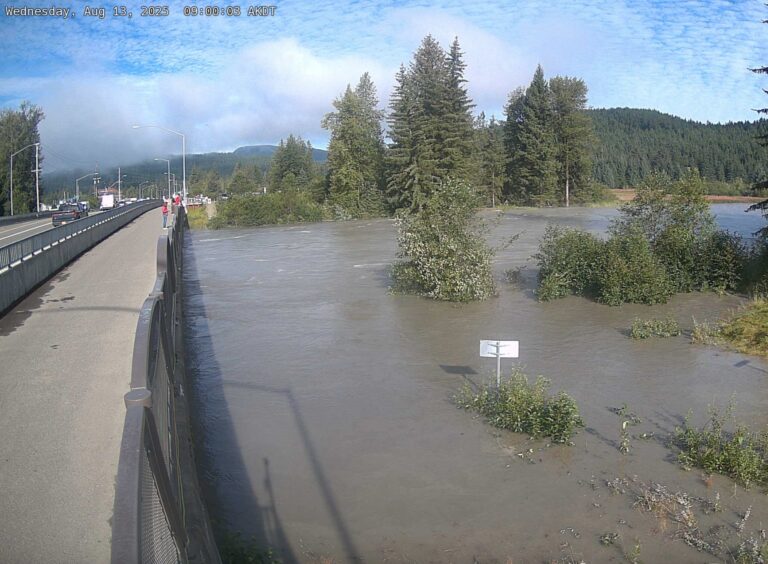
Residents of portions of the Mendenhall Valley in Juneau, as well as Haines and Skagway have been dealing with weak or no cell service this week after a fiber line was severed during Juneau’s destructive glacial outburst flood on Aug. 13.

The flood, triggered by the release of water from Suicide Basin into the Mendenhall River, damaged critical communications infrastructure, leaving major carriers scrambling to restore service to northern Southeast Alaska. Customers with AT&T, Verizon, GCI, and other providers have reported widespread outages and interruptions. Service has been impacted on the Back Loop Road in Juneau, where the Mendenhall Back Loop Bridge was also damaged by the flooding, with repairs scheduled to start Saturday.

AT&T customers in Skagway are expected to remain without service until approximately Aug. 28. Other carriers have not provided clear restoration timelines but have acknowledged that the fiber break is to blame.

Both Haines and Skagway rely heavily on the single fiber route through Juneau for connectivity. The outage has not only left residents without reliable mobile service but also raised concerns about public safety and communications in the event of emergencies. 911 calls in Skagway will still reach the local police station.

The Aug. 13 flooding in Valley neighborhoods along the Mendenhall River was mitigated by large Hasco barriers put in place that prevented overflow to a certain extent, but may have made the main channel of the river more powerful and damaging to the cable that runs across it near the mouth of the river.

Trump, Putin meet for three hours in Anchorage, announce ‘progress’ toward peace plan

28

President Donald Trump and Russian President Vladimir Putin, with members of their respective delegations, met Friday for close to three hours at Joint Base Elmendorf-Richardson, emerging to say they had made progress toward a potential peace plan to end the conflict in Ukraine.

At a joint press conference following the closed-door talks, both leaders declined to offer specifics on the framework they discussed, but Trump said he would reach out to NATO leadership and Ukrainian President Volodymyr Zelenskyy in the coming days.

He said he could not broker the actual deal that was discussed today, but hoped it can be forged between Ukraine and Russia.

“I’m going to start making a few phone calls and tell them what happened, but we had an extremely productive meeting and many points were agreed to. There are just a very few that are left,” Trump said.

Putin, speaking through an interpreter, expressed optimism about the talks but cautioned that the process could be undermined by other nations. He said he hopes that other European nations don’t “throw a wrench” in the process. He said that if Trump had been president, there would have been no war.

Neither leader took questions from reporters after delivering their statements. The two then left the podium, with Trump acknowledging the press corps with a wave.

The meeting was the cornerstone of Trump’s visit to Alaska, where the two leaders have been engaged in high-stakes diplomacy aimed at halting a war, now in its fourth year.

Trump rally in Anchorage draws happy, energetic crowd, while peace talks begin just a few miles away

Supporters of President Donald Trump and those hoping Ukraine-Russia peace will be negotiated between the president and President Vladimir Putin showed up at 11 am at the corner of Seward Highway and Northern Lights Blvd. in Anchorage, at the same time that the peace talks were set to begin on Joint Base Elmendorf-Richardson.

About 180 people joined the rally with flags and banners promoting America, Trump, and peace.

In other parts of town, Democrat protests have been waged against peace in Ukraine by those who believe peace can be achieved only through prolonged war and more American spending on the war machine. Signs of protest against Trump’s efforts to bring peace could be seen around the city all week.

At the pro-America rally on Friday, a half dozen marked and unmarked police vehicles were stationed nearby in the Midtown Mall Parking lot. Across the street, a disheveled vagrant encampment littered the corner, a normal scene at the intersection in this era of Anchorage’s vagrant crisis.

A candidate for governor had earlier pulled up a motor home to assist. Bernadette Wilson, a Republican who declared for governor in May, was serving free water, coffee, and donuts, wearing a sweatshirt with an American flag on it.

Bernadette Wilson speaks to Alaskans attending the pro-America rally at the corner of Northern Lights Blvd. and Seward Highway.

Meanwhile, at JBER, the meetings had begun, as seen in this video:

Gov. Mike Dunleavy, who had a meeting scheduled with Trump while he is in Alaska, commented, “It’s no accident that President Trump picked Alaska for this meeting; Alaska exudes U.S. strength and energy independence.”

Carmela Warfield, chairwoman of the Alaska Republican Party, holds a sign aloft during the rally.

In the middle of the protest area, an infiltrator had come earlier and, in chalk, written “86 47” which is a code for those who wish to do harm to the president. The rally participants didn’t even notice it for a long time, but when they did, they doused the offensive phrase with water.

Someone from the pro-war side used chalk to mark up the sidewalk where the peace advocates were expected to be standing. The peaceniks didn’t notice it for most of the duration of the event, as they were focused on their sign waving and fellowship.
Finally, it was doused with water.

Trump and Putin land at JBER: Video

President Donald Trump and Russian President Vladimir Putin landed at Joint Base Elmendorf-Richardson Friday morning, with Putin arriving from Moscow by way of a refueling stop in Magadan in Russia’s Far East.

Trump was accompanied aboard Air Force One by senior adviser Dan Scavino, part of the president’s close-knit team traveling to Alaska for the summit. Others on Air Force One include Monica Crowley, as earlier reported by Must Read Alaska.

The two leaders are meeting at the base to negotiate a potential end to the Ukraine conflict, now in its fourth year. Trump has said his primary goal is securing a ceasefire, although he has also signaled willingness to discuss possible “land swapping” as part of a settlement framework.

The summit schedule includes a private one-on-one meeting with translators, followed by expanded talks involving members of each leader’s delegation. The day will conclude with a joint press conference. Discussions are set to begin around 11:30 am local time and wrap up later the same day.

Also on the schedule is a meeting between Gov. Mike Dunleavy and the president, with the likely topic being the gasline that both are committed to building from the Arctic.

A rally in support of the president’s efforts for peace is set to begin at the Midtown Mall, on the corner of Seward Highway and Northern Lights Blvd.


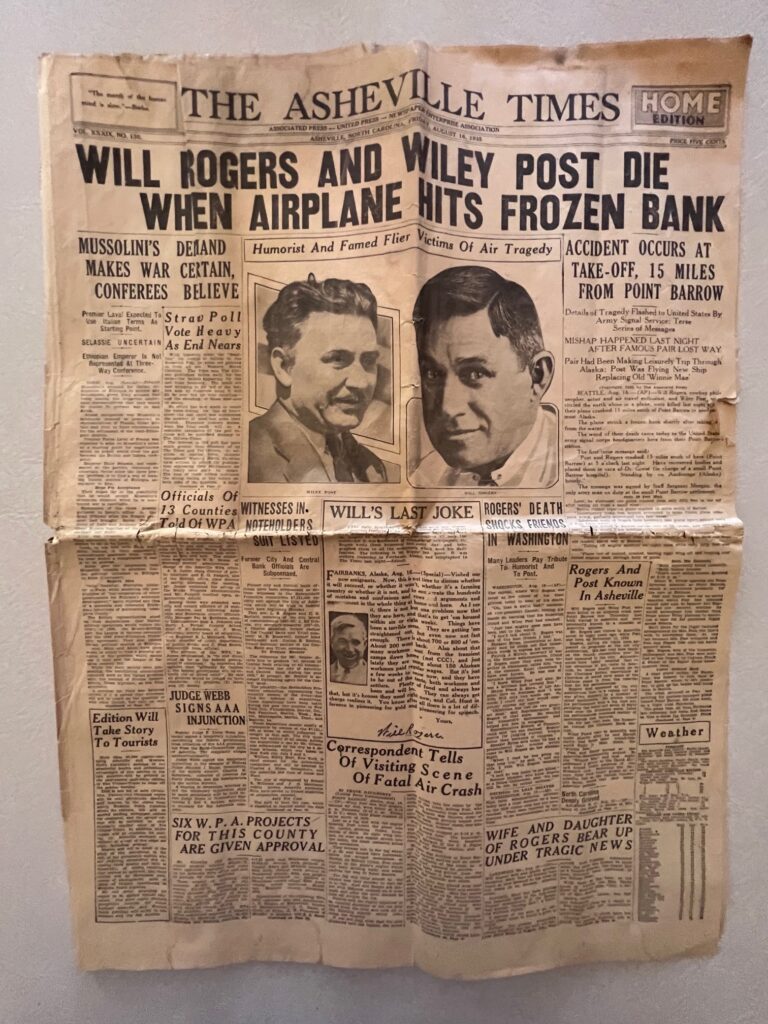
90 years ago today, America lost a cowboy philosopher and renown aviator in Alaska

On Aug. 15, 1935, two of America’s most famous figures — humorist Will Rogers and aviation pioneer Wiley Post — were killed when their small plane crashed near Utqiaġvik, then known as Barrow.

Rogers, 55, was a celebrated writer, stage performer, and social commentator whose wit and wisdom made him one of the most beloved public figures of his era. Post, 36, was a record-setting pilot best known for being the first to fly solo around the world and for his high-altitude flight research.

The pair were on an aerial tour of Alaska in Post’s experimental Lockheed Orion-Explorer, which had been fitted with pontoons for water landings. On that foggy August afternoon, their plane went down just after takeoff from Walakpa Bay, a short distance southwest of Barrow.

The tragedy stunned the nation. Rogers was mourned as the country’s ambassador of good will. He had starred in over 70 films, wrote a syndicated newspaper column, and was a national figure for his sharp commentary on American life. At the time of his death, he was 55 and was at the height of his popularity.

Post was remembered as a fearless innovator in aviation. In Alaska, the crash site became a landmark, and both men are honored with memorials in Utqiaġvik.

Their final flight 90 years ago today is a memorable page in Alaska’s aviation history, in a state known for having the highest number of private planes per capita and more pilots per capita than any other state.

Curtains open on political theater in Alaska, as Trump and Putin take center stage

The stage is set in Anchorage for today’s high-stakes summit between President Donald Trump and Russian President Vladimir Putin, with both leaders now en route to Alaska. Here are some news nuggets from the past few hours:

  • Monica Crowley, Chief of Protocol of the United States since May 2025 in the second Trump administration, is aboard Air Force One traveling with the president and his team as they headed north for the meeting.
Monica Crowley aboard Air Force One.
  • Putin, meanwhile, made a final refueling stop in Magadan, a Russian city on the Sea of Okhotsk in the country’s far east. There, he toured a local factory, met young hockey players, and laid flowers at a memorial honoring U.S.-Soviet cooperation during World War II. Magadan has been a sister city of Anchorage since 1991. In 2023, the Anchorage Assembly voted to suspend the sister city relationship due to the Russian government’s actions in Ukraine.
  • Reports say Trump plans to greet Putin on the tarmac when the Russian leader’s aircraft touches down in Anchorage around 11 am local time. That report comes from British news sources. It has not been reported where Putin’s plane will land, but it is likely to land at Ted Stevens Anchorage International Airport and be positioned in the South Park area.
  • Trump was asked about a “land swap” concept, where Ukraine and Russia could exchange territory as part of a peace compromise. Trump said, “I’d have to let Ukraine decide.” Russia currently occupies nearly 114,500 square kilometers, about 19% of Ukraine, according to open-source battlefield maps, including Crimea and swaths of eastern and southeastern territory. Ukraine President Zelenskyy insists Ukraine will never recognize Russian control over its land; most nations recognize its 1991 borders.
  • The Russian delegation has brought both symbolism and political trolling to Anchorage. Foreign Minister Sergei Lavrov arrived in Anchorage wearing a T-shirt emblazoned with “CCCP,” the acronym for the Soviet Union, a gesture widely interpreted as a jab at the United States. Lavrov wore the shirt in public and conducted media interviews in it ahead of today’s talks.
  • Some Russian journalists in Anchorage are staying in makeshift quarters inside the lobby of the Alaska Airlines Center at the University of Alaska Anchorage. Instead of hotel rooms, they have been given small cots — two per cubicle and their room walls are curtains. Meanwhile, the Lakefront Anchorage Hotel is reported to be packed with Russian officials and staff.
  • Among other sightings: Dmitry Peskov, Putin’s press secretary, was spotted dining at Jens’ Restaurant in Midtown Anchorage. And five members of the Russian entourage were seen at a Walmart purchasing vodka, Johnnie Walker Black, and Heineken.

With hours to go before the summit, we’ll provide more updates throughout the day at Must Read Alaska.

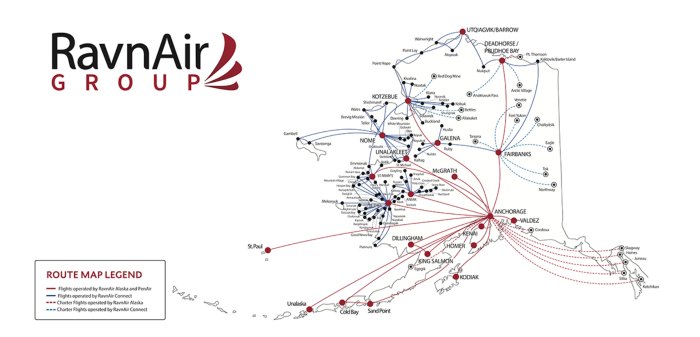
Ravn Alaska ends service, folds into New Pacific Airlines

Regional carrier Ravn Alaska has ceased flight operations across the state, according to a message posted Thursday on the company’s website.

“We appreciate the years of service we were able to provide to Alaska communities,” the statement reads. “While we are no longer operating flights in Alaska, we’re grateful for the trust you placed in us during our time serving the region.” The company offered no further explanation for the shutdown.

For decades, Ravn Alaska served as a lifeline between many rural and urban communities, transporting passengers, mail, and cargo across a vast network. But the airline has struggled in recent years.

In 2023, Ravn filed for Chapter 11 bankruptcy protection, a move attributed in part to the lingering financial damage from pandemic-era policies and the unionization of pilots.

The challenges deepened in February 2024, when the company laid off about 130 employees — more than a third of its workforce. CEO Rob McKinney departed soon after, and the airline brought in Southern California businessman Tom Hsieh to lead the company.

As of Thursday, Ravn’s website contained only the closure announcement, with no mention of future plans, other than saying the company was folded into New Pacific Airways, a company that is trying to launch Boeing 757 service in the Lower 48 and internationally.