Saturday, December 27, 2025
Home Blog Page 1723

Brena’s ‘Our Fair Share’ drum beat

STICKING IT TO THE JOB CREATORS

On a crisp Saturday morning, a panel of white-haired men sat on the stage of the Wendy Williams Auditorium at University of Alaska Anchorage and answered each other’s questions about the state’s budget problems.

Libertarian-leaning United for Liberty had manage to push its way onto the agenda, with a cameo on the morning panel by Ric Davidge. Davidge was the only voice to express the need for spending cuts at the panel, which was part of a symposium hosted by Alaska Common Ground, a left-tilting organization that masquerades as a neutral public policy group.

Run by hardcore Democrat Cliff Groh, when Common Ground puts on a symposium, rest assured there won’t be a lot of diversity of thought. There was not a lot of diversity anywhere, if we’re perfectly frank, at least in the morning sessions.

Commissioner of Revenue Randall Hoffbeck started off the  discussion by proposing the governor’s approach of modest cuts and immodest new revenues, while former Senator Rick Halford argued against cutting the Permanent Fund dividends, and Rep. Paul Seaton poured a cup of his own blend of taxes and Permanent Fund restructuring that would take from the rich and give to the poor.

Halford, we note, recently broke with Gov. Bill Walker on the governor’s unilateral grab of half of every Alaskan’s Permanent Fund dividend. Halford also recently all but declared the Alaska LNG gasline project dead — for now. Once an ally of Walker, he’s returned to the fold of the loyal opposition; he did not seek reappointment to the Alaska Gasline Development Corporation board.

Then there was Robin Brena.

ROBIN ‘SUE THE BASTARDS’ BRENA

Robin Brena is an Anchorage oil and gas attorney who has made a luxurious life for himself by suing energy companies. He has no official role in the Walker Administration, although he chaired the governor’s transition team oil and gas committee. He bought the governor’s law practice for an undislosed amount.

Brena is widely regarded as Gov. Bill Walker’s surrogate voice — in elections and in policy.  When Brena’s lips move, the voice you hear is Gov. Walker’s.

Brena’s appearance on the panel today was an acknowledgement that since he is spending tens of thousands of dollars to unseat Republicans during this election cycle (and the last one), what he has to say is very, very important.

He spoke rapidly and repeatedly about how Alaska is not getting “our fair share” of oil proceeds. It was a phrase he made sure he said every time he had the microphone.

Not quite Tourrette-like, it was a mantra like “It’s our oil” that Brena wanted to make sure everyone heard. And so he repeated it.

In fact, he said “our fair share” eight times in the span of the 10 minutes that he possessed the microphone. An astute observer pondered aloud whether he intends to start a citizens’ initiative using that name, since he’s trying to make it stick in the public’s mind.

BRENA CALLS FOR 400 PERCENT TAX HIKE ON OIL

What Brena proposes is that the oil sector should be taxed to make up the entire state budget deficit.

At today’s prices, he’s proposing a 400 percent tax increase.

“We are getting less than our fair share of petroleum revenues,” he said. “Before we go anywhere else [for revenue] we should get it from the oil exported from Alaska…Our historic fair share went from 35 percent in 2012 down to 8 percent. This is unsustainable.”

Our fair share is $2-3 billion more than we are getting right now,” he continued.

Brena paused briefly in his theme to also promote a state income tax of 15 percent of a payer’s federal tax liability, “so citizens of Alaska pay directly and are more responsive to spending by state government.”

But all the other sources of revenue, he said “don’t get us an additional penny of our fair share of petroleum wealth.”

When his turn came to ask a question of the rest of the panel, Brena persisted with his theme: Did anyone on the panel believe that we should reduce spending, raid the Permanent Fund dividend or levy statewide taxes when we’re not yet “getting our fair share of oil?”

“My question is that we need someone who will stand up for Alaskans and get our fair share of petroleum revenue and not to continue this system,” he said.

The “our fair share” theme is also found in Brena’s latest opinion piece published today by the Alaska Dispatch News. 

In it, he proposes completely restructuring oil taxes once again. The last restructuring was with Senate Bill 21, which passed in 2013, was then challenged at the ballot box by Brena and the Democrats. SB 21 was upheld by voters.

Brena now proposes returning to the prior tax structure, which was a job killer:

  • Increasing the base rate for the major legacy fields and for harvesting the resource.
  • Eliminating credits (taken as deductions and paid) for all but the most challenged fields.
  • Eliminating loss carryforwards.
  • Eliminating the “new oil” definition or reducing it to only the most challenged fields (which would not include Point Thomson).
  • Increasing progressivity, which is exactly opposite of what voters passed when they approved SB 21 with “No on 1” in 2014.
  • Increasing the number of state auditors and state lawyers to go after producers for revenue.
  • Insisting on full financial disclosure by producers operating in Alaska.

SURPRISE! ACES IS BACK

What Brena is proposing is the same things that killed jobs and prosperity for Alaskans before, with the bill known as ACES. That legislation depressed investment in Alaska, and it took SB 21 to bring work back to the oil patch.

Those who wonder what’s next in taxes in Alaska will want to read Brena’s opinion piece in the newspaper, because within it is found the roadmap for legislation that Gov. Walker will likely propose during the next legislative session.


Road to Juneau: Numbers are better than ferry alone

screen-shot-2016-10-01-at-7-09-35-am
Juneau: The capital that Alaskans can’t afford to visit. / Alaska DOTPF photo

IT’S TIME WE HAVE ACCESS TO STATE CAPITAL

By BRUCE ABEL

Normally I wouldn’t take time to respond to a My Turn in the Juneau Empire, but in this case Rich Moniak’s My Turn on Sept. 25, along with the Alaska Dispatch News article he references, are clearly political push-pieces designed influence Gov. Bill Walker’s decision on constructing the road to Juneau.

While I don’t take issue with Mr. Moniak or anyone else who doesn’t want the road for their own personal reasons, I do take issue with distortion of facts and figures simply to obscure the truth in the court of public opinion.

Mr. Moniak claims the return on investment for the road has a negative cost to benefit ratio. Where was this number ginned up? Over what time period did he calculate the return? Does he understand that a road returns its value in perpetuity?

At best this claim is misleading and a statistical distortion. Currently it costs $299 to place a car on the ferry to Skagway. At $3 a gallon, traveling to Skagway would cost about $15 to get to the Katzehin ferry terminal. A short haul ferry would cost, say, an additional $50. Total savings: $234, or $468 round trip.

I bet these are the numbers that matter to young families. Of all the things one could use as an argument against building the road, this is easily the most ridiculous.  The 28 cents (return on investment per dollar spent) he cites is one of those “Bridge to Nowhere” labels some opposition group obvoiusly hopes sticks.

One of the great tragedies in this debate is that pro-road folks are labeled anti-ferry. This is absurd. We all know ferries connecting communities in Southeast Alaska are essential. However, we also know roads are the single biggest efficiency driver; that’s why none of us paddle our kayak to work or take a canoe to pick up the kids after school.

We know roads are the single biggest efficiency driver; that’s why none of us paddle our kayak to work or take a canoe to pick up the kids after school.

Yet Moniak suggests we should stick with a 1950’s infrastructure in perpetuity. Are we to accept that no further progress will ever be acceptable?

Next, let’s address the “cutting the cost of state government” comment. I’m sure it’s an unintentional oversight, but the nearly the entire road is paid for through the federal highway funds, and it is simply waiting the governor’s signature to proceed.

Road construction will provide 300-plus high paying jobs in Juneau, Skagway and Haines over a 10-year period. Businesses and schools all benefit from these jobs, as does every community member who enjoys the benefits of a healthy regional economy. If Gov. Walker had no other reason to proceed in light of the State’s financial woes, this is reason enough.

Juneau has an aging population and struggles to attract young families, living wage jobs, new businesses, tax revenues, healthy schools and affordable housing. Here we have a half-billion-dollar project, funded and ready to proceed, which would help offset the state’s economic woes and make living in northern Southeast Alaska easier for everyone — and we are expected to think this is a bad thing?

Mr. Moniak says the road would cost $5 million more to maintain than the state currently spends maintaining ferries. The fuel savings and revenue from the short haul ferries would significantly offset that figure.

And what about the ever increasing maintenance costs of our aging ferries? With the Taku offline year round, the Malaspina out of service, the Columbia recently off line for emergency repairs and the fast ferries off line for the winter, how can anyone argue that our growing transportation demand can be met, let alone improved with a worn out fleet of mainline ferries that are a half century old?

Finally, Mr. Moniak says, “Walker can avoid a long and expensive path,” referring to the inevitable lawsuits and conveniently ignoring the cost of replacing the current long haul fleet. Really? I guess your message to the governor is it’s high time Alaska hang up the shingle and proclaim, “Alaska is closed for business.”

Gov. Walker has many difficult decisions on his plate, but this shouldn’t be one of them. Building the road will get more people working, allow better access to all ferry service communities, prevent Southeast Alaska from being a further drain on the state and provide much needed infrastructure improvements that will serve all Alaskans forever.

Guest opinion writer Bruce Abel is the owner of Don Abel Building Supply, past president of the Juneau Chamber of Commerce and past president of Western Building Material Association.


State argument: Mistakes happen

0

screen-shot-2016-09-30-at-2-07-51-pm

ASSISTANT AG LOSES HER COOL

Alaska Assistant Attorney General Margaret Paton-Walsh was feeling peevish.

Judge Andrew Guidi had not yet arrived, so she took advantage of the few minutes she had to unload on the plaintiff’s attorney for  Nageak v. Mallott and Bahnke.

It was not yet 8:30 a.m. at Nesbitt Courthouse Room 504, and the square-built attorney in charge of defending the Division of Elections was engaged in domination politics over a seated Tim McKeever.

Paton-Walsh lectured – not in her library voice — about how his asking for documents was inconvenient to her and a waste of time.

McKeever had requested a discovery document this morning for something he felt should have been given to him earlier, and Paton-Walsh was now fuming.

“I have other work to do…” back at her office, she scolded him in front of about a dozen people who had gathered in the Anchorage Superior Court.

McKeever and fellow attorney Stacey Stone responded politely as Paton-Walsh spent more than a minute on a tirade over McKeever’s request.

All they wanted, McKeever and Stone tried to explain, was to see the chain of custody documents for the ballots from District 40, which is the North Slope Borough and Northwest Arctic Borough. And to know who was in the room when ballots were counted.

McKeever and Stone were there to represent Rep. Ben Nageak on Day 4 of his appeal of the irregular voting methods and final certified results of the House primary race, which was a series of missteps, mishaps and miscounts that began on primary day, Aug. 16.

The judge had consented to an expedited trial at the request of Paton-Walsh, who was now bristling with anger over McKeever’s discovery request.

The State’s first witness was Sallie Regan of Juneau, who serves on the State Review Board.

Regan capably responded to the questions posed by Paton-Walsh, as a witness who was well prepared for court. Paton-Walsh staged a bit of courtroom theater by having Regan open ballots from Kivalina and count all seven of them in front of the judge. It was unclear what the purpose of the exercise was, but it filled the time for the State’s side.

When McKeever questioned Regan, however, her testimony was uneven. She didn’t seem to understand his questions, asked for them to be repeated, rested her head on her chin and furrowed her brow. She was not able to answer some questions, and McKeever simply had to move on since she did not seem to understand him.

What became clear in Regan’s testimony is that errors were made in more than half of the precincts in District 40. Some small, some large, but lots and lots of errors. Dean Westlake of Kotzebue beat Rep. Nageak by eight votes, and the trial under way is to determine if a new election should take place in that race due to the extensive problems that have been identified.

McKeever asked Regan if the review board should have counted the 50 extra votes from Shungnak, and she emphatically stated yes, because to not count those votes would have disenfranchised those voters due to an election worker error, which would not be fair.

She did not seem to be concerned that by counting double ballots in Shungnak, the other voters in the District were disenfranchised, as they were only allowed to vote one ballot.

When McKeever asked her if it was common for Alaskans to vote two ballots, Regan said it was, but she was not able to provide any instances in recent years where it had occurred.


The trial continues Monday with closing arguments. A separate Supreme Court trial is scheduled for Oct. 12, and will consolidate election misconduct charges and the recount issues.

Judge Guidi wants the Superior Court trial to wrap up on Monday.


Anchorage: Murder, mayhem

0

september-30-2-day-without-murder

Last week, Anchorage resident Paula Zorawski opened the door to her Russian Jack home to see what was going on outside. She was shot in the head.

Zorawski has since died,  becoming the 27th murder victim in Anchorage this year.

Nineteen-year-old Alonzo Steward, who had been sought in connection with the shooting, turned himself in and has been charged with second-degree murder.

Earlier, police arrested 18-year-olds Michael Fitzgerald, Savon Berry, and Tommy Hunter Higgs III on assault, robbery, and drug possession charges in relation to the crime.

Anchorage is trending higher for violent crimes, with one murder occurring every 10 days in 2016.  More of it looks like gangster crime, The city is three homicides away from a new annual homicide death toll.

According to court documents, the men were after drugs and money, but they ran after they shot Zorawski, who may not have been the intended victim.

Mayor Ethan Berkowitz has struggled to make good on his campaign promise of “Safe and Secure” Anchorage. Three homicide cases involved two victims each, all occurring on urban trails and all remaining unsolved.

The mayor and Police Chief Chris Tolley struggled to answer basic questions about those killings, and dodged questions about whether there is a serial killer stalking Anchorage, in this KTUU interview.

While he was running for office, Berkowitz said, “This is what happens when you reduce a visible police presence. You’re going to have more crime, more dangerous streets.”

Berkowitz promised a force of at least 400 officers, a 20% increase. He also promised community policing.

But 17 months into his first term, the violent death toll has only risen, and residents are anxious about using the once-popular urban trails.

Berkowitz has blamed former Mayor Dan Sullivan for trimming the police force. But homicide rates were at a 20-year low in 2014 under the Sullivan administration, only rising in 2015, when 16 homicides were recorded.

Juneau Access: Essential infrastructure

0

screen-shot-2016-09-28-at-3-48-44-pm

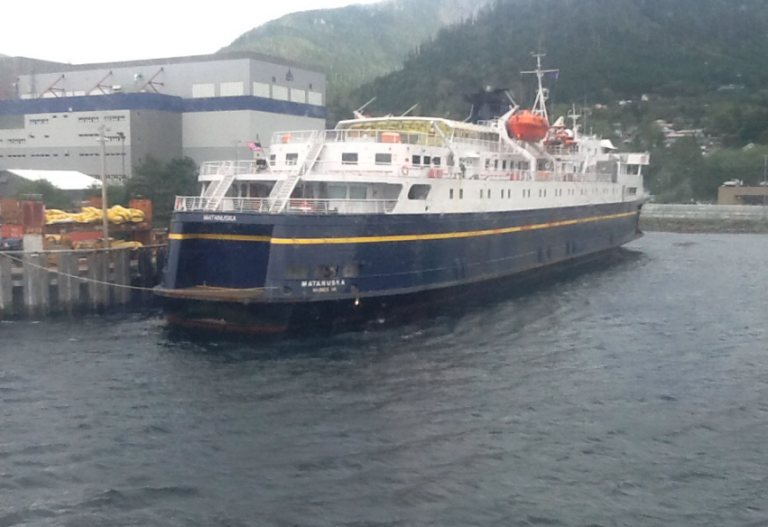
AMHS Ferry Matanuska docked in Ketchikan / Creative Commons photo

GUEST COMMENTARY

By DENNY DEWITT

JUNEAU – In a grocery store here, a sign was posted with this message: “Attention Customers, due to the ferry system breakdown, our normal Monday delivery will be delayed until Wednesday. We are sorry and ask for your understanding.”

It reminded me why we need an integrated transportation plan in Southeast Alaska that includes shuttle ferries and roads. It is critical that the long-term regional transportation plan include greater development of Southeast Alaska’s road system.

Road system development begins with Juneau Access, a project that is funded and is close to EPA approval.

The Alaska Marine Highway System has evolved into a marine transportation system with 11 vessels carrying passengers and freight in Southeast Alaska, Prince William Sound and Southwest Alaska.

The ferries serve as essential transportation infrastructure for many of the region’s smaller communities, providing important year-round passenger, vehicle, and freight service. As we can see from the store’s message about lack of inventory, it is being stretched beyond its reasonable expectation.

Ferry ridership generates only about one-third of the revenue necessary to fund the system’s $160 million operating budget. With steadily declining resources to fund the marine highway and other State operations, it is essential that we pursue all opportunities to develop more sustainable regional transportation infrastructure.

Absent that, the long-term sustainability of the ferry system is uncertain, as is its capacity to continue service where it is most needed.

The effort to build a road connecting Juneau to the continental highway system is at a critical juncture. Planning for the first phases of the Juneau road project is in the final stages of the environmental impact statements process.

The Alaska Department of Transportation and Public Facilities, in consultation with the Federal Highway Administration, is preparing the Final Supplemental Environmental Impact Statement needed to secure the permits and begin construction.

Juneau is the largest North American community not connected to the continental highway system. Further, current ferry service meets only about 7 percent of the demand for travel in Lynn Canal. It will meet even less of that demand in the future if service is further reduced.

The probability is great that signs like the one I saw in the local store will be more commonplace,  along with higher prices, unless there is change to a more integrated transportation plan.

The greatest economic benefit for the northern Southeast region will come from unconstrained highway access to the entire North American road system. The Juneau Access road will enable as much as tenfold increase in travel in and out of Juneau, thus improving access between the Capital City, the Yukon and the rest of Alaska.

Greater freight reliability is just one benefit. Less expensive travel out of Juneau for vacations and recreation is another. More importantly, it will allow for repositioning of ferry assets to better serve smaller communities in Southeast within the State’s coming budget constraints.

Access to Alaska’s capital is critical to sustaining and enhancing the economic well-being of Southeast Alaska.

Denny DeWitt is the Executive Director of First Things First Alaska Foundation, which is is dedicated to preserving the economic viability and future of Alaska through education. 

Former ADN columnist dinged for prisoner ‘familiarity’

0
screen-shot-2016-09-28-at-7-11-35-pm
Mike Dingman, profile photo from his Twitter account

AFTER INVESTIGATION, LOSES LICENSE AND JOB

Former Alaska Dispatch News columnist Mike Dingman is a former something else now too. He’s a former Alaska Department of Corrections correctional officer.

Working at DOC since 2005, Dingman was accused of abandoning his post while on duty, causing or directing staff to falsify information in log books, and having “undue familiarity” with a woman prisoner at Hiland Mountain Correctional Center in Eagle River.

DOC opened an investigation and Dingman quickly resigned and moved to Las Vegas. By that action, he has lost his Alaska Police Standards Council certification and can never serve in law enforcement anywhere in the country.

Dingman, in his description at the end of his ADN column, states he is a “fifth-generation Alaskan born and raised in Anchorage. He is a former UAA student body president and has worked, studied and volunteered in Alaska politics since the late ’90s.”

His latest column was Aug. 30. Two weeks prior, the Alaska Public Standards Council voted unanimously to revoke his certification. And two weeks prior to being officially sanctioned by the public safety community, he wrote a column titled: “GOP has become home to misguided opportunists and zealous lemmings.”

Dingman isn’t the only columnist the Alaska Dispatch has retained who has had run-ins with the law. Shannyn “just a girl from Homer” Moore has her own track record of theft, which led to years of probation and numerous other sanctions.

Dingman this past year was a contributor to two candidates, as shown on Alaska Public Offices Commission reports. He gave Jason Grenn’s campaign $250; Jeff Landfield received $281.

screen-shot-2016-09-28-at-10-24-58-pm

Bright, shiny objects: Take a knee

0

screen-shot-2016-09-28-at-5-34-10-pm

MEANWHILE, ON THE MEAN STREETS OF ANCHORAGE…

Patrick Flynn, Anchorage Assemblyman, chose theatrics over tradition during this week’s meeting, “taking a knee” during the Pledge of Allegiance. Assemblymember Amy Demboski was not holding back about it:

“Today is a sad day for the Anchorage Assembly. Anchorage Assembly member Flynn decided to use this public meeting as an opportunity to disrespect the veterans, men and women of all backgrounds that have served this country, by kneeling during the Pledge of Allegiance. Say what you will about the narrative from BLM, elected officials who openly disrespect veterans are not up to par in my book.

“I’m a veteran and an Anchorage Assembly member who represents 50,000 people; I stand firmly behind the APD, AST, and all law enforcement and I refuse the narrative that cops are racist. I am offended by the clear disrespect shown by the member from downtown.”

What she said.

EMPIRE PAYWALL COMES DOWN FOR TWO WEEKS

Readers won’t need a password to read the Juneau Empire for the next two weeks. The paywall has been dropped in an effort to help the public get more informed in advance of the Nov. 8 General Election.

OPEN ENROLLMENT FOR OBAMACARE DEAD AHEAD

During the 2016, 23,029 Alaskans enrolled in Obamacare health insurance plans. Enrollments totalled 20,897 at the end of open enrollment for 2015, an increase of 2,132 or 10 percent.

By March 31, 2016, actual enrollment in the Alaska exchange stood at nearly 18,000, with nine out of 10 enrollees being subsidized for their premiums. The average subsidy at $737 in Alaska for the past year. That is two and a half times the rest of the country.

Enrollment is open year-round for Alaska Natives and Native Americans. For the rest of Alaskans, open enrollment for 2017 coverage starts Nov. 1 and ends in January.

CATS ON A LEASH

Not to be outdone by the Kenai Peninsula Borough Assembly, which opened a recent meeting with an invocation offered by a satanist, the Kenai City Council on Oct. 5 will determine if cats must be on leashes when outside of their owners’ properties, in the same way that dogs already are required to be.

Kenai Mayor Pat Porter and council member Tim Navarre introduced the ordinance after numerous complaints of cats at large, “defecating on private property, invading plant beds, and otherwise disturbing property owners’ peaceful enjoyment of their property.”


EVENTS OF INTEREST

screen-shot-2016-09-27-at-8-03-54-am

screen-shot-2016-09-23-at-8-23-53-pm

st-myrna

screen-shot-2016-09-28-at-6-22-25-pm


‘Pure lies’ spun by Together for Alaska

0

BELTRAMI, BRENA, TOGETHER FOR DEMOCRATS?

Rep. Liz Vazquez has sent a letter to Together for Alaska, an independent expenditure group formed by political consultant Jim Lottsfeldt, asking for a retraction of defamatory statements the group has made against her and her legislative aide, David Nees.

A flyer that has been distributed throughout her West Anchorage district, claims that Vazquez is using her staff to campaign for her, underwritten by public money.

liz-vazquez

“It’s pure lies,” Vazquez said today. “We can corroborate it because David Nees not only logs into the state computer every day, and logs out, he logs in and out of the parking garage. They are just fabricating this claim. David has never gone door to door for me.”

Vazquez hired an attorney and is demanding a retraction. Attorney Stacey Stone sent the following letter to Tom Wescott, who is chairman of the group:

“The referenced flyer contains multiple false and defamatory statements which accuse Representative Vazquez of using taxpayer funds to support her reelection campaign. Specifically, the flyer falsely states that Representative Vazquez has hired David Nees to go door-to-door for her using public funds, not campaign funds. The flyer goes on to allege that the door-to-door work is being performed under the guise of “constituent relations”. When in fact, Mr. Nees has never gone door-to-door for Representative Vazquez campaign for reelection, and Mr. Nees does absolutely no campaign work for her during his legislative office hours.

By falsely stating that Representative Vazquez is improperly utilizing public funds, Together for Alaska is wrongly attributing illegal conduct to her. Together for Alaska has put Representative Vazquez in a false light and has defamed her. This allegation of such conduct has irreparably damaged Representative Vazquez’s good name and reputation.

I strongly encourage Together for Alaska to only disseminate such facts that are accurate and not attribute the foregoing conduct to Representative Vazquez. Representative Vazquez does not deserve to be portrayed in a false light or be defamed and her reputation should not be besmirched in order to illegally swing an election.  

On behalf of Representative Vazquez, we request that an immediate retraction be prepared and disseminated to each and every voter residing in and eligible to vote in House District 22. If such does not occur on before Friday, September 30, 2016, we have been authorized to pursue all legal remedies available to Representative Vazquez, up to and including litigation.

A full week has passed since the first negative campaign flier hit mailboxes in District 22, and now a second one has landed, with the same false information.

Lead contributors to the group are IBEW, AFL-CIO, and attorney Robin Brena, a close associate of Gov. Bill Walker, and the purchaser of his law firm. Brena is viewed by political observers as a surrogate for Walker in the election cycle. Together for Alaska has identified Vazquez, a conservative, as a target to give the governor a more compliant legislature. They are supporting liberal Jason Grenn for House District 22.


The presidential predictor who gets it right says…

0

screen-shot-2016-09-27-at-5-06-34-pmBOOK REVIEW

Predicting the Next President – The Keys to the White House 2016, By Allan . Lichtman

The man who has predicted every presidential win since 1984 says Donald Trump will win on Nov. 8.

Polls are all over the map on the Hillary Clinton-Donald Trump race for the presidency.

But Allan J. Lichtman doesn’t use polls. He looks at conditions, such as these:

  • After midterm elections, if the incumbent party holds more seats in the U.S. House than after the previous midterm elections
  • Whether there is a serious contest for the incumbent party nomination
  • Whether the incumbent party candidate is the sitting president
  • Whether there is a significant third party or independent campaign
  • Economy – if there is a recession during an election
  • Social unrest during the incumbent’s term
  • Scandals in incumbent administration
  • Foreign policy and military success or failure of the incumbent
  • Charisma of incumbent party candidate
  • Charisma of the challenger candidate
Of course, even Lichtman has never seen a presidential race like this one. We found the 2016 edition of his book at Amazon.