Thursday, December 25, 2025
Home Blog Page 1474

Human Rights Commission director was regulating ‘hate speech’

MARTI BUSCAGLIA DIGS DEEPER THE MORE SHE EXPLAINS HERSELF

Pro-tip for Marti Buscaglia: She may want to just stop talking to the press. She’s not making it better and now that there’s an official investigation into her conduct, it’s time for her to just clam up for a bit. In fact, taking a quick vacation to Hawaii would be advisable.

Buscaglia, the executive director of the Alaska Human Rights Commission told a reporter on Friday that she simply wasn’t sure:

Was the “Black Rifles Matter” truck decal free speech or hate speech?

Since she wasn’t sure, she took action to regulate it as hate speech in a parking lot on A Street that is leased by the State.

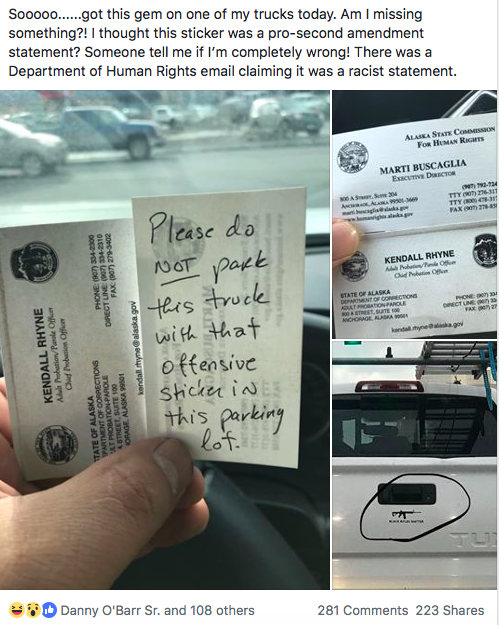
Buscaglia left her calling card — her official business card showing the authority vested in her by the State of Alaska — on the truck belonging to Brenton Linegar, who owns a small plumbing firm that had a contract to do repairs on the building. It was a heavy-handed message to a private citizen to get off the parking lot of the State of Alaska.

Buscaglia, whose agency has an official Facebook page, then took a photo of the back of the truck and decal and posted it on Facebook with a provocative comment meant to shame the truck owner: “In what world is this OK?” she wrote.

Under the Seal of the State of Alaska, Buscaglia was doxxing the owner of the truck — publicly shaming him on Facebook. That wasn’t enough for her. She decided to hurt his business by sending an email to the owner of the building asking him to ban the plumbing company from doing work.
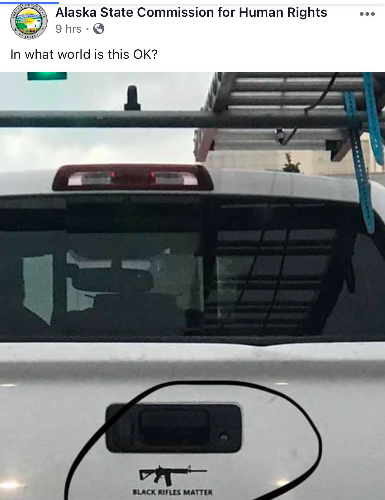
Buscaglia — or her staff — felt the immediate backlash from Alaskans on Facebook, and the sting of their comments led her to remove the post from the official State page.

She offered an explanation that “it offended many gun owners who felt we were against the second amendment and the right of citizens to own guns. Please know that is not the case. Our concern was with the connotation of the statement to the Black Lives Matter movement. We know some of you were offended by the post so we removed it.”

Buscaglia was showing her confusion: Gun owners on Facebook weren’t offended by the agency’s action due to the Second Amendment. It was the First Amendment they were concerned about.

After all, this is a state agency with a mission of enforcing fines and penalties on people for their behavior. The agency had, on Thursday, suddenly expanded its mission from regulating behavior in hiring and housing to regulating speech on public property — a massive scope expansion.

[Read: Human Rights Commission vs. First, Second Amendment]

As the Human Rights Commission public relations nightmare started blazing, Buscaglia’s phone started to ring. By Friday, the news media had taken notice.

She told the Associated Press: “I think the line between being protected by the First Amendment and hate speech is very fine. And frankly, I wasn’t sure which one this was.”

HATE SPEECH A NEW REGULATORY AREA FOR THE HUMAN RIGHTS COMMISSION?

The U.S. Supreme Court has, on multiple occasions, shown that whatever hate speech is — and that is an elastic term — it’s protected by the U.S. Constitution.

The Court has said, at least six times in recent years, that even offensive speech is protected. Those protections do not necessarily include lewd, obscene, libelous or “fighting” words — “those which by their very utterances inflict injury or tend to incite an immediate breach of the peace.”

[Read: Dunleavy investigates bureaucrat’s attack on gun-loving plumber]

However, even that speech has strong protections. Rappers and hip hop artists have been threatened with with obscenity or outright censorship efforts, and rap lyrics made a name for themselves in the 2015 Supreme Court case Elonis v. United States, when the Court was asked to decide whether a song was a real threat because it contained lyrics that appeared to threaten the rap artist’s ex-wife. His conviction was overturned by the Supreme Court.

But at the Alaska Commission on Human Rights, there is such a thing as hate speech, and Buscaglia is on the lookout for it, and has shown a willingness to use the authority of her office to punish people who she thinks is violating some kind of law. A law that doesn’t exist is being enforced.


Buscaglia later told KTUU that her business card contained direct phone access to her and she had hoped to receive a call from the truck owner to learn more about the bumper sticker.

“I wrote it on my business card expressly for the purpose that I expected the person to call me when they got it,” she said. “It has my direct line on there. The connotation that if you pull into the human commission parking lot and you see a truck with that sticker, you would wonder what’s going on.”

That’s not what her note said. It said “Please do NOT park this truck with that offensive sticker in this parking lot.”

Along with her business card was one from Kendall Rhyne, chief probation officer for the State of Alaska.

Buscaglia claimed she was just trying to start a conversation with the truck owner. But was she? Or were those cards meant to add authority and intimidation to the handwritten note?

In any case, she may not have started the conversation she wanted to have. Linegar, the truck owner, took the matter to his friends on Facebook, asking them if there’s something he didn’t understand about the Black Rifles Matter sticker.
FIRST AMENDMENT PROTECTS POLITICAL SPEECH

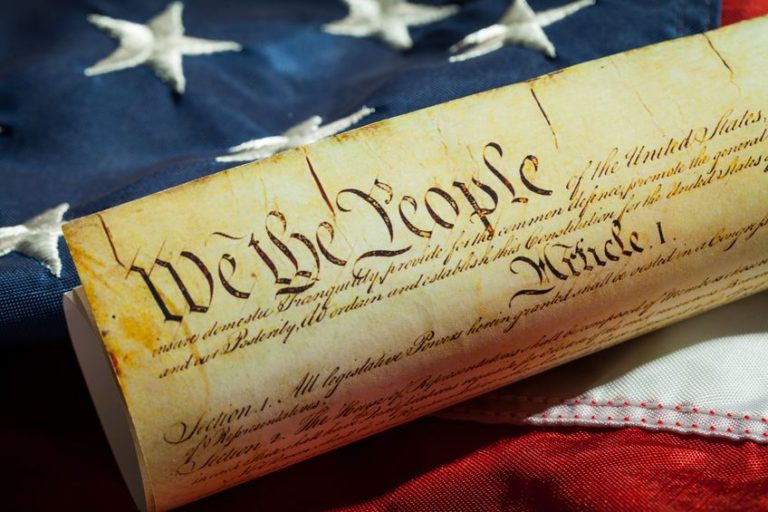
The purpose of the First Amendment is to protect the public from people like Marti Buscaglia, those who appoint themselves philosopher kings to sit on high and decree which political speech is protected and which must be removed from the public square — and from government-owned parking lots.

As a person who had a career in newspapers, Buscaglia evidently never grasped the rule of law provided by the Constitution. She is now the agency chief in charge of enforcing — or abusing — its protections.

And it’s taken a plumber to point out the problem with the situation.

Coming Up

0
Send political calendar items to suzanne @ mustreadalaska.com

Spring revenue forecast: North Slope oil at $68.90 for FY19

0

THEN DROPS TO $66 PER BARREL FOR 2020

The Alaska Department of Revenue released the spring 2019 revenue forecast today. The spring forecast includes the Department’s updated FY19, FY20, and long-term forecasts for oil price, oil production, and state revenue.

Not counting transfers from the Alaska Permanent Fund, the Department forecasts unrestricted revenue of $2.7 billion in FY 2019 and $2.3 billion in FY 2020.

Additionally, the Permanent Fund is expected to transfer $2.7 billion to the general fund in FY 2019 and $2.9 billion to the general fund in FY 2020. These amounts are available both for payment of Permanent Fund Dividends and for general government spending.

Alaska North Slope oil prices are forecast to average $68.90 per barrel for FY 2019 and $66.00 for FY 2020. Based on a review of oil market fundamentals, the Department chose not to revise its view on long term oil price since the fall forecast. Long term, the Department continues to expect oil prices to stabilize in the low 60’s in real (inflation-adjusted) dollars.

The revenue forecast is also based on projected North Slope oil production averaging 511,500 barrels per day in FY 2019 and 529,500 barrels per day in FY 2020.

The fall forecast posted by former Gov. Bill Walker anticipated an average Alaska oil price of $75 per barrel for fiscal year 2020, with prices climbing to average $84 per barrel by 2027.

The current price of Alaska North Slope crude is $68.43.

The production forecast is prepared in collaboration with the Department of Natural Resources and reflects an updated assessment of future production that slightly adjusted production expectations for the next several years. Production is still expected to remain around 500,000 barrels per day over the next decade as new developments offset production declines from existing fields.


Some human rights, not others?

THE ANCHORAGE DAILY PLANET

If the state is looking to save a couple of million dollars, it should start in the governor’s office by red-lining the Alaska State Commission for Human Rights – or, as it should be known, the Alaska State Commission for Some Human Rights But Not Others.

Must Read Alaska is reporting a worker for a small plumbing contracting business in Anchorage, a business working on the building leased by the commission, came back to his truck this week and found a note. It was on the back of commission Executive Director Marti Buscaglia’s business card. There was another card from probation officer Kendall Rhyne.

Buscaglia’s message told the worker to “not park this truck with that offensive sticker in this parking lot.”

The sticker in question: “Black Rifles Matter.” It has an image of a semi-automatic rifle.

Read the rest of this op-ed at Anchorage Daily Planet:

http://www.anchoragedailyplanet.com/151217/some-human-rights-not-others/


Dunleavy investigating bureaucrat’s attack on gun-loving plumber

HUMAN RIGHTS COMMISSION MAY HAVE ABUSED AUTHORITY

Gov. Michael Dunleavy has asked the Department of Law to launch an investigation into the apparent abuse of state power that occurred on Thursday at the parking lot of the Alaska Human Rights Commission.

The executive director of the Alaska Commission on Human Rights, in her own handwriting, told a plumbing company to move its vehicle from the parking lot due to what the bureaucrat thought was a racist sticker.

The state executive, who makes $139,000 a year plus fringe benefits, is Marti Buscaglia. She runs a 19-person office that, ironically, investigates abuses of people’s human rights.

The sticker on the worker’s truck said “Black Rifles Matter,” and is a pro-Second Amendment statement, according to the owner of the truck, Brenton Linegar, who owns a small plumbing firm that had a contract to do repairs on the building.

In a conversation with Must Read Alaska, he expressed concern that he would lose work because of what the state official had done, and he had trepidation that publicizing her action could harm his future business opportunities, including his future contracts to work on that particular building on A Street in Anchorage.

[Read: Human Rights Commission vs. 1st, 2nd Amendment]

“Protecting an individual’s constitutional rights, including the 1st amendment, is of the utmost importance to this administration,” said a post on Gov. Dunleavy’s official Facebook page this morning.

There are at least two areas where the Department of Law may seek to get further information to clarify the intent of the bureaucrat’s actions and possible corrective action:

  1. Buscaglia used her official business card to send a message to Linegar, telling him to not use the lot because of the sticker that Buscaglia found offensive.
  2. Buscaglia and her staff then posted a photo of the truck on the state agency’s official Facebook page, and derided the owner with the message, “In what world is this OK?”, while displaying his license plate. This is use of state resources for what may be an unconstitutional “government shall make no law” act.
  3. Buscaglia and her staff then argued with citizens on the agency’s Facebook page and said she thought the message was racist. This could be harmful to the plumbing business and grounds for a lawsuit against the state.

Buscaglia is no stranger to using Facebook to promote her politically charged views. Astute Must Read Alaska readers found this post on her personal page, wishing an excruciatingly painful death on a hunter back in 2015:

The Alaska Commission on Human Rights is part of the Office of the Governor, has a budget of over $2 million, and a staff of 19 that investigates complaints from Alaskans about discrimination due to race, gender, or disability.

In 2018, the agency processed 1,733 inquiries, which resulted in 297 complaints. Racial discrimination continues to be the single most prevalent basis for complaints; but an increasing number of complaints involving service and emotional support animals are taking more and more of the staff’s time, according to agency’s 2018 report, which was issued in January.

Sitka road project awarded

36

CONSTRUCTION JOBS THIS SUMMER ON BARANOF ISLAND

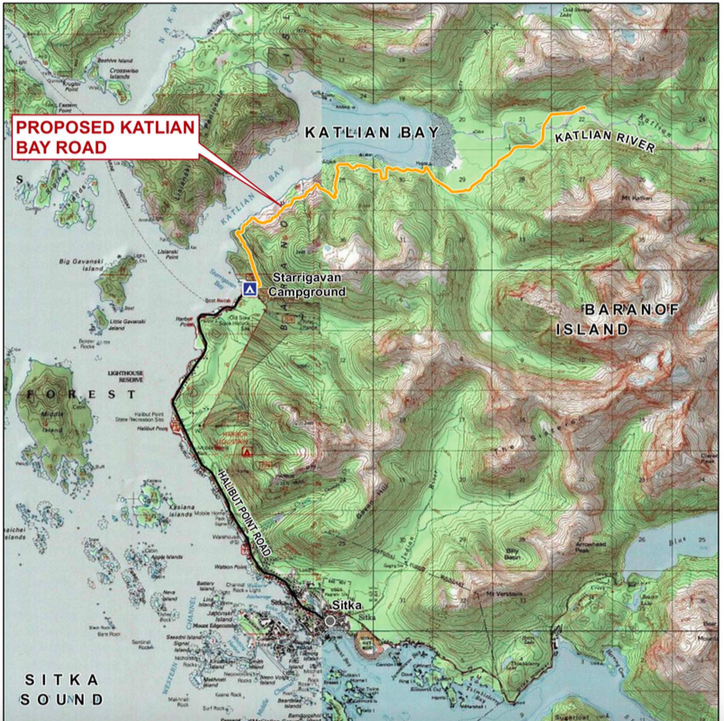
A nine-mile gravel road up one side of Katlian Bay near Sitka will finally be under construction this summer. It’s one of the first big “open for business” road projects of the Dunleavy Administration, after four years of “no-build” state management.

A $31.7 million bid was tentatively awarded by the Department of Transportation this month to K&E Alaska, an Oregon-based excavation firm with an office in Sitka. The final bid award would come after a 10-day protest period is completed.

The road project on Baranof Island is described as a single-lane, unpaved road with bridge crossings, beginning at the northern end of Halibut Point Road, extending east along the south shoreline of Katlian Bay, crossing the Katlian River, and ending four miles east of the Katlian Bay estuary at the boundary between Shee Atika and U.S. Forest Service Lands.

The project opens up territory for subsistence and recreation, and also gets close to Shee Atika Native coporation lands for future development. It will end at a turnaround that meets up with an existing Forest Service trail. Ultimately, it could link to a road to Rodman Bay, allowing transportation vessels to avoid Peril Strait, which is only usable at high tide.

But for now, it’s a road to resources and recreation. The Katlain River, which the project would bridge, is rich in salmon, dolly Varden, steelhead, and trout, and Shee Atika land is rich in timber.

Alaska voters approved the funding in November 2012, as part of the $454-million transportation projects bonds ballot question, which contained authority to borrow for transit projects statewide. The original estimate was for around $16 million. The remainder of the money for the project is coming from a Fairbanks project that was federalized, leaving money available to shift to the Katlian Bay project.

Dozens of construction jobs will be associated with the project on Baranof Island, which was originally scheduled for completion in 2018, but which had been put on hold by the Walker Administration.

Human Rights Commission vs. First, Second Amendment

COMMISSION ORDERS MAN TO MOVE HIS TRUCK, DUE TO GUN DECAL

Brenton Linegar owns a small plumbing contracting business in Anchorage. His firm was working on the building leased to the Alaska State Commission for Human Rights at 800 A Street.

When one of his employees went out to the work truck on Thursday, he found a note on it from the executive director of the commission, telling him to “not park this truck with that offensive sticker in this parking lot.” Along with that note, written on the back of the state worker’s business card, was another business card, belonging to a state probation officer.

The sticker on the back of the truck that offended the state workers says “Black Rifles Matter.” It has an image of a semi-automatic rifle.

Linegar sees it as a pro-Second Amendment sticker. But the government worker saw it as racist and said so in an email that has made its way around the internet. She was clearly triggered.

The Human Rights Commission was so troubled by the truck sticker that it even posted a picture of it on the Facebook page for the agency — official state property:

Linegar says he’s tired of being bullied, and that there’s nothing offensive about the sticker. There’s even a Black Rifle Coffee Company, which sports semi-automatic stickers and is decidedly pro-Second Amendment. It’s a company that’s owned by veterans.

Linegar says a couple of his employees are not white, and they drive that particular truck.

Is it a play on words for “Black Lives Matter?” Yes, perhaps, he said. But the “Black Guns Matter” movement was started by an African American to educate blacks about their Second Amendment rights.

[Read: Black Guns Matter brings workshop to African American community]

Support for the Second Amendment is not offensive to many Alaskans. GunsandAmmo says that Alaska is nearly tied with Arizona for being the best state for gun owners. Arizona only won the top spot due to its accessibility to competitive shooting opportunities.

And a quick tour of the Internet show there are a multitude of other plays on that particular “lives matter” phrase, such as “All Lives Matter,” or this St. Patrick’s Day rendition, sold at Etsy.com, which says “Irish Livers Matter.”

Linegar hasn’t filed a complaint against the Human Rights Commission Executive Director Marti Buscaglia or probation officer Kendall Rhyne.

But he might have a case that his constitutional rights were violated by government workers with vast powers to hurt individuals and who can — and maybe already has — harmed Linegar’s family business.

After hundreds of comments on the State Human Rights Commission Facebook page criticizing its actions, Commission posted an explanation of its actions and removed the original post. Even that brought comments from many late into the night on Thursday and by Friday morning there were over 500 comments in response to the agency’s explanation.

Rep. Stutes fixates on ferry system, while state needs go unheeded

14

REPS. MERRICK AND RASMUSSEN SAY PORT OF ALASKA AND JUNEAU ACCESS  ARE BEING IGNORED

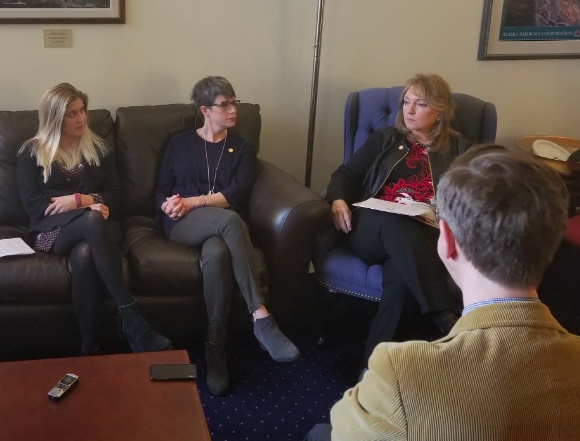
Following the third public hearing on the Alaska Marine Highway System budget, other legislators are saying enough is enough to Rep. Louise Stutes, who chairs the House Transportation Committee. At a press availability, they and Rep. Colleen Sullivan-Leonard said the state infrastructure needs are being ignored by the House Democrat-led leadership.

Hundreds of Alaskans, and some from Washington State, have testified in Stutes’ committee this week that they want the ferries to remain with either existing funding or more funding. One testifier said the proposed budget cuts were “political terrorism.” None has offered suggestions about how ferries could operate differently, such as having users pay for their own fares, rather than having the state pay for the fares of Alaskans and tourists.

Rep. Sara Rasmussen (R-Anchorage), and Rep. Kelly Merrick (R-Eagle River) said the state has other needs, and those are being dismissed by the Transportation Committee chairwoman as she fights for ferries for her district.

“While the House Transportation Committee sits through yet another session of testimony this afternoon on the Alaska Marine Highway System, the rest of our state’s transportation and infrastructure issues continue to be neglected,” said Rasmussen.

“While I understand the importance of the Marine Highway System and generally support efforts to continue ferry service in a cost-effective manner, there are other important issues that warrant our immediate consideration. Our state owns and operates 239 airports, including Ted Stevens International Airport. The Port of Alaska, which imports 3.5 million tons of food and goods Alaskans need annually, is crumbling and needs repairs. We have thousands of miles of highways and railroads that need to be maintained. These issues are critically important to our ability to grow Alaska’s economy and they’re being completely ignored. Rather than spending hours fixated on one government system, we should be focusing on the whole – investing our time and resources in modern infrastructure through projects like the Juneau Access Road – that could fundamentally revolutionize both the economies of Southeast Alaska and the rest of the state.”

The Port of Alaska is owned by the Municipality of Anchorage, but needs at least $2 billion in repairs to remain usable. Some have suggested it be transferred to the State of Alaska or to a state port authority, since the majority of Alaska’s goods come through that port. The docks will have to start closing due to corrosion within about nine years, and new docks will take at least eight years to build.

Merrick, who lives in Eagle River, spoke to the needs of the Juneau community, where she was born and raised. “I also believe that this is an opportunity to look for long-term, fiscally responsible solutions that will bolster tourism and industry in the region without forcing Alaskans to give up more of their Permanent Fund Dividends,” said Merrick.

“We need to think about investing in capital projects like the Juneau Access Road and maintenance to improve our state’s existing infrastructure and accessibility. Advancing these projects in Alaska creates jobs that our state desperately needs,” she said.

The Juneau Access Project was killed by former Gov. Bill Walker.

But Stutes, who represents Kodiak, Seldovia, and Cordova, is on a mission to fully fund the ferry system. Must Read Alaska learned that Stutes has sent a video crew onto the M/V LeConte to do a promotional video in support of the existing funding of the ferry, and the transportation needs of coastal communities. No word yet on how the video is being funded.

Cruise industry, Juneau settle lawsuit

3

NO MORE BRONZE WHALES

A lawsuit that Cruise Lines International Association of Alaska filed against the City and Borough of Juneau has been settled. The city will not appeal the decision that went against it in December, when U.S. District Court Judge H. Russel Holland agreed that the head tax being collected was not being spent in accordance with the U.S. Constitution’s Tonnage Clause.

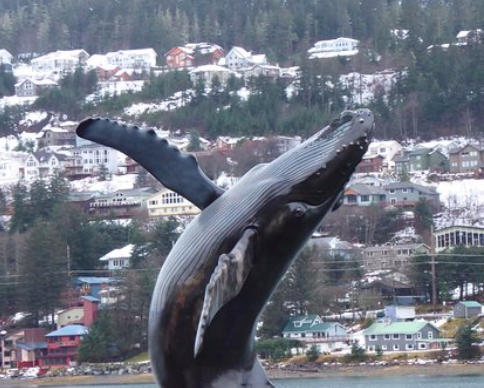
That clause prohibits states from taxing cargo without the consent of Congress if they aren’t providing some kind of service to the ship itself. At issue was a long sea walk and an artificial island adjacent to a bronze whale that was far away from the actual operations of the ships and the docks that support the industry.

The agreement between the parties is scheduled to be adopted at a special Assembly meeting on Friday, March 22, at 5 p.m.

“This agreement is a great solution for CLIA, CBJ, cruise ship passengers, and all Alaskan port communities. I’m so happy to move beyond litigation and get back to the collaborative work of growing and supporting our economic development. This agreement solves the underlying tension between Juneau’s need to exercise local control and CLIA’s need to have predictable applications of the law and implementations of fee and tax policy that don’t create unintended consequences. My only regret is that the parties didn’t find this practical solution sooner,” said City Manager Rorie Watt.

The meat of the agreement is:

  • Juneau will use passenger fees to continue providing services and infrastructure to cruise ships including: restrooms, signage/wayfinding, motor coach staging, crossing guards, fire and emergency medical service, and police patrols. There would be no change from historical practice in the port area.
  • Juneau will use passenger fees to fund up to 75 percent ($9.3 million) of the $12.4 million Statter Harbor project. The remainder of the project costs will come from local sources.
  • Legal fees for both parties will be reimbursed.
  • Juneau will continue to develop the downtown waterfront in accordance with the Long Range Waterfront Plan.
  • Passenger fees will not increase for the next three years.

Both parties also agreed to meet annually to discuss any new proposed Juneau projects and services that may be funded with passenger fees. Moving forward, Juneau and the cruise industry will agree to settle future disagreements through discussion or mediation before resorting to litigation.

CLIA filed a lawsuit in the spring of 2016 alleging CBJ was unconstitutionally collecting and spending fees collected from cruise ship passengers.

“Litigation was hard on everyone, but we all suffered enough to fully appreciate the value of a strong working relationship. I especially applaud CLIA’s willingness to step up, acknowledge community impacts, and be a partner in the provision of necessary services and infrastructure,” Watt said.

[Read: Juneau loses lawsuit]

“We are very pleased to reach a resolution with the CBJ and certainly appreciate the mayor, assembly and city manager’s considerable efforts toward, what is a very positive outcome,” said John Binkley, the president of CLIA-Alaska. “The agreement achieves our goal of providing certainty and predictability of how passenger fees will be utilized going forward; while still supporting services to our guests and the local community.”