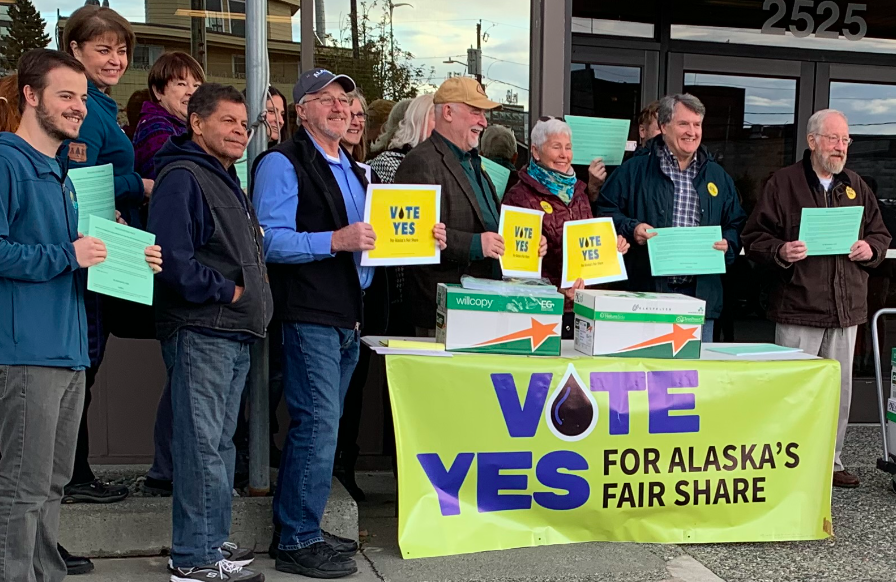
MARK BEGICH, IVY SPONHOLZ, BILL WIELECHOWSKI, ROBIN BRENA
They got the band back together again. — the oil tax band, that is. The one that lost at the ballot box when voters chose “No on One” in 2014.
A group of oil tax advocates gathered at the Division of Elections on Wednesday and took ownership of the petition booklets they’ll use to gather signatures and make a run at oil companies again.
Their cause is to increase taxes on oil production in Alaska by some 200-300 percent. They’re calling it “Our Fair Share,” and they are led by the law partner of former Gov. Bill Walker, Robin Brena, the oil tax big gun who stands in the middle of the group in the photo above.
[Read the ballot initiative here]
The effort by Brena and Company is another attempt to undo the most recent oil tax reform, SB 21, which passed in 2013 and led to an increase in investment in Alaska’s oil patch.

The taxers will need to get 28,501 signatures before Jan. 21, 2020 in order to make the November General Election ballot. That’s less than 90 days, so this means that they’ll be hiring a professional to send out mercenaries to collect signatures for $1 per.
The Alaska Attorney General has cautioned that the ballot language for this next round of taxation is confusing and could lead to unintended interpretations.
[Read Attorney General Kevin Clarkson’s opinion here]
But evidently the language was good enough for the sponsors of the initiative, which include former U.S. Sen. Mark Begich, current State Sen. Tom Begich, former Anchorage Assemblyman Eric Croft, former Gov. Walker deputy chief of staff Marcia Davis, former Rep. Les Gara, U.S. Senate candidate Al Gross, Anchorage Daily News columnist Stephen Haycox, ACLU’s Laura Herman, Rep. Ivy Spohnholz, Sen. Bill Wielechowski.
Read the entire list of sponsors here:
Some 144 of the 163 names submitted by the group were from the Anchorage municipality. For the petition booklet itself, they’ll have to get valid signatures equal to 7 percent of the total district vote in the last general election in each of three-fourths of the 40 Alaska House districts.
The pro-taxers will be tapping into a quantifiable distaste that some Alaskans have for oil companies. Like elsewhere, the oil companies in Alaska have a popularity problem, and they’ll have to spend a lot of money to convince voters not to jack up the taxes on oil again.
After posing for publicity shots, the group took their petitions with them and decamped to begin the 90-day race for signatures.
If they’re successful, the oil tax initiative could show up on the November General Election ballot. That could be a crowded, confusing ballot and a noisy election cycle. The other ballot initiatives that are trying to make the deadline are:
- Election reform – ranked voting, no party primary ballots allowed.
- Education – putting vague education funding language in the state constitution.
- Recall the governor.
- Move the Legislature to Anchorage.