
By NOLAN WILLIS
I have lived in Alaska most of my life and have observed over many years that most of our problems are readily solvable, but we cannot seem to get out of our own way. A classic example of this is the impending Cook Inlet gas supply constraint.
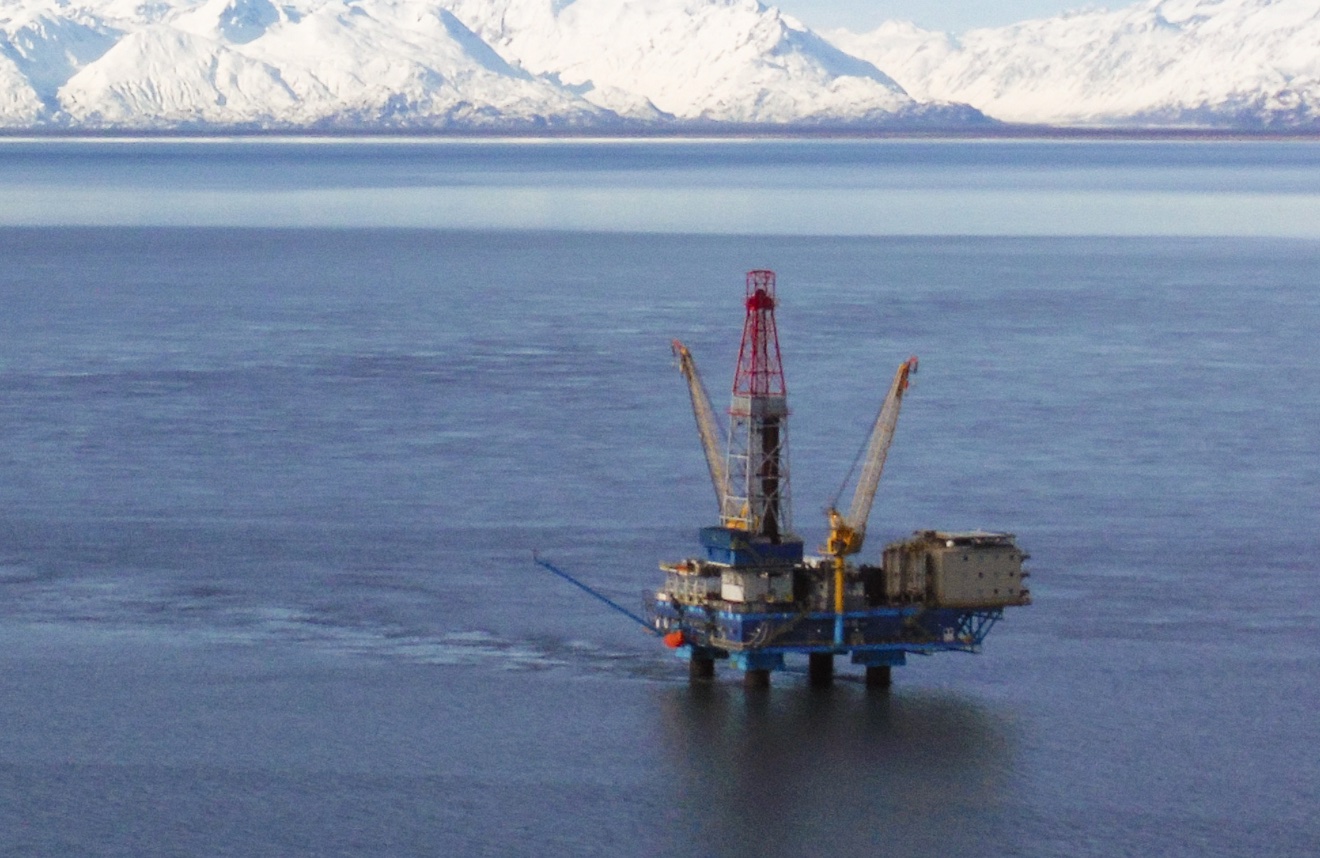
According to a United States Geological Survey report on undiscovered oil and gas resources dated July 12, 2011, Cook Inlet contains an estimated 19 trillion cubic feet of undiscovered (untapped) natural gas — enough to last about 270 years at the present rate of consumption (70 billion cubic feet per year).
When only proven reserves are considered, a 2022 Department of Natural Resources Cook Inlet Gas Forecast indicates that there is an estimated 820 billion cubic feet within relatively easy reach—enough for about a decade. We just need to drill holes in the right places to get it. Some producers, like Furie Alaska, are sitting on top of enough gas to supply our needs for the next several years but lack the capital funding to get to it.
Why can’t we tap more gas? For one thing, our royalty policies have not been consistent over the past decades. In one particularly egregious case, the State initially gave tax credits to incentivize Cook Inlet development and subsequently revoked them once developments were well underway because the State needed (or wanted) more revenue.
This bait-and-switch in conjunction with some land, lease, and resource boundary disputes created a bankruptcy (Buccaneer) and serious financial strains on producers, stymied drilling efforts, and signaled to all prospective producers that Alaska is not good for business. Additionally, misguided environmental goals and ESG (environmental, social, governance) influences have restricted bank lending to oil and gas developments out of concern for the environment.
Moreover, the State of Alaska has its own plans to build a multi-billion-dollar pipeline from the North Slope to Southcentral Alaska, and that project, if executed, would make most Cook Inlet investments nearly worthless in the long-term.
All the aforementioned issues and many others have contributed to a climate of business uncertainty and excessive risk where nobody wants to provide the necessary capital to get more drilling operations underway. For producers, the safest course of action is to do nothing until things get really bad because that means they can charge more for producing less gas at minimal risk to their own interests.
If we are going to have secure access to Cook Inlet gas resources, our State needs to fully and consistently support gas development and not jerk our industries around to the tune of whatever is convenient or popular. The need for reliable support is even greater when the supplies are constrained and investment capital is constrained by ESG policies. Without consistent support, the local supply will fail and that is not good for Alaskans. The producers will move elsewhere, and consumers will be stuck with the situation that we created with nobody to blame but everyone else.
I know that many today are opposed to oil and gas development out of principle or because of concern for climate change. However, if reducing emissions is the primary goal for some, neglecting Cook Inlet so that its production dries up is going to do more harm than good. In the foreseeable future, every urban Alaskan’s carbon footprint will increase along with their heating and electric bills as foreign gas is about to be tanked in from Mexico or Canada to make up the supply deficit.
Importing LNG from elsewhere is more energy and carbon consumptive, and more costly, than locally produced gas. Alaska is embarking on this path because we are not acting strategically. Not only will we consumers be paying more for our energy supply to line the pockets of people out-of-state instead of supporting local employment, but we will also be emitting more carbon dioxide and methane to the atmosphere in the process.
In other words, there are no environmental benefits to be gained by the upcoming supply constraint and associated economic hardship, despite how some people feel about oil and gas development. This is like going on a strict diet that leaves you hangry and grouchy combined with an intense, exhausting exercise program that only results in increased weight gain—a miserable and pointless proposition.
Here is a suggested path forward—an idea for consideration. We ought to bypass the ESG-bound banking cartel and designate about $5B from the Permanent Fund or from some other State monetary resource toward a Cook Inlet Resource Development Fund. We then solicit development proposals from private companies to compete on the basis of how to extract gas out of Cook Inlet. Then, we provide the money as capital to get the gas development operations underway. Instead of demanding loan payback in fixed terms with interest, treat this as an investment where the citizens of Alaska are permanent stakeholders. Have each MCF of produced natural gas from Cook Inlet contribute a dollar value (for instance, $3/MCF adjusted for inflation yearly) back toward the development fund and nix all the other royalties that gas producers would normally be required to pay when extracting gas out of Cook Inlet.
The existing statutory royalties and taxes are worthless to Alaskans if the gas cannot be extracted at all, and we need to be forward-thinking enough to understand this, as well as the fact that energy insecurity and high costs threaten the economic well-being and prospects of all Alaskans—even those living outside the Railbelt. If a successful gas development effort cost $2B from the proposed fund, the payback period would be on the order of a decade, and there would be a fund full of money after that to do future development when those gas wells start running low or when significant investments need to be made to prevent bad things from happening. Under the present circumstances, revenue will dry up with production, and there will be nothing left afterward except pain and suffering.
Obviously, I am presenting a simplified and potentially controversial idea here, and there are many details to work out. The point is that there are solutions to our problems if we simply take some ownership. None of us want our suffering economy to shrivel up and die, but that is the most likely outcome, given our present trajectory that results from being passive and making shortsighted decisions.
Long-term, we need to give serious consideration to nuclear power to diminish our emissions and provide long-term energy security. Europe and the rest of the developed world relies extensively on nuclear energy, so I am a big proponent of this. However, reality demands that we solve the problem in front of us first because that is the solvable problem that is within our grasp.
As a wise person once told me, when unsure of what to do, just take the next single right step. This is what I tell my kids when they are overwhelmed with decision-making. We need to take the next right incremental step, and for us Alaskans this means securing our gas supply to keep our existing heat and power infrastructure operational while we develop a long-term plan for a cleaner energy supply.
We can accomplish this alternative energy supply next, but we will not get the chance if we are struggling to fuel our businesses, our homes, and families while a bunch of people and businesses leave this great State.
Nolan Willis is a lifelong Alaskan, a Bristol Bay Commercial Fisherman, a licensed Professional Electrical Engineer, and the current Chair of the Institute of Electrical and Electronics Engineers Alaska Section. His work experience spans the worlds of utilities, energy, communications, and naval nuclear propulsion.


