
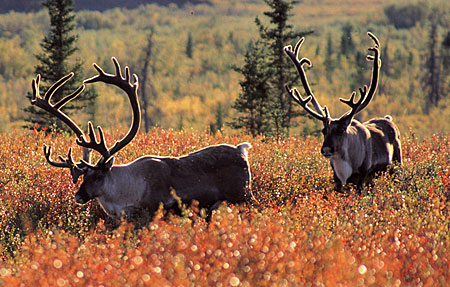
An update for resource development in northern Alaska: the Alaska Industrial Development and Export Authority (AIDEA) released findings from a new scientific review asserting that the proposed 211-mile Ambler Road would pose minimal threats to the Western Arctic Caribou Herd (WAH). The announcement, made on December 23, 2025, highlights the road’s potential to access rich mineral deposits while safeguarding wildlife, amid ongoing debates over environmental and subsistence concerns.
The report, authored by biologist Matthew A. Cronin, Ph.D., and completed on October 28, 2025, analyzes caribou data in relation to the Ambler Road project. It estimates the road’s footprint at less than 0.005% of the WAH’s 92.2-million-acre range, with only 3-4.8% of collared caribou crossing the alignment in fall and winter from 2010-2022. The study emphasizes that primary migration routes lie west and north of the route, over 150 miles from calving grounds.
The last major caribou assessment related to the Ambler Road prior to this was in the U.S. Bureau of Land Management’s (BLM) 2020 Final Environmental Impact Statement (EIS), which incorporated data up to 2018-2019. That EIS projected potential migration delays and habitat fragmentation affecting 0.0005% of the WAH range, drawing from surveys dating back to 1982-2017. A 2023 Draft Supplemental EIS updated some analyses with data to 2022, but the 2020 version remains the core federal reference.
Key differences include the current report’s use of fresher data showing a sharper WAH decline—to 152,000 animals in 2023 from 259,000 in 2017—and reduced road crossings in recent years, attributing declines more to predation and weather than infrastructure. Earlier reports, like the 2020 EIS, focused broader on subsistence impacts, estimating high reliance (20-45% of harvests) in affected communities.
Predation and winter weather are primary threats to the WAH, without the road in existence, Cronin wrote in the report.
AIDEA’s release underscores mitigation measures, such as no public access and predator control requests.
If built, the road could generate over $1.1 billion in state revenues from taxes and royalties, while creating 2,730 construction jobs and boosting rural economies.


