THE SMITHSONIAN
The “Liscomb Bone Bed” along the Colville River in Alaska’s North Slope is full of duck-billed dinosaur fossils.
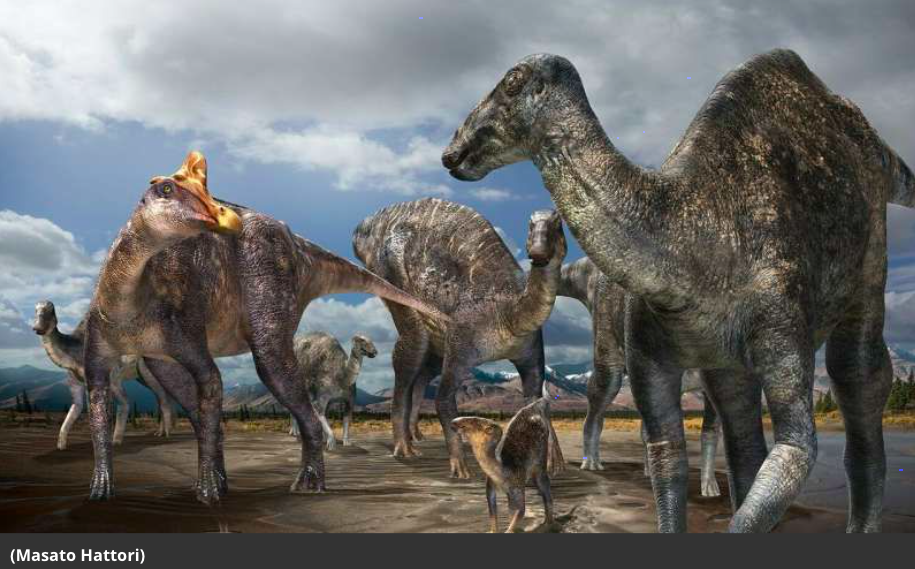
Over 99 percent of the 6,000 dinosaur fossils pulled from the quarry are hadrosaurines, a branch of the hadrosaur, or non-crested duck-billed dinosaur tree.
A newly identified fossil, however, adds unexpected variety to the prehistoric Arctic ecosystem: Researchers found the fossilized remains of a lambeosaurine, a crested duck-billed dino, according to a new study published in the journal Scientific Reports.
In 2014, paleontologists from the Perot Museum of Nature and Science in Dallas were examining fossils from the 70 million-year-old bone bed when they came across a fragment of skull that seemed different from the others.
Most of the bones in Liscomb came from a species of hadrosaur called Edmontosaurus, but the team believed this fragment might come from a theropod dinosaur. When that turned out not to be the case, the museum filed the bone fragment away with the other hadrosaurs.
Hokkaido (Japan) University graduate student Ryuji Takasaki came to the museum to study the hadrosaur fossils. He, too, picked up on the strange skull fragment.