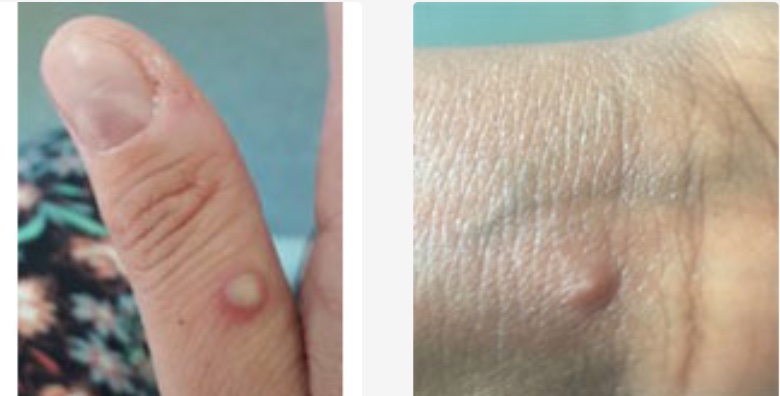
The World Health Organization says that behavioral changes are needed: Men having sex with multiple other men should limit their sexual partners to lower the risk of infection and reduce the spread of monkeypox.
“That means making safe choices for yourself and others, for men who have sex with men,” WHO Chief chief Tedros Adhanom Ghebreyesus said. “This includes, for the moment, reducing your number of sexual partners.”
99% of the cases of monkeypox are among men, and at least 95% of those patients are men having sex with men, according to WHO.
WHO also called on media, public health authorities and government to fight stigma and discrimination, which the agency said will only fuel the outbreak, although it didn’t say how it would fuel the outbreak.
The U.S. Centers for Disease Control has a slight different message than WHO. While agreeing that monkeypox is primarily a gay sex disease right now, the CDC is emphasizing that anyone can get monkeypox. The CDC is also cautioning health agencies and the media from using photos that show severe cases of the illness.

The current count of cases in the United States stood at 4,907 on Wednesday. Only Wyoming, Montana, Vermont, and Alaska have no reported cases yet, and New York City leads the nation in infections. The Biden Administration said Thursday that more than 780,000 doses of vaccine will be available Friday, in addition to the 300,000 doses of monkeypox vaccine distributed earlier this month, for a total of 1.1 million doses.
“Anyone can get monkeypox, and CDC is carefully monitoring for monkeypox in the United States. CDC is working to provide frontline healthcare providers and public health officials with information about what monkeypox looks like and how to manage the illness. Many—though not all—of the reported cases have been among gay and bisexual men. Given this, CDC is focusing on identifying and using specific channels that will directly reach gay and bisexual men across racial, ethnic, socioeconomic, and geographic backgrounds. In addition to this focused messaging, CDC is also providing information to a wider audience about symptoms and the behaviors that can lead to the spread of monkeypox,” the CDC said.
The CDC advice to health professionals has at least two parts: One is for general audiences, and one is for gay men. For the general audience, the CDC recommends health professionals saying that “anyone can get monkeypox.”
The CDC says, “Focusing on cases among gay and bisexual men may inadvertently stigmatize this population and create a false sense of safety among those who are not gay and bisexual men.”
The advice continues: “Promote messaging that provides information on what monkeypox is and how it can spread and encourages seeking health care if experiencing monkeypox-like symptoms.”
“When using images of the rash from patients with monkeypox, focus on how cases typically appear in the current outbreak and avoid showing extreme cases, unless necessary.”
“In some situations, such as healthcare provider education, it may be necessary to show extreme case presentations. Carefully consider the audience and whether only presenting images of how cases typically appear may accomplish the same goals.”
“Include pictures of people from diverse backgrounds and racial/ethnic groups.”
But for health professionals talking to gay men, the communication is tailored:
“It’s important to reach any disproportionately affected community with non-alarmist, fact-based messaging about monkeypox that provides people with tools they can use to protect themselves and others.”
“When focusing messages to gay, bisexual, and other men who have sex with men, use targeted channels that directly reach these audiences, such as specific websites, dating apps, or media programs.”
“To help make messages resonate, use relatable or personal stories that depict people ‘like me’ from the intended audience.”
“Messaging and dissemination tactics may need to be adapted to reach the communities who need the information as we learn more about the current monkeypox outbreak.”
Read more about how the CDC is framing the communication around monkeypox at this link.
Learn more about what the CDC is advising doctors regarding monkeypox at this link.