
In September of 2018, Alaska was home to 97,301 residents enrolled in Medicare, the health care program that serves residents ages 65 and above.
Today, Alaska has just tipped over the 100,000 mark, a threshold it’s never reached before. The state’s population is getting older as Baby Boomers cross over into senior citizen status, and seniors try to stay in the state for as long as they can.
Medicare beneficiaries now make up 14 percent of the state’s total population, just under the rest of the U.S., where they make up 15 percent.
Today, one in nearly seven Alaskans is enrolled in the health care program that was created by President Johnson in 1965 for those over the age of 65.
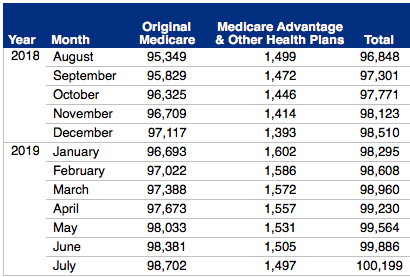
The population of Alaska more than doubled in last 40 years, increasing at more than four times the rate of the rest of the country. In 2010, Alaska was home to 55,000 senior citizens. In nine years, that number has nearly doubled.

2019 is shaping up to be the ninth year in a row that Alaska has had the fastest growing population of those over 65.
Most people become eligible for Medicare when they turn 65, and most who turn 65 are forced to enroll in the program or pay a hefty penalty to the federal government. For many, it’s not a free program — elders have to pay a premium to the federal government and it often comes out of their Social Security check. It can cost them $135 a month for Part B Medicare, which pays for doctor’s services and outpatient care. Recipients have typically also paid into Medicare for most of their working lives.
Medicare coverage is also available to people who are disabled. In Alaska, 14 percent are eligible as a result of a disability or permanent kidney failure.
As for communities with the most Medicare enrollees, Anchorage is the largest, with more than 38,495 enrolled as of July, 2018, an increase of 1,556 from the prior year. Fairbanks North Star Borough is down by 139 Medicare enrollees since last year. The Mat-Su went from 13,986 Medicare enrollees to 14,665 in the past year.
According to the Institute on Aging, America’s 65-and-over population will nearly double over the next three decades, from 48 million to 88 million by 2050.