The Alaska Public Media-KTUU “Debate for the State” on Friday demonstrated the policy and position differences between Congressman Don Young and his challenger Alyse Galvin.
Galvin didn’t know the difference between a Coast Guard cutter and an ice breaker, and stuck to her attack points. During much of the debate she seemed on the verge of tears, her emotions close to the surface. Don Young stayed above the fray and didn’t insult her for her lack of preparation, and also didn’t respond to her attacks and insults, although he did call out reporter Rich Mauer for having been politically motivated in his coverage.
But what the debate also demonstrated is the subtle media bias that few but the trained eye can detect. It was a demonstration of tricks of the trade in television.
On Friday night, it happened in the control room of KAKM public broadcasting studios.
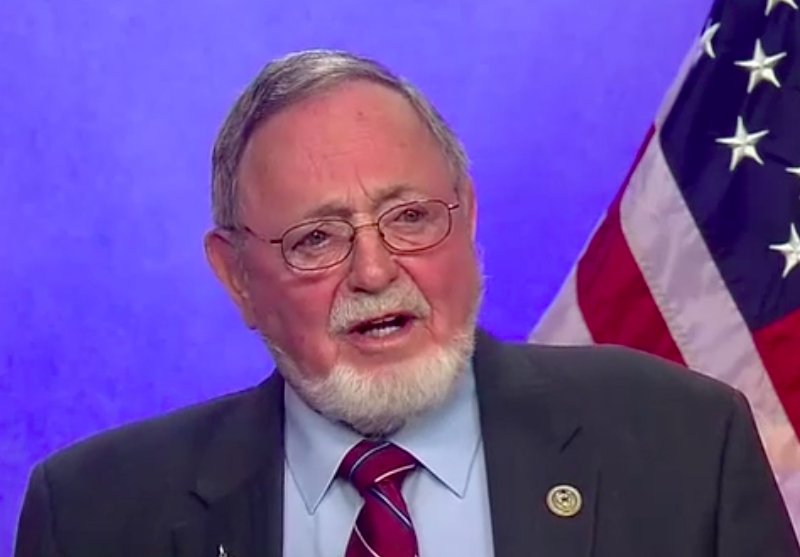
KAKM ran the “chroma” very hot on Young to make him look red, and on HD TV, he was nearly a posterized red during three quarters of the debate. The color adjustments on Galvin and the panel of reporters was normal. The image comparison below is from a computer screen and doesn’t show the dramatic difference that was evident on an HD Sony television.



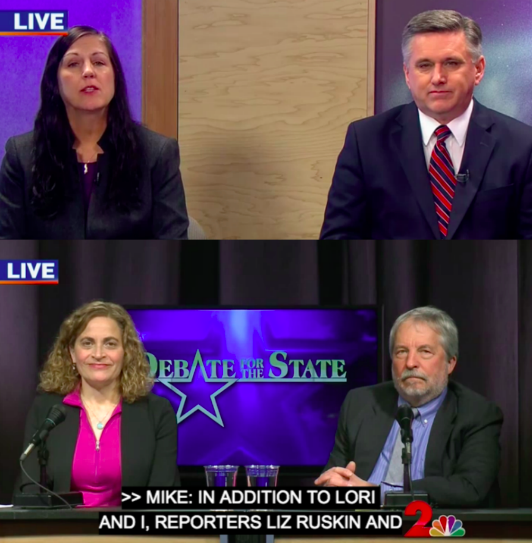
Must Read Alaska asked the Young campaign if the congressman was unusually red, and was told he was not, although the studio was warm.
In campaign ads, video image is everything as campaigns use cinematic techniques to favor their candidates and discredit others. Lighting, image quality, color, and angle are all considered tools in the toolbox of persuasion. Such techniques when used to show a candidate badly are not considered fair play for public broadcasting, which receives government funds and is supposed to demonstrate impartiality.
Further bias was present in the studio itself on Friday night. Galvin was allowed to have her large campaign staff “in studio,” while the two people who accompanied Don Young — his wife, Ann and his state director Chad Padgett — were asked to leave the studio. They watched the debate from a conference room upstairs.
[Correction 10-28-2018: Alaska Public Media representative said Galvin’s staff was not allowed in the studio during the debate and if Young wanted to look better on camera he should have worn makeup. It appears Young mistook the panel of reporters for Galvin supporters. Don Young has never worn makeup, however.]
Over at KTVA, reporters are employing the same types of technology tricks to create an impression among readers:
In the story about the two campaigns, the station used an image of Congressman Young with his eyes closed and mouth open, while the image of Galvin showed her bright-eyed and smiling.
The station could have chosen any number of images in its story about the congressional race and has the technology to change the images. But most online viewers will not click on the video and watch it. They’ll just see the image, read the story, and move on. And the impression they might take from this photo is that Young is not very alert, while Galvin is.