
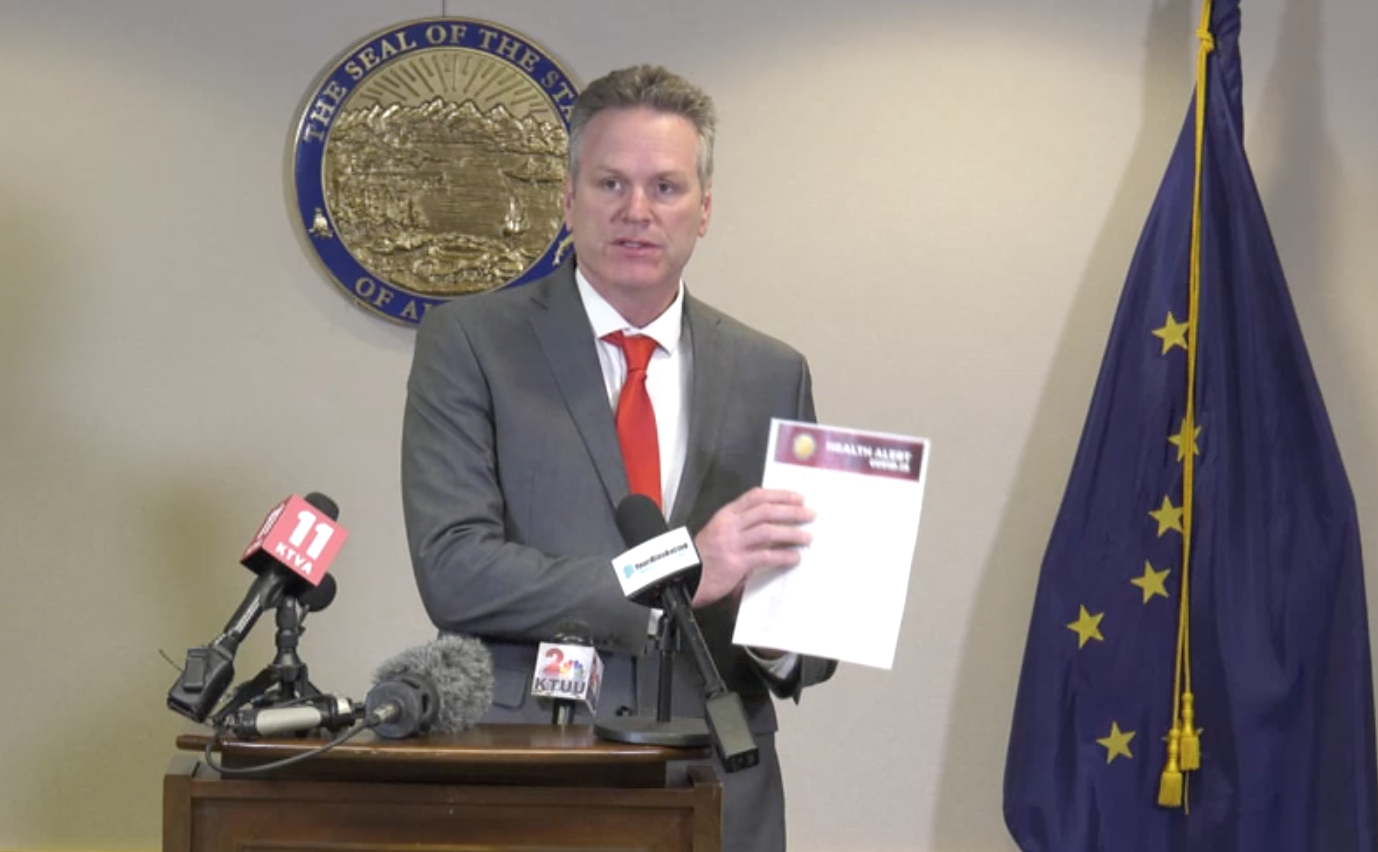
The spring of 2020 came in like a monster in Alaska. And it wasn’t the snow or cold — there had only been about 22 inches of snow that winter. What happened after March 12 that year could encompass an entire book on pandemics, policy, and public panic.
Three years ago today, the first case of Covid in Alaska was announced — a pilot of a cargo jet had tested positive. Anchorage is the nation’s leading cargo airport, with flights coming from China and South Korea on an hourly basis, stopping for fuel in Anchorage before heading to distribution facilities in places like Memphis, Tenn. and Louisville, Ken.
The pilot was treated at a hospital and was quarantining in a hotel. But officials knew that Covid had arrived and was probably elsewhere in the population, undiagnosed and spreading.
One day earlier, President Donald Trump, already in Covid battle mode, had announced a travel ban from Europe. In January, he had banned travel from China for non-American travelers.
By the time the pandemic was under control, Alaska had been seen as a model for balancing the need for a stabilizing health policy and the constitutionally set personal freedoms:
- Second lowest death numbers of any state
- Highest survivability of any state
- First state to vote to get rid of emergency
- Economy was opened in early May of 2020
- No statewide mask mandate
- No statewide vaccine mandate
- Led with other states with court actions to stop federal vaccine mandates under Biden.
But on March 12, 2020, panic was already setting in in Alaska, where medical facilities were not equipped for the expected pandemic, where not enough personal protective gear was available for medical workers, or enough ventilators for the seriously ill. The epicenter of the virus was in Seattle, Alaska’s hub city for travel.
Two days before Alaska’s first case, Gov. Mike Dunleavy had declared a state emergency in anticipation of Covid’s arrival, so that resources could be mobilized for the unknown needs that would soon arise.
Gov. Dunleavy, Chief Medical Officer Dr. Anne Zink, and Alaska Department of Health and Social Service Commissioner Adam Crum had just announced sets of recommendations to help prevent or slow the spread of cases of the illness, the origins of which are still debated today, but which many believe began in a bioweapons project at a laboratory in China.
The Alaska state recommendations were for people to mask up if they were in public. While the governor never mandated masks, most municipal leaders eventually did, including then-Mayor Ethan Berkowitz, who issued a mask mandate in June of 2020.
The first Alaska resident to have died from Covid was a resident of Petersburg, who passed on March 16 at a health care facility in King County, Washington, where he had been admitted for care for a different, but serious medical condition.
On March 27, the first in-state death from Covid was announced. It was a 63-year-old person who was in an Anchorage hospital for treatment for another illness, and who had tested positive for Covid on March 25.
By March 29, the Legislature had given the governor the authority to do what needed to be done to keep the state from going into a Covid crisis, by addressing public health and economic problems that would arise, and to move funds from one area of the budget to others, in order ensure the government was nimble in its response.
The recommendations for Alaskans on this day in 2020 were:
- Wash your hands often or use hand sanitizer if soap or water are not available, before going and out of rooms or buildings, using restrooms, and before eating. Avoid touching eyes, nose, and face, cover coughs or sneezes, stop shaking hands, and regularly clean and disinfect frequently touched surfaces and items.
Recommendations for higher risk Alaskans
On this day in 2020, the advice for people who are over 60, and anyone who has serious chronic health conditions was to stay home as much as possible, ask family or friends to bring in supplies and food, avoid crowds and mass gatherings where exposure risk is greater, stay at least six feet away from others who are sick, limit close contact and wash your hands often and telecommute for work.
Leftists and Democrats began clambering for the governor to do more — to enact a statewide mask mandate and order business to close. The Legislature, which was run by progressives, still had a mask mandate in the Alaska Capitol during the 2022 legislative session, and required testing to enter the building. Accusations that the governor was not doing enough came from Democrats in the Legislature and Democrat activists around the state.
By later that year, the Democrats were hammering Dunleavy for not enacting more mandates.
“Public health officials have repeatedly urged statewide policies to slow the spread of the disease, most recently during a House Health and Social Services Committee on October 21,” the Democrat-controlled Alaska House Majority stated in a news release later that fall. “The Dunleavy Administration, however, has failed to enact basic statewide protective measures that we know are effective, like a temporary mask mandate in places where social distancing is difficult, implementing capacity limits in public places, and issuing workplace safety standards.”
The critiquing of the governor was largely from partisan Democrats, showing the ideological differences between their authoritarian style and Dunleavy’s attention to the imperative of civil rights. They said he was killing Alaskans.
Dunleavy said all along he would avoid infringing on the rights of Alaskans.
“I certainly don’t want to infringe on the rights of folks,” he said on July 13, 2020. “We don’t need to take draconian actions here in Alaska.”
Some also criticized him from the right side of the spectrum, saying that he was too quickly led into liberty-infringing policies by his Chief Medical Officer, Dr. Zink.
The governor did order a temporary “shelter in place” mandate in at a news conference, where he required Alaskans to “remain at their place of residence and practice social distancing.” People could go outside and get exercise but were to remain six feet from anyone who was not inter household.
That spring was the first time Alaskans had heard of such a thing called “social distancing.” By that time, many city leaders had already ordered their own “hunker down” mandates.
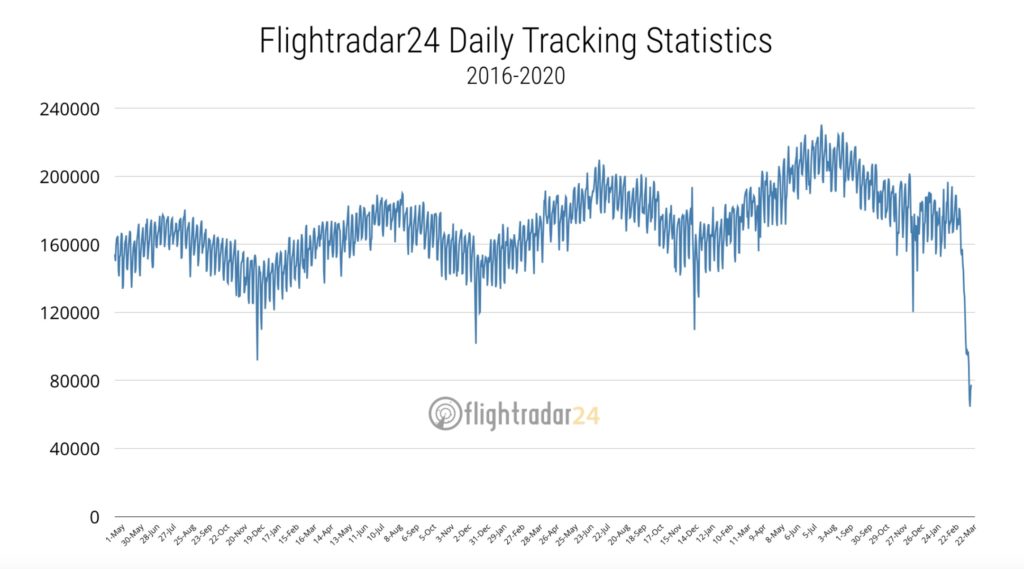
Three years ago this month, the skies became suddenly quiet as most Americans stopped flying. FlightRadar24.com tracked a 21% drop in air traffic. Airports were empty, reflecting the general panic that had taken hold of the country as the still little-understood virus was spreading and killing its way across the nation.
Although Dunleavy used a relatively light touch, only shutting the economy down for a few weeks, draconian shutdowns ordered by Mayor Berkowitz extended even after he quickly left office in October of that year, under scandalous circumstances. His unelected successor, Austin Quinn-Davidson, continued his policies with mask mandates and bans on gatherings.
By May of 2020, nine Alaskans had died either from or with Covid, and the economy began to suffer from the effects of not only the pandemic, but the reactions to the pandemic.
By June, the state had enacted a traveler testing program. Incoming persons to the state needed to test within 24 hours of arrival or could quarantine for 14 days without testing.
Testing on arrival in Alaska airports identified 951 Covid infections, or one per 406 arriving travelers, according to a report from the CDC from last year “and might have contributed to Alaska’s low incidence during the summer by reducing opportunities for community transmission at travelers’ destination locations.”
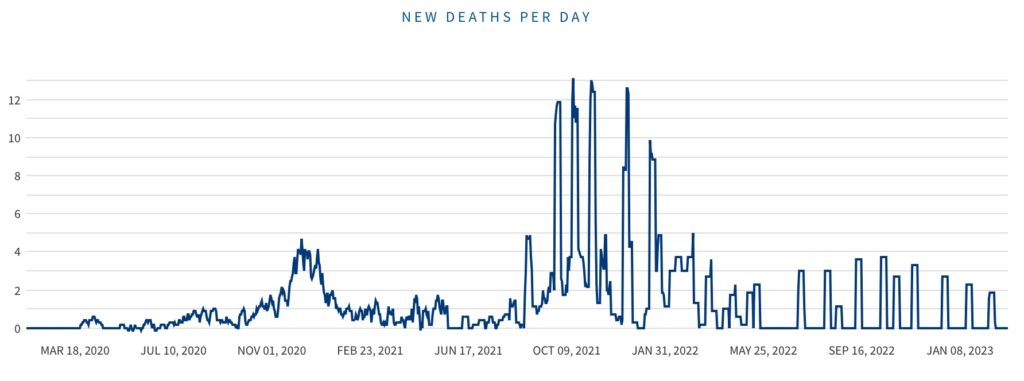
Today, three years after the first case of Covid, there have been 282,000 cases of Covid reported in Alaska, with many other cases unreported. The number of Alaskans who have died from or with the disease stands at 1,422 as of March 5. About 64% of Alaskans are vaccinated.
The coronavirus pandemic was a test for the nation and its leaders. Some leaders, such as Alaska Gov. Mike Dunleavy and Florida Gov. Ron DeSantis, survived politically, and were reelected two years after the pandemic hit. So did some of the draconian governors such as Gov. Gavin Newsom of California, who also won reelection even after a major recall attempt in 2021, which failed. The president at the time, Donald Trump, did not survive politically, as Covid became politicized and the government responses became part of the election debate that year, and after some states went to an all-mail-in election to stem the spread of the virus.
Have an opinion on this topic? Have memories of that year? Share in the comment section below.


