
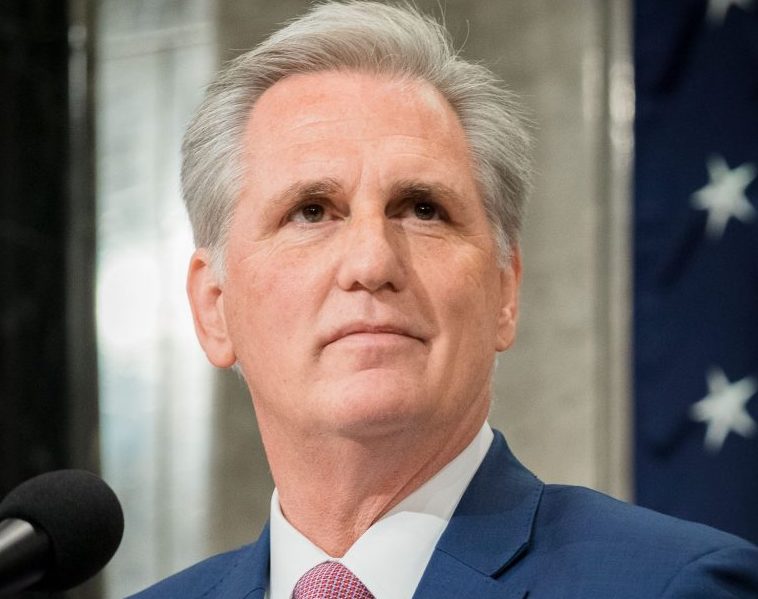
In a secret ballot among Republican U.S. House members, Rep. Kevin McCarthy of Bakersfield, Calif. has overwhelmingly won the Republican nomination for speaker, according to those who were in the room and spoke anonymously. But he was not without challenges from the right wing of the Republican Party and he has yet to secure the speaker’s job; that vote will be taken in January on the floor of the House.
McCarthy, a fourth-generation resident of Kern County and son of a firefighter, won 188-31 against a challenge from Rep. Andy Biggs of Arizona. When the House gavels in in January, McCarthy will need almost all Republican votes to become speaker, and it’s unclear if the right wing Freedom Caucus members will cooperate, or hand the gavel back to Rep. Nancy Pelosi.
Biggs, a former chair of the House Freedom Caucus, said on Monday that he would run against McCarthy, but admitted his chances of winning were “tough.” And even some Freedom Caucus members recognized the danger of splintering.
“If we don’t unify behind Kevin McCarthy, we’re opening up the door for the Democrats to be able to recruit some of our Republicans,” Georgia Rep. Marjorie Taylor Greene told reporters.
Other House Republican roles that were voted on include Rep. Steve Scalise of Louisiana, who was elected without opposition to become House majority leader. Rep. Tom Emmer of Minnesota beat two challengers to be the House majority whip.
With several races around the country still uncalled, Republicans are on the verge of taking 218 seats. Democrats have 205 seats, and about 12 are still not called, including Alaska’s House seat, which appears to be going to the Democrats and will likely be in the minority for the next two years.
In the Senate, Alaska will also be in the minority due to the 51 seats won by Democrats this cycle.
Republicans will have to count on no defections to the Democrat caucus and no splintering by the Freedom Caucus in order to keep the House.


