
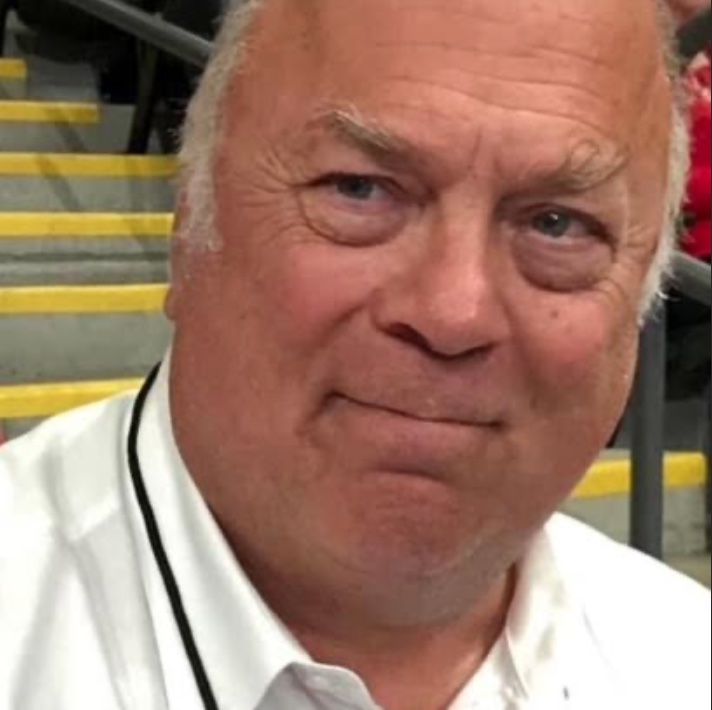
By REP. KEVIN MCCABE
A few days ago, I was listening to the radio when I heard someone talk about the “greater fool theory.” It’s a financial concept, one that says someone might invest in something risky, hoping that someone else, a “greater fool,” will come along later and see enough value in it to pay more. But I started wondering if that theory is about more than just Wall Street or housing markets.
What if it also applies to something bigger? What if it’s how you build a state, or even a nation?
The United States and Canada were built by greater fools. Those dreamers, builders, homesteaders, prospectors, railroad men, the people who took the long bet. They didn’t always see a profit in their lifetime. In fact, most didn’t. But they built anyway. They bet everything on a nebulous future they wouldn’t live to see, and we’re standing on their shoulders because of it.
Consider the Gold Rush in California, or the Klondike in Yukon. Thousands risked everything for a shot at wealth. Most failed. But they carved trails, settled towns, and opened trade routes. Or look at the homesteaders who tried to farm the Plains, or even Palmer. Many gave up, beaten by drought, cold, and isolation. But they broke ground that still feeds populations. Ranchers lost whole herds in the winters of the late 1880s, but they kept going and built an industry anyway. The early railroad barons were some of the biggest fools of all. Collis Huntington didn’t live to see the full benefit of the Transcontinental Railroad. Sir William Mackenzie, who tried to unite Canada with steel rails, died bankrupt. But their tracks are still running today.
That’s the legacy I see when I look at the Northern Rail Spur, Port MacKenzie and the Point MacKenzie Rail Extension. It’s the same spirit. We’re being told it’s a gamble. That it’s too risky. That it won’t pay off. That we need an anchor tenant before we build. That’s the kind of thinking that would have stopped every big American project before it ever started. The Erie Canal, the Alcan Highway, the oil pipeline; none of those had guarantees. But somebody had the courage to bet on a future that would justify the effort.
Port MacKenzie is not a mistake. It’s a deep-water port capable of handling the biggest ships in the Pacific. With the right connections, it could ship copper and rare earth minerals from Interior Alaska to Asia, bypassing congested ports in the Lower 48. The Port MacKenzie Rail Extension is 75 percent complete. We’ve already invested $184 million. It just needs to be finished—maybe another $100 to $150 million, if we go by typical rural rail costs of $5 to $10 million a mile. The Alaska Railroad says more. I say let’s do the math, compare apples to apples, and see if our numbers aren’t closer to the truth.
Add to that the Northern Rail Extension, which would bring in even more freight from the resource-rich Interior, Canada, or even goods from the lower 48. That’s worth 3,000 jobs and over $300 million a year in projected benefits.
Thanks to leadership from Mat-Su Borough and Congressman Nick Begich, we secured a $7.9 million BUILD Grant for a barge ramp. And I introduced House Bill 255 to create a regional port authority that could make this a reality, not just for Mat-Su, but for all of Alaska.
The critics don’t get it. They want a guarantee before they lift a finger. But that’s not how you build big things. That’s not how you build anything worth having. Sometimes you have to go first. Sometimes you have to lay track into empty country, trusting that the trains will come. It’s easy to call that foolish. But if that’s foolish, then Huntington was a fool. Mackenzie was a fool. Every homesteader, prospector, and settler was a fool.
And yet they built the backbone of two great nations.
We’re not reckless. We’re not blind. We see the costs. But we also see the opportunity. If we build Port MacKenzie and connect it to the rail system, we’ll open up a whole new trade corridor. We’ll unlock our mineral wealth. We’ll create jobs that last for decades. And if we don’t? Then we’ll have at least tried to do something bold, and our children will have infrastructure to build on, to expand with bigger and better plans. We’ll have done what Alaskans have always done, taken risks, shouldered burdens, and tried to leave something better behind.
That’s what this is about. We’re not building for today. We’re building for 50 years from now. For our kids and grandkids. For a future we may not live to see. We’re not fools. But we’ll risk being called that if it means building something great.
Let them call us what they want. History will remember who built and who sat on their hands.
Kevin McCabe represents Big Lake in the Alaska Legislature.


