
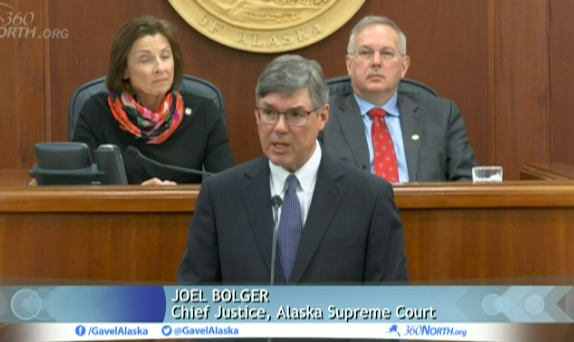
The Judicial Council advanced to Gov. Mike Dunleavy the names of three judges to fill the upcoming vacancy on the Alaska Supreme Court. But in breaking a tie vote, Chief Justice Joel Bolger turned back the only minority and rural applicant.
The finalists were Dani Crosby, Jennifer Stuart Henderson, and Yvonne Lamoureux, white urban women.
The members of the council had the chance to advance the name of a rural minority judge, Paul Roetman of Kotzebue Superior, but the three lawyers on the council voted against the rural judge, while the three public members voted for him.
Chief Justice Joel Bolger broke the tie and voted against Roetman, in spite of Bolger being on the record stating that the court needs rural justices and minorities.
The judges whose names were advanced are all Anchorage Superior Court judges. Their names will be forwarded to the governor who must choose the next Supreme Court justice from those three.
Roetman, who describes himself as Mexican-American, has served in Kotzebue for many years and his nomination was championed by public member Kristie Babcock.
Ironically, it was Babcock who faced hostility from Democrats for her nomination to the judicial council because she was not from rural Alaska. Rep. Matt Claman lobbied against her for that reason, as did other Democrats and two members of the Alaska Redistricting Board. Babcock is from Kenai.
During the discussion at her first vote on the Judicial Council, Babcock said that if Roetman’s name could not be moved forward, she’ would vote against the other nominees.
“If we cannot move that name forward, then it’s not right to move any names forward,” Babcock said.
Roetman is considered a conservative “constructionist” judge. The three whose names were advanced to Dunleavy are all considered liberal to quite partisan.
Bolger is leaving the court early. Although his term ends in 2027, he has become controversial due to perceived hostilities toward the Dunleavy Administration.


