

Firing someone from the Executive Branch for a disrespectful “poke in the eye” letter of resignation is not enough, according to Federal Judge John Sedwick.
If Gov. Dunleavy’s chief of staff had only fired state elections attorney Libby Bakalar because of her vulgar and partisan blog, that would have been OK.
Alaskans have a right to expect their election lawyers will be fair and impartial, the judge wrote. And in her many extreme and vulgar blog and social media posts, Bakalar attacked not only President Trump, but insulted all who voted for him — the 54 percent of Alaskans who cast their ballot for Trump in 2016.
As the senior elections lawyer for the state, Bakalar could have been fired for using awful judgment that was likely to hurt the public trust in the Division of Elections, where she had a key role in advising Lt. Gov. Byron Mallott. But Sedwick didn’t like the way that Chief of Staff Tuckerman Babcock fired Bakalar, and therefore has found her firing unlawful.

“That is to say, frequent and widespread partisan commentary by an elections attorney is reasonably likely to undermine the public’s trust in the integrity and credibility of elections,” Sedwick wrote.
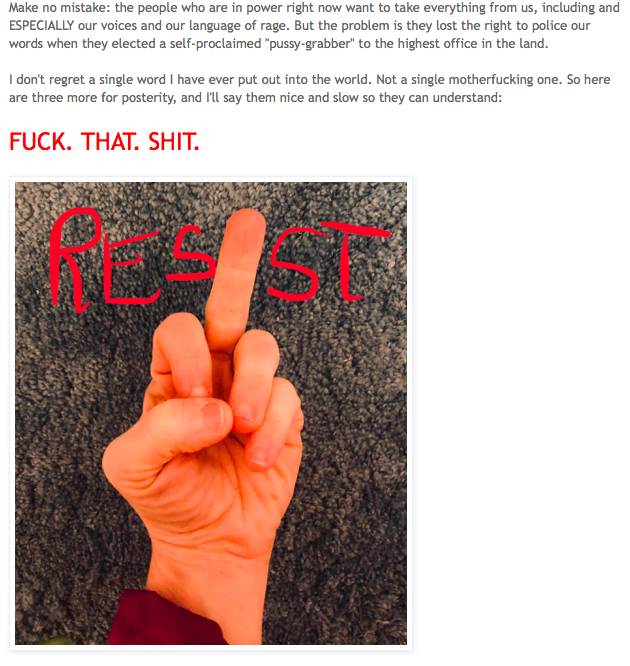
“While Defendants now rely on the unprofessional content of Plaintiff’s blog, which contained irreverent and vulgar language, that concern was not mention by Babcock during his deposition. Indeed, he specifically refrained from suggesting he knew anything specific or particular about her blog or its contents. Rather, he maintained that he just generally was aware she had strong opinions and a blog,” the judge said.
“However, Defendants, who made the decision to fire Plaintiff without consultation, failed to show that they had any awareness of this particular concern, or that they acted in response to it rather than a dislike of her personal views.
“Without an adequate showing that Defendants actually were motivated by a reasonable concern for the potentially disruptive effects of Plaintiff’s publicly espoused political opinions, the court must conclude that her termination ran afoul of the First Amendment,” Sedwick wrote.
In other words, Babcock should have simply cited Bakalar’s many coarse political rants as cause for her dismissal.
The judge seems unsure if Bakalar was a policymaker, and therefore she might enjoy some immunity for her extreme views, even while she was the key advisor to Alaska’s election system.
“In Biggs, the Ninth Circuit held that a city attorney operated as a policymaker in city government, because, even though the attorney was a subordinate, she presented reports to the city’s governing council on legal issues, worked on high-profile issues, drafted regulations and ordinances, and spoke to the press on occasion.136 These responsibilities, notably similar to Plaintiff’s, were enough for the court to find that she occupied a position where political alignment was a valid job qualification. Based on Biggs, it was reasonable for Defendants to think that a high-level assistant attorney undertaking the responsibilities she outlined in her resignation letter could be fired for political reasons. While this court ultimately concluded that Plaintiff’s position was distinguishable given her role as counsel to the Division of Elections, no existing precedent or body of persuasive case law would have made this conclusion readily apparent. That is, there is no existing precedent that placed this issue beyond debate,” Sedwick wrote.
The decision may be appealed to the Ninth Circuit Court of Appeals. As it stands, it’s a partial win for Bakalar, who is now an attorney for the City of Bethel, and a partial loss, as she is not able to hold the governor or Babcock personally liable.
The entire decision is at this link:



