
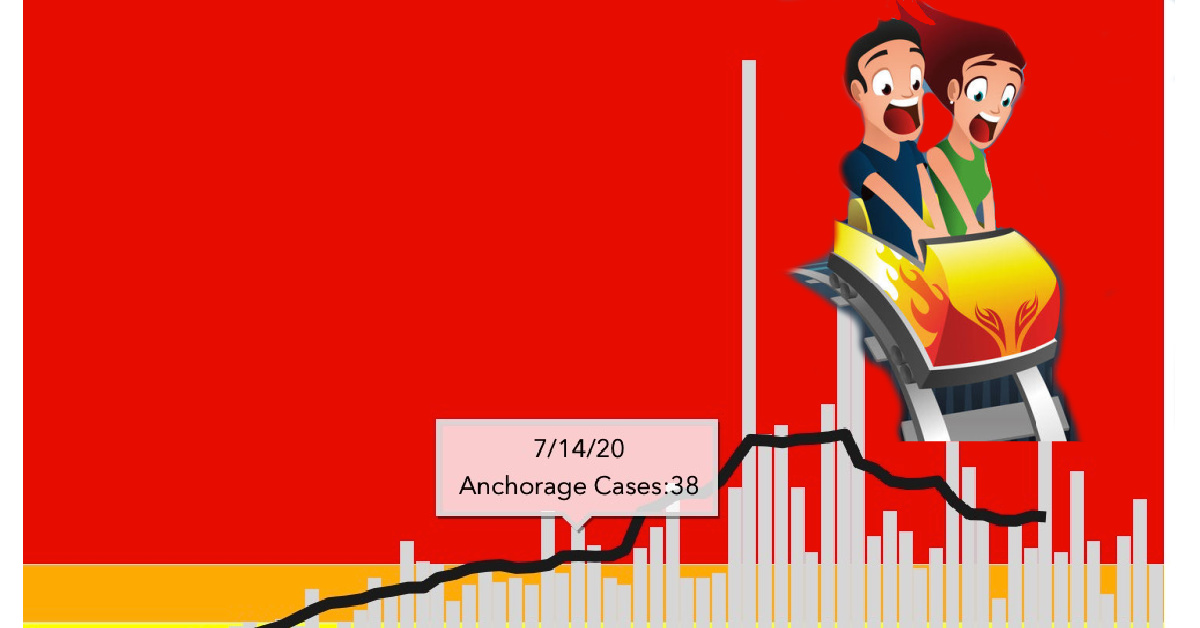
BUSINESSES SAY THEY ARE THE SACRIFICIAL LAMB FOR BAD SCIENCE
Is it working? It has been three weeks since Mayor Ethan Berkowitz’s latest Emergency Order 15 went into effect. On Aug 3, he shuttered bars, restaurants, bingo halls, theaters, and churches.
Gatherings indoors are limited to 15 in Anchorage, but people must remain at a distance from each other. Restaurants may serve outdoors and for takeout, and several have created tents outside their establishments, complete with walls, the equivalent of rustic dining rooms with drafty corners.
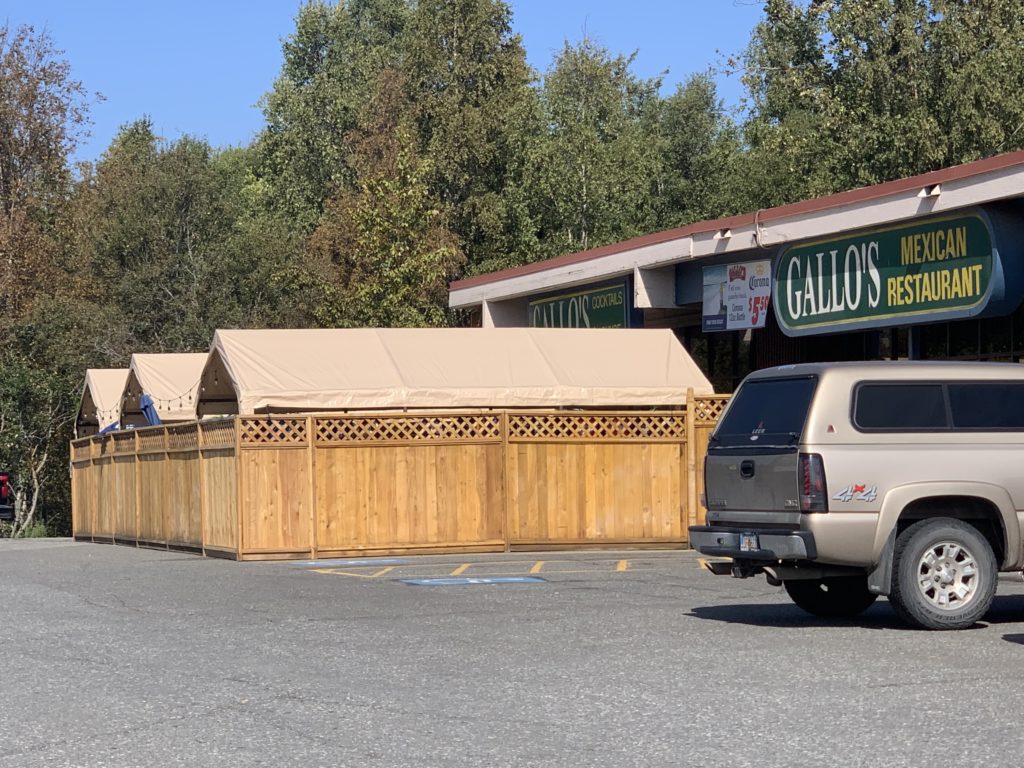
Other restrictions and mask mandates are still in effect, hobbling the business community, whilst government work continues unabated and code enforcers comb the city for lawbreakers.
Three weeks later, the change in the number of COVID-19 cases diagnosed per day in Anchorage is somewhat unremarkable.
The trailing average is about 40 new cases a day in Anchorage in each of three-week increments since Aug. 1.
That’s six per day less than the three weeks prior to Aug. 1 (if one removes the one day spike when 152 cases were diagnosed in Anchorage on July 25, which reflects an outbreak at Copper River Seafoods.)
But the decline had already begun in late July, before the emergency order went into effect.
It’s even more striking if you look at the 7-day central moving average for positive tests, shown in the chart below. That average is taken three days before and three days after a point in time, to show more of a rolling average for positive tests:
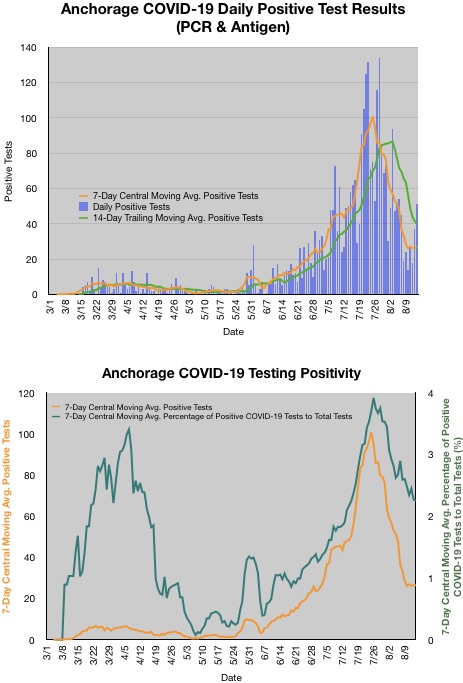
These charts show that there’s a roller coaster effect with this virus, but do not indicate that the complete shutdown of the Anchorage economy in March slowed the spread.
The mayor briefly opened up the economy in June and July, only to once again close some venues for the entire month of August, primarily hitting restaurants and bars. By the time he decreed EO 15, the cases were dropping.
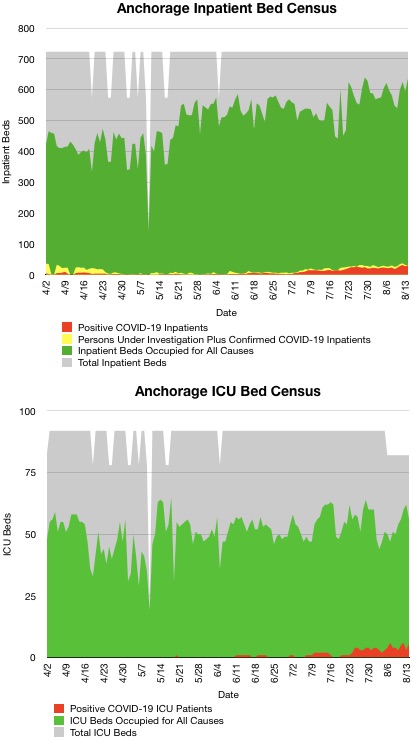
The mayor has been concerned that the hospitals would become overwhelmed with COVID-19 patients, but the data shows that the number of actual beds occupied by these patients is relatively stable and low, currently at 41.
Since March 3, only 198 Alaskans have been hospitalized with the illness — some of them had other conditions that complicated their health, such as heart disease, age, diabetes, or asthma.
The COVID-19 patients are the red lines in these charts:
Mayor Berkowitz has hammered home time and again that he is following the science. The mask mandate is one of those science-driven laws that some say has no science behind it at all and others say may help a little bit at least.
Yet on Friday, he predicted that his mandates would continue in some fashion, although he would not say what he plans to do next week when EO 15 expires.
“I’m going to impose upon you for many more months,” Berkowitz said.
“When we get to the end of the month, we’re going to do something different than what we’re doing today,” the mayor also said.
As Anchorage heads into the chilly fall season, it’s going to be harder for restaurants to provide outdoor dining. On Sept. 15, the daily maximum average temperature is between 53-57 degrees. The minimum temperature in Anchorage is between 39 and 45 degrees.
Some business owners who were shut down on Aug. 3 say they have been sacrificial lambs for no good reason.
“If we were the culprits in the rise of COVID,’ there would have been a sharp drop in the numbers about 10 to 14 days after the shutdown,” said Sandy Powers of Tudor Bingo. “This did not happen. The bars, restaurants, theaters, bingo halls, and churches are paying a massive price. Our employees are struggling, businesses are struggling, and somehow we are supposed to feel like we are a shield protecting the city. It is devastating to all of us.”
At Tudor Bingo, the gaming site has 12,000 square feet and between 100-120 people are in the building at a time, generally seated to play the game. None of the bingo halls have been a site of an outbreak.
“The burden is becoming too great to bear,” said Powers.
Other business owners said it’s the big stores that remain open that are more likely to be places spreading the virus, but are not paying the price that small operators are paying.
WHAT TO MAKE OF THE DATA?
Alaska has been under a state of emergency due to the COVID-19 pandemic since March 11. Since that time, there have been 31 deaths attributed to COVID-19 among Alaskans, or about one death every five and a half days. The deaths have been primarily among old or infirm individuals. Some of those deaths are disputed by people who were close to the situation.
The data could very well show that by completely shutting down the economy, the government can, in fact, drive down the number of infections. But it’s a temporary fix, because every time the economy opens back up, infections eventually follow. And no government has yet said what “flat” is or when masks can come off, frustrating business owners and causing many of them to fold.


