
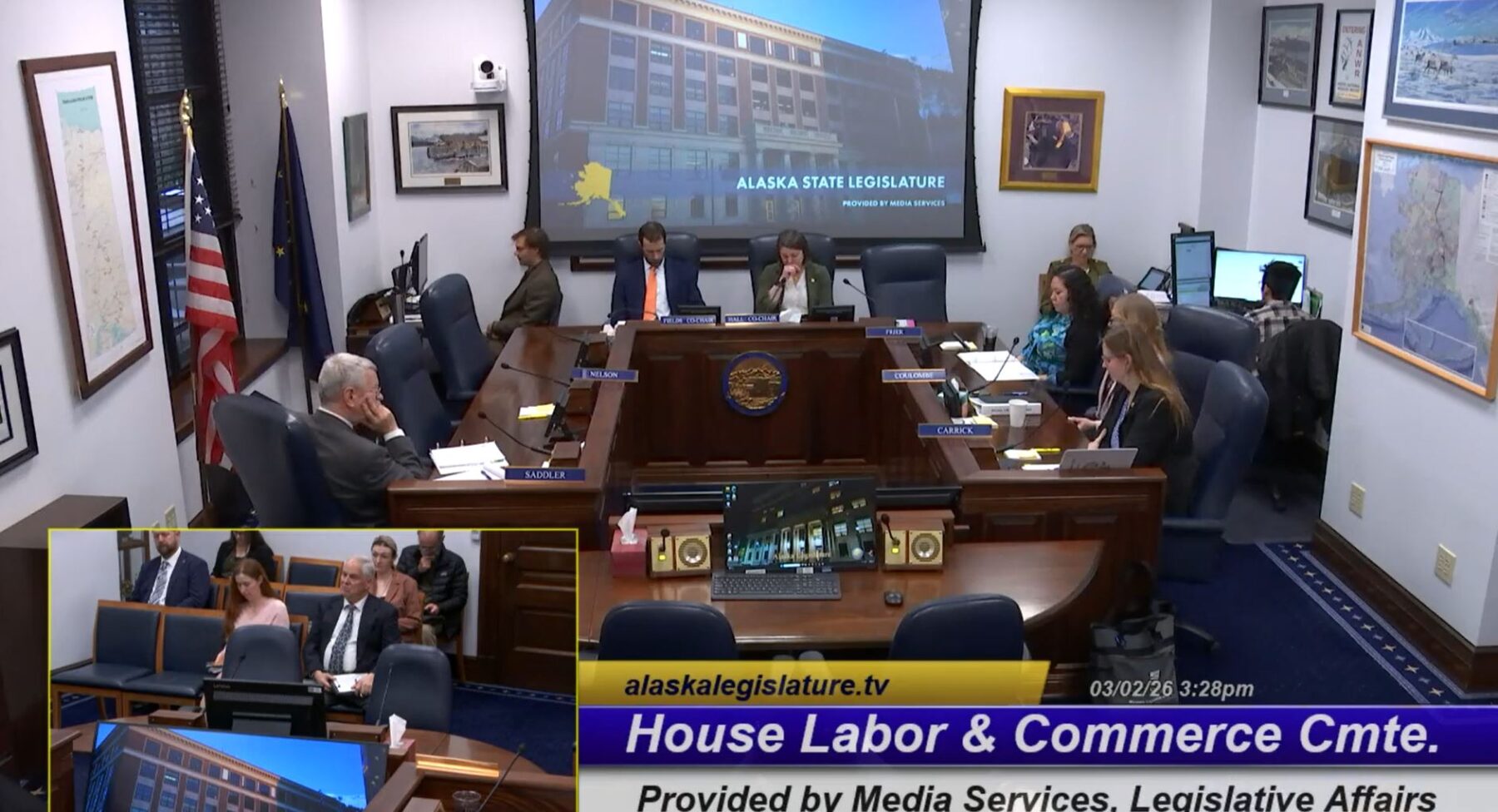
The Alaska House Labor and Commerce Committee convened Monday afternoon to confront one of the state’s most pressing fiscal challenges: escalating health care costs for municipalities and their employees. The session featured detailed testimony from local leaders before turning to two governor-backed and sponsor-driven bills aimed at strengthening worker protections and employment training. With health care expenses outpacing inflation and straining budgets from Anchorage to Kodiak, lawmakers explored both immediate pressures and long-term policy solutions.
Municipal Health Care Crisis – Data, Impacts, and Prevention Strategies
Assembly Vice Chair Anna Brawley of Anchorage opened the presentation with data on rising costs for the Municipality and Anchorage School District. Speaking not as an official representative but with data gathered from staff, Brawley highlighted per-member average claims paid: “In 2018, that was $1,829… In 2025, that went over $3,000.” Total spend climbed from $48.75 million in 2018 to $64.6 million in 2025. She noted utilization rose only 6% last year while costs jumped 20%, attributing the gap to broader policy and economic factors.
Brawley praised the municipal Vera Health Care Clinic as a bright spot, crediting preventive and primary care for reducing downstream expenses. “Having access to preventive services, primary care, and really routine care to manage chronic conditions… is very helpful,” she said. She warned that without systemic changes, municipalities face impossible choices: shifting costs to employees through higher premiums, cutting other services, or reducing benefits. “It is difficult to see how we can grow our economy when all of us are really facing extremely high health insurance premiums.”
Kodiak Mayor Terry Haines echoed the strain, noting health care inflation erodes wage growth. “Instead of a raise in pay, we pay increased health insurance premiums, which often go unseen and unnoticed by the employees,” he stated. He highlighted the end of enhanced ACA subsidies, projecting sharp increases for individuals and couples—potentially $44,000 annually for a 60-year-old couple earning $82,000. “Many will make the hard choice… and I think we will all pay the price in the form of a less healthy population with a health care plan called emergency care.”
Juneau Assembly Member Maureen Hall, drawing on 20+ years as a nurse and school nurse consultant, described school nurses as Alaska’s “hidden health care system.” She warned cuts have shifted burdens to emergency rooms and families. Hall advocated prevention, citing Bartlett Regional Hospital’s Hello Baby program as a model for addressing prenatal substance exposure and early childhood trauma. “Real health transformation happens in the home, not in the hospital,” she emphasized, calling for investments in ages zero to three.
Co-Chair Hall (D – Anchorage) committed to distributing Brawley’s written materials and requested details on municipal contract negotiations. The testimony underscored a statewide crisis affecting budgets, workforce retention, and economic growth.
HB 267 – Rebalancing Unemployment Insurance for Workforce Training Expansion
The committee heard first from Governor Dunleavy’s bill HB 267 on employer contributions to the Unemployment Insurance (UI) trust fund and STEP program. Policy advisor Robert Boyle described the fund as “over capitalized” at $821 million, exceeding solvency targets by $247 million. “This bill offers a pathway to resolve both issues,” he said, shifting 0.4% employer contributions to STEP while reducing UI taxes.
Director Paloma Harbour detailed projections: employer UI contributions could drop to zero until the fund nears 3.3% reserve ratio around 2040. “It would mean an overall employer savings of $68 million,” she noted. The bill maintains employee contributions while expanding training capacity—STEP currently receives $11.2 million in applications against only $7 million available.
Representative Carrick (D – Fairbanks) questioned the declining reserve ratio trend, and Representative Colombe (R – Anchorage) asked about employee taxation: “We’re one of three states to tax employees.” Harbour confirmed no changes to TVEP and clarified reimbursable employers (e.g., State of Alaska) pay 100% of claims directly.
The bill was set aside after initial briefing.
HB 260 – Strengthening Wage Protections and Contractor Accountability on Construction Sites
The committee then turned to House Bill 260, sponsored by Representative Andy Josephson (D – Anchorage), addressing wage theft and contractor licensing enforcement. Josephson described the bill as creating a “fair playing field” through two pillars: enhanced Certificate of Fitness (COF) enforcement for electricians and plumbers, and joint-and-several liability for unpaid wages.
Staffer Ken Alper explained the COF provisions in sections one and two: failure to possess required certification would trigger administrative penalties rather than hard-to-prosecute misdemeanors. “The bar is really hard to get a misdemeanor conviction now… The intent of the bill… is to streamline the process,” Alper stated. A conforming change in section four adds these cases to the Office of Administrative Hearings docket.
On wage protection, Alper noted subcontractors often dissolve, leaving workers unpaid. The bill imposes liability up the chain: “The obligation to make sure those wages get paid steps up to the contractor themselves.” Information exchange requirements would allow general contractors to verify subcontractor compliance. Josephson highlighted a friendly amendment removing employee liability for COF violations, noting employees are “not in the best position to police themselves.”
Invited trestimony Boris Gresely, policy director for the Western States Carpenters, shared multi-state results: “Cheated workers get paid faster… A culture of compliance and self-policing is established.” He reported helping over 500 workers recover more than $5 million in stolen wages. “Wage theft is not accidental; it is a business model,” Gruskin said.
Aldon Zellhuber, business manager for UA Plumbers and Pipefitters Local 262, spoke from 30 years of field experience and two as state plumbing inspector. He described current enforcement as “a paper tiger,” with no convictions in his career despite repeated violations. “This bill tries to put some teeth back into that,” he stated, emphasizing public safety risks from unqualified workers.
Representative Sadler (R – Ragle River) probed comparative penalties across states, while Representative Fields (D – Anchorage) connected wage theft to safety, noting non-compliant contractors often endanger workers. The bill was set aside with an amendment deadline of March 9 at 10:00 a.m.
The next meeting scheduled for Wednesday. Committee members signaled intent to balance cost containment, worker protections, and workforce development amid Alaska’s unique economic pressures.


