
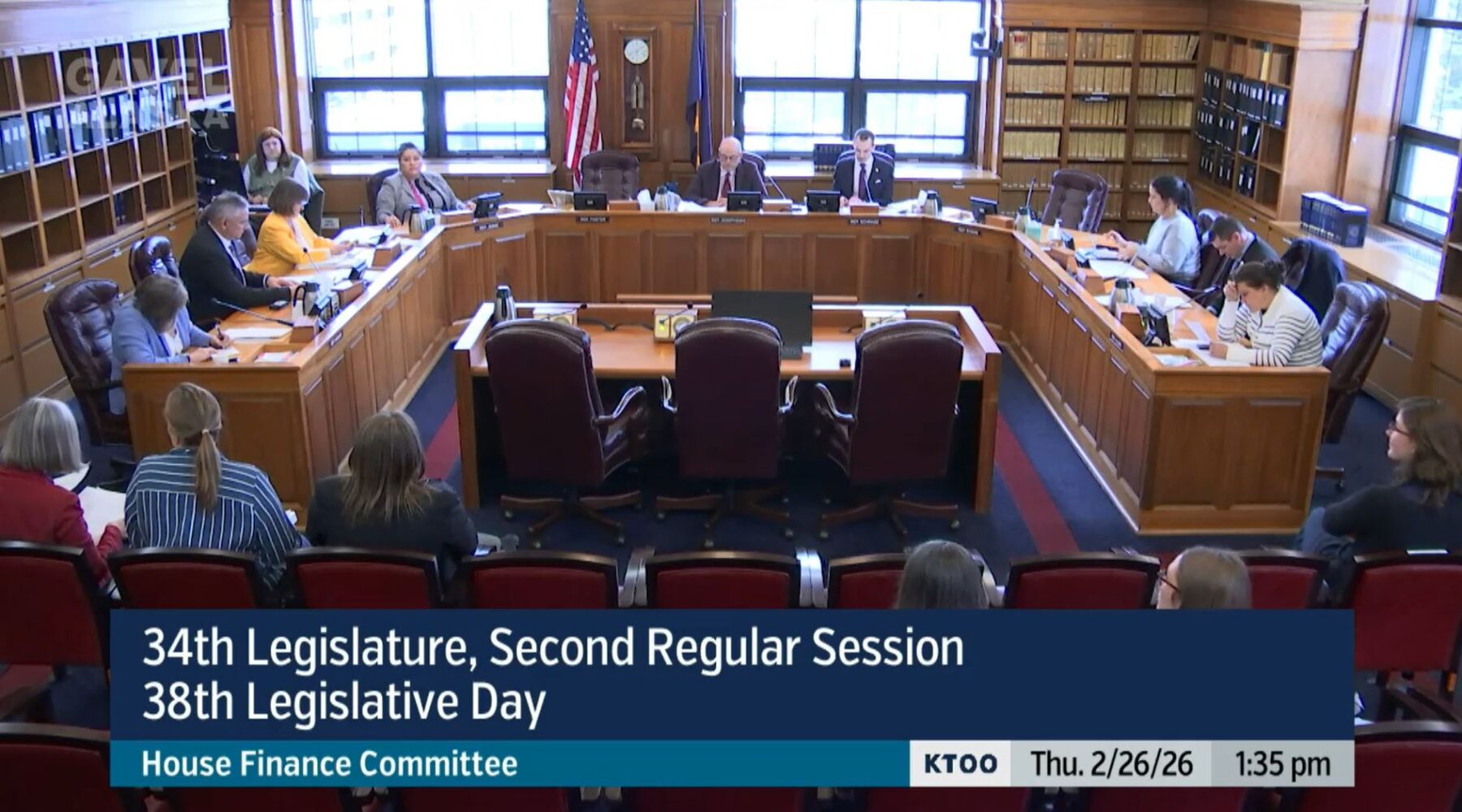
The Alaska House Finance Committee convened Thursday in Juneau to revisit HB 21 on voter pre-registration for minors and receive a detailed budget overview from the Department of Commerce, Community, and Economic Development (DCCED).
HB 21 – Pre-Registration for 16-Year-Olds Sparks Debate on Civic Education and Implementation
Representative Andi Story (D – Juneau), sponsor of HB 21, opened with a passionate case for expanding civic participation. The bill would allow 16-year-olds to pre-register to vote, building on existing law that permits registration three months before age 18. Story emphasized long-term habit formation: “Voting is habit-forming. When someone participates in their first eligible election, they are significantly more likely to continue voting throughout their life.” She cited turnout disparities—52.62% among 18-19-year-olds versus over 71% for 65-75-year-olds—and argued early engagement while students remain connected to schools and families strengthens democracy.
The committee probed efficacy and operations. Representative Stapp (R – Fairbanks) referenced a 2017 Fowler study showing marginal turnout impact and raised concerns about DMV IT capacity, noting the division is “two years behind on critical projects.” DMV Director Kathy Wallace clarified the fiscal note’s $149,000 annual cost for one analyst/programmer position: “It’s not simply changing a couple of forms… there is a lot more programming and interagency connectivity.” The Division of Elections fiscal note estimated $16,410 annually for processing, reflecting updated population data and postage rates.
Privacy and consent dominated discussion. Representative Allard (R – Eagle River) voiced strong concerns about exposing minors to political mailings without parental approval: “At sixteen years old, I don’t think anybody should be open to political propaganda.” Director Carol Beecher assured pre-registered minors would remain on a separate confidential list not provided to the public, though she could not guarantee 100% security against breaches. Story highlighted safeguards: a confirmation notice three months before age 18 requires household verification of residency and intent. No parental consent is required, prompting debate on maturity and attestation under penalty of perjury.
The committee held the bill after reviewing fiscal notes, with plans to revisit implementation details.
DCCED Budget Presentation Reveals Operational Efficiencies and Fee Stabilization Efforts
DCCED Commissioner Julie Sande and Administrative Services Director Hannah Lager presented the department’s FY2027 request of $242.8 million, with unrestricted general funds at $15.9 million—down $5.8 million from the prior year. Lager emphasized DCCED’s small UGF footprint while managing a $1.9 billion portfolio of grants and loans. Key changes included continuing disaster recovery staffing with federal awards, stabilizing CBPL licensing fees by shifting $4.2 million in investigations costs to broader business license and corporate receipts, and establishing the Railbelt Transmission Organization (RTO) under AEA.
The fee stabilization proposal drew focused questions. Lager explained it reduces inequity where “good actors” subsidize investigations of others, aligning with prior pandemic-era general fund offsets. Representative Hannon (D – Juneau) inquired whether the shift would mitigate impacts from multi-state compacts reducing Alaska-based licensees. Lager confirmed it would stabilize fees in smaller pools. On contracting versus vacancies, Lager noted deliberate reevaluation of roles, with examples like the actuary position offsetting expensive external services once filled.
The presentation highlighted successes: Alaska seafood remains the top protein on U.S. restaurant menus, and community management sustainability improved, with non-compliant communities dropping from 31% in 2016 to 15.8% in 2025. Lager credited rural utility leadership longevity and cooperative models like AVEC for efficiency gains saving residents and the PCE program millions annually.
Next week’s agenda including family services and children’s services budget details.


