
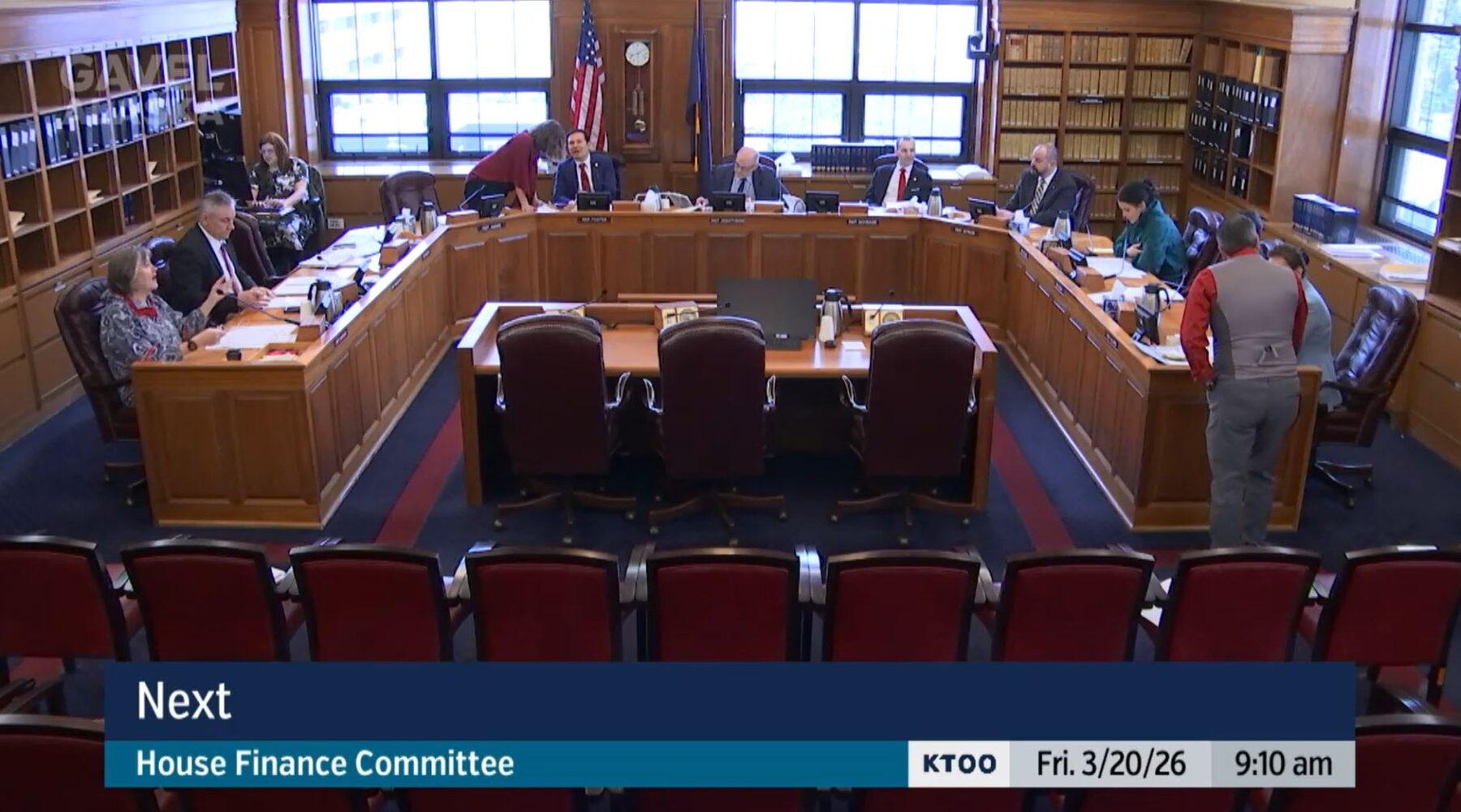
The House Finance Committee convened its ninth hearing on SB 64, the comprehensive elections reform package, focusing on seven amendments amid ongoing concerns about maintaining bipartisan balance and election integrity. The panel prioritized a technical compliance fix before engaging in robust debate over restoring presidential write-in options, ultimately advancing the measure while holding it for afternoon continuation.
The committee first addressed Amendment A, flagged by Legislative Legal as essential to avoid conflict with the federal Help America Vote Act of 2002. Rep. Calvin Schrage (NA-Anchorage) moved the amendment, explaining that SB 64’s removal of utility bills, bank statements, paychecks, and certain government documents as valid identification risked violating HAVA protections for first-time mail registrants. “What this amendment does to fix that issue is what Leg Legal has recommended we do,” he stated. The targeted language allows only those specific voters to use federally accepted documents via a questioned ballot, preserving the bill’s broader ID reforms for other cases. Amendment A passed without objection, ensuring federal compliance without expanding government mandates or altering core state policy.
Attention then turned to Amendment 2, sponsored by Rep. Frank Tomaszewski (R-Fairbanks), which reinstates write-in voting for President and Vice President—lost after 2022 regulations tied to ranked-choice voting implementation. Tomaszewski argued the change restores a fundamental voter right available in all other races. “It reflects a fundamental principle of our election system that people should be able to vote for the candidate of their choice,” he said. The amendment mirrors standalone HB 4, which carries a zero fiscal note and has advanced through House committees.
Rep. Stapp noted that lack of historical success does not justify denial: “Just because nobody’s probably ever going to win a write-in presidential campaign, doesn’t necessarily mean they shouldn’t have the opportunity.” Rep. Jamie Allard (R-Eagle River) stressed military voters: “We know that we don’t want anybody to be disenfranchised… I’d support that there’s a write-in candidates for the presidential race too.” Co-Chair Rep. Neal Foster (D-Nome) leaned toward support, stating, “For me, when it comes to elections, I want to make sure that we err on the side of being overly inclusive as opposed to overly restrictive.” Rep. Elexie Moore (R- Wasilla) cited the Murkowski write-in precedent, where courts upheld voter intent over perfect spelling.
Critics, including bill sponsor Sen. Bill Wielechowksi (D-Anchorage), warned against late-stage additions to a delicately negotiated omnibus measure. Wielechowski supported the concept in principle but cautioned, “I actually support this idea… I guess my thought would be that it doesn’t belong in this bill… It upsets the very, very delicate balance that we have.” His staffer David Dunsmore initially flagged absent elector appointment provisions, later clarified by Legislative Legal’s Andrew Dunmire, who pointed out requiring write-in candidates to certify electors under existing statute. Division of Elections Director Carol Beecher confirmed staffing sufficiency but raised practical ballot-space concerns, noting eight candidates already strain design limits and a write-in would add a ninth column under ranked-choice rules.
Rep. Nellie Jimmue (D-Toksook Bay) urged focus on real issues, citing seven villages disenfranchised by ballot delays in a prior special election. Rep. Alyse Galvin (NA-Anchorage), while backing voter choice, opposed insertion here: the bill’s core goals—voter cleanup, data security, ballot tracking, envelope curing, rural access, and timely results—risk derailment. Rep. Schrage echoed this, preferring standalone HB 4 for full vetting. Rep. Sarah Hannan (D-Juneau) supported the separate bill on the floor but opposed grafting it onto SB 64 to honor negotiated compromises.
A faithless-elector discussion emerged, with Dunsmore noting party-nominated electors pledge loyalty while write-ins might not. Legal counsel confirmed the amendment’s language addresses appointment, though Beecher requested further Division review. Procedural notes included Rep. Stapp’s call for clearer amendment handling and Galvin’s distribution of a historical summary letter outlining the bill’s narrowed scope after excluding dozens of provisions to achieve bipartisanship.
After exhaustive discussion, the roll call yielded a 6-5 adoption: yeas from Allard, Stepp, Moore, Tomaszewski, Bynum, and Foster; nays from Hannon, Jimmie, Galvin, Josephson, and Schrage. Co-Chair Foster announced the bill would hold until the 1:30 p.m. session for remaining amendments and public testimony on HB 21 (minor voter registration).


