FINAL NUMBER FROM COMMITTEE IS $700 MILLION LARGER THAN GOVERNOR’S BUDGET
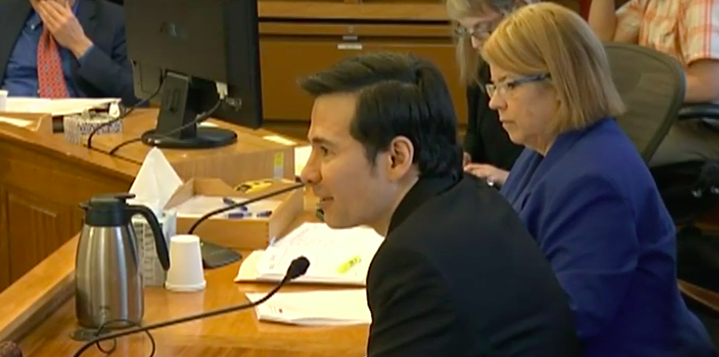
The House Finance Committee completed its work on the State budget on Friday. It goes next to the floor of the House of Representatives for consideration and possible amendments.
Here are some of the highlights, keeping in mind that the budget that the committee was working off of was not the one offered by Gov. Michael Dunleavy for 2020, but was former Gov. Bill Walker’s FY 2019 adjusted budget:
The committee cut $114 million from agency operations and $143 million from statewide items for a total of $257 million total net cuts from the adjusted 2019 budget.
The total state-funded spend in the House Finance proposed budget is $5.3 billion, nearly $700 million more than Dunleavy’s $4.6 billion proposed budget.
[Read: House Finance budget detail]
The only identified source for that level of undesignated general fund spending is the Alaska Permanent Fund dividend, and indeed, the budget approach by the House Finance Committee from the outset was to fund programs first and then calculate dividends for Alaskans based on what is left over.

The plan currently leaves a dividend for eligible Alaskans of about $1,400, which is $1,600 less than Gov. Michael Dunleavy’s $3,000 dividend. Dunleavy has $1.9 for the dividend for the budget.
House Finance cuts include:
- $13.5 million from the Department of Corrections
- $72 million from the Department of Health and Human Services
- $13.8 million from the Department of Transportation
- $10 million from the University of Alaska system, less than one tenth of what Gov. Michael Dunleavy proposed cutting ($134 million)
- $2.6 million from the Legislature’s budget
- $1 million from the Office of the Governor
The current House budget holds steady spending for the Pioneer Homes and the Senior Benefit program, and funds K-12 education for 2021 at $1.324 billion, but does not fund education for 2020.
Why is FY 2020 education not funded? The committee leadership appears to be relying on advice that the 2018 Legislature had already appropriated money for education for 2020 when it forward funded education.
Under AS 14.17.300(b), funds may be expended from the Public Education Fund without further appropriation. The amount in the Public Education Fund appears to come up a bit short, however, at $1.17 billion. Education’s budget was forward funded last year for FY 2020.
The current House budget also increases Public Safety funding by $10 million, and makes no cuts to the Village Public Safety Officer program.
When the budget reaches the House floor, it will once again be the subject of lengthy debate. And the dividend amount will surely be part of that debate.
To be fair, the House Finance Committee did not set a dividend amount, but it also did not say where the money will come from to pay for the budget.
Dunleavy’s proposed budget was built from the ground up and ended up being $1.6 billion less than Walker’s 2020 budget, because it was based on actual revenues. So the House and the governor are working from different budgets.
In total spend, including all funds, the House Finance proposal is $10.2 billion.
Voting in favor of the budget in House Finance were Co-Chairs Tammie Wilson and Neal Foster, Reps. Daniel Ortiz, Bart LeBon, Gary Knopp, Jennifer Johnston, and Andy Josephson.
The Republican minority voted against it: Reps. Cathy Tilton, Kelly Merrick, Ben Carpenter, and Colleen Sullivan-Leonard were all no votes, as they were looking for deeper cuts.
In years past, the Finance Committee has released packets of amendments ahead of the hearing to allow for transparency and for the Administration to review them for technical accuracy. This year, that did not happen.
Another new practice this year is that the Administration’s subject experts were told to not be in the Finance Committee room to help answer questions members may have about implementing a proposed amendment or if funds are available based on the funding source proposed in the amendment.
In years’ past, the Administration was always asked to be in the room to help answer questions.
This was a committee making multi-million dollar decisions without experts in the room. The result may be that there will be a lot of cleanup work to do in the Senate Finance Committee when the budget arrives in that body.
House Finance will meet Monday at 1:30 pm to hear from the Department of Education on a plan for the school bond debt reimbursement program and HB 106. Members will also take up HB 41, shellfish enhancement public testimony.