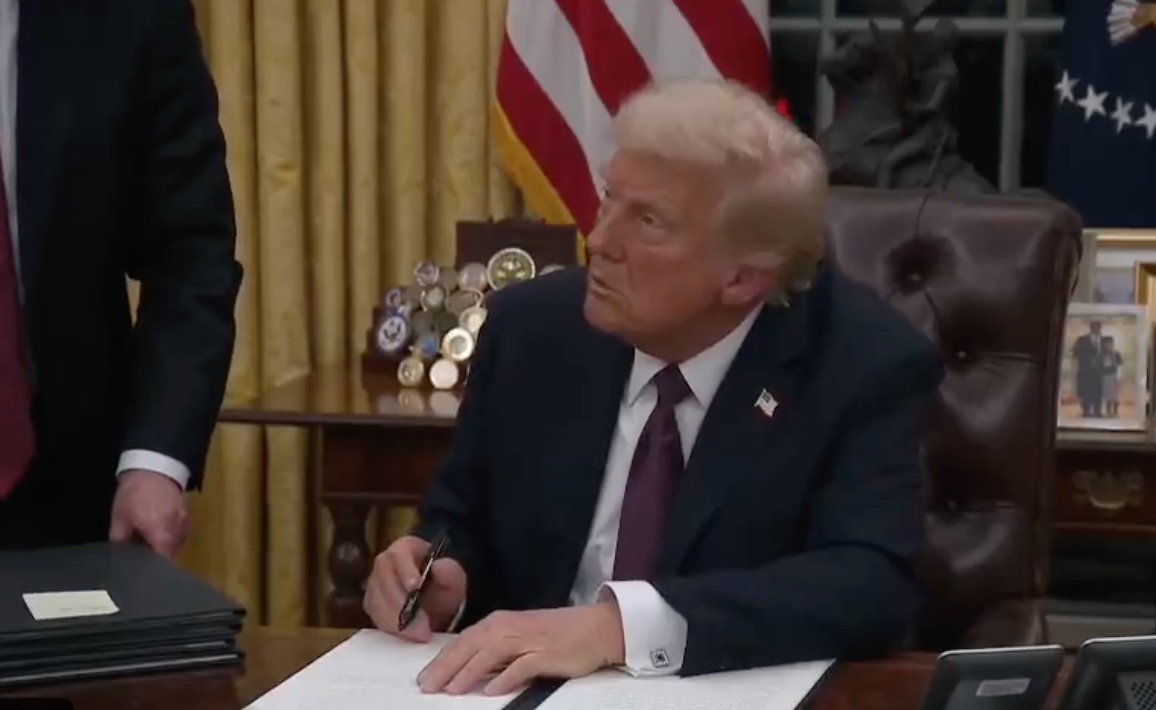
Washington state is the lead state a coalition of 15 states in a federal lawsuit challenging President Donald Trump’s executive order declaring a “national energy emergency,” and his order to agencies to hurry up on environmental reviews for fossil fuel projects.
The lawsuit, announced by Democrat Washington Attorney General Nick Brown, was filed in U.S. District Court for the Western District of Washington. Brown said the emergency declaration is unlawful and aimed at locking the nation into continued reliance on fossil fuels.
Other states joining the case are Democrat-run: California, Arizona, Connecticut, Illinois, Massachusetts, Maine, Maryland, Michigan, Minnesota, New Jersey, Oregon, Rhode Island, Vermont and Wisconsin. This is Brown’s 17th lawsuit against the Trump Administration.
“This is not a serious or lawful effort by the president. It is all about eliminating competition and shackling America to dirty fossil fuels forever,” Brown stated at a news conference.
Trump’s executive order was issued Jan. 20, moments after he took the oath of office, and included strong support for Alaska’s oil economy. His order ignored solar, wind, and other renewable energy sources, which have proven costly.

“Our Nation’s current inadequate development of domestic energy resources leaves us vulnerable to hostile foreign actors and poses an imminent and growing threat to the United States’ prosperity and national security,” the order stated.
According to Brown’s office, since the order’s signing, federal agencies have already begun fast-tracking fossil fuel projects, sidestepping critical reviews mandated by the Clean Water Act, the Endangered Species Act, and the National Historic Preservation Act.
The lawsuit argues that Trump’s invocation of a national emergency is baseless and in direct contradiction to the original intent of the National Emergencies Act.
The case could set the stage for a major legal battle over the scope of presidential authority and the future of environmental policy in the United States.