
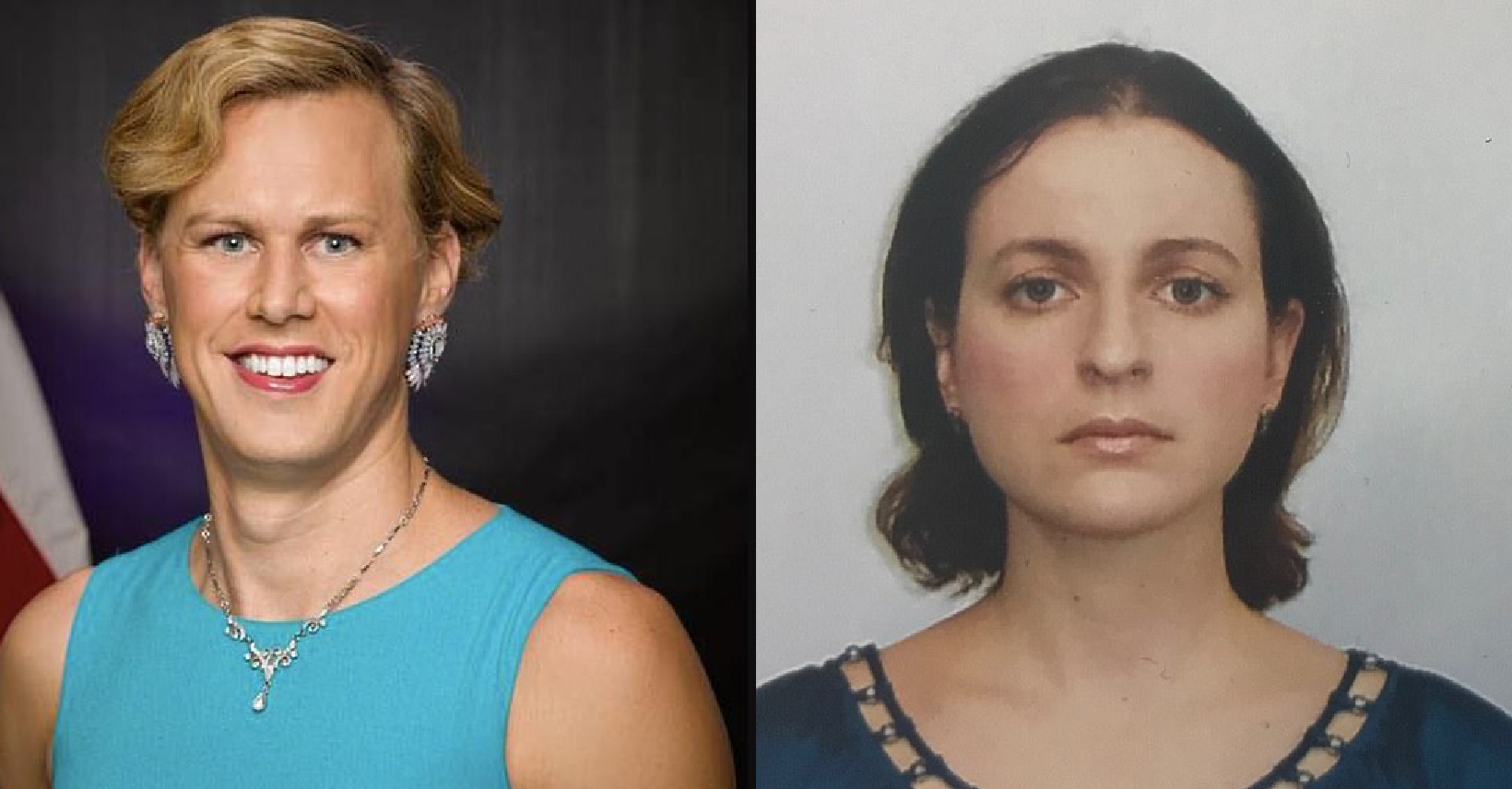
A federal grand jury has returned an indictment charging Anna Gabrielian, age 36, and her husband, Jamie Lee Henry, age 39, both of Rockville, Maryland, with conspiracy and for the disclosure of individually identifiable health information related to assisting Russia in connection with the conflict in Ukraine.
The indictment was returned on Sept. 28, 2022 and unsealed Sept. 29, upon the arrest of the two defendants.
Gabrielian was scheduled to have initial appearance at 11:30 a.m. Thursday in U.S. District Court in Baltimore before U.S. Magistrate Judge Brendan A. Hurson. Henry was also expected to have an initial appearance on Thursday.
Henry is the nation’s first transgender Army major. Henry, a Major in the United States Army, held a secret-level security clearance, and is Gabrielian’s husband and is a doctor. During the time of the alleged conspiracy, Henry worked as a staff internist stationed at Fort Bragg. Henry has been treating soldier patients for over 17 years.
Gabrielian is an anesthesiologist and worked at Medical Institution 1, located in Baltimore, Maryland.
The indictment was announced by United States Attorney for the District of Maryland Erek L. Barron and Special Agent in Charge Thomas J. Sobocinski of the Federal Bureau of Investigation, Baltimore Field Office
The two are accused of using their secret security clearance at Fort Bragg to steal records from the base hospital. The base is the home to the U.S. Army’s Delta Force and Special Operations Forces, also known as Green Berets. It’s also home to the Army’s XVIII Airborne Corps. The base houses about 52,000 active duty warriors and is one of the largest military communities in the world.

According to the eight-count indictment, Gabrielian and Henry conspired to cause harm to the United States by providing confidential health information of Americans associated with the United States government and military to Russia.
Specifically, the indictment alleges that beginning on Aug. 17, 2022, Gabrielian and Henry conspired to provide ‘Individually Identifiable Health Information’ related to patients at “Medical Institution 1” and at Fort Bragg to an individual whom they believed to be working for the Russian government in order to demonstrate the level of Gabrielian’s and Henry’s access to individually identifiable health information of Americans; their willingness to provide that information to the Russian government; and the potential for the Russian government to gain insights into the medical conditions of individuals associated with the United States government and military in order to exploit this information.
Gabrielian and Henry met with an individual they believed to be associated with the Russian government, but who was, in fact, a Federal Bureau of Investigation undercover agent, in order to convey to the agent their commitment to aid Russia, and to discuss ways in which they could help the Russian government.
Gabrielian told the agent that she had previously reached out to the Russian embassy by email and phone, offering Russia her and her husband’s assistance.
Gabrielian told the agent that, although Henry knew of Gabrielian’s interaction with the Russian Embassy, she never mentioned Henry’s name to the Russian Embassy. Gabrielian wanted to make sure Henry could deny any knowledge of her actions.
On Aug. 17, 2022, Gabrielian met with the undercover agent at a hotel in Baltimore. During that meeting, Gabrielian told the agent she was motivated by patriotism toward Russia to provide any assistance she could to Russia, even if it meant being fired or going to jail.
Gabrielian proposed potential cover stories for meeting the agent and stressed the need for “plausible deniability” in the event she was confronted by American authorities about meeting with the agent. Gabrielian also told the agent that, as a military officer, Henry was currently a more important source for Russia than she was, because he had more helpful information, including how the United States military establishes an army hospital in war conditions and information about previous training provided by the United States military to Ukrainian military personnel. Gabrielian arranged to meet with the agent and Henry later that evening.
At about 8:10 p.m. that evening, the indictment alleges that Gabrielian and Henry met with the agent in the agent’s hotel room. During the meeting, Henry explained to the agent he was committed to assisting Russia and had looked into volunteering to join the Russian Army after the conflict in Ukraine began, but Russia wanted people with “combat experience” and he did not have any.
Henry told the agent, “the way I am viewing what is going on in Ukraine now, is that the United States is using Ukrainians as a proxy for their own hatred toward Russia.”
Henry and Gabrielian allegedly offered to provide the agent with private medical records from the United States Army and Medical Institution 1 in order to help the Russian government. During the meeting, Gabrielian demanded that if she were put at significant risk of arrest, she wanted her and Henry’s children to, “have a nice flight to Turkey to go on vacation because I don’t want to end in jail here with my kids being hostages over my head.”
Henry also indicated that he was concerned about passing a background check for his security clearance, telling the agent, “I don’t want to know your name … because I want plausible deniability, too. In a security clearance situation they want to know names and people and all this stuff.”
As detailed in the indictment, a few days later Gabrielian and the UC again met at the hotel in Baltimore to discuss providing Army medical records to the UC. Gabrielian told the UC that Henry was concerned about violating HIPAA, but Gabrielian had no such concerns.
Gabrielian stated that she would check with Henry about providing medical records from Fort Bragg patients and get back in touch. The next day, Gabrielian sent a text to the agent, using coded language, to advise that Henry would provide Army medical records to the agent. On Aug. 31, 2022, Gabrielian and Henry allegedly met the agent at a hotel room in Gaithersburg, Maryland.
According to the indictment, Gabrielian provided the agent with health information related to two individuals, including the spouse of an employee of the Office of Naval Intelligence, whom Gabrielian pointed out had a medical condition Russia could “exploit.”
Henry also allegedly provided health information related to five individuals who were military veterans or related to military veterans.
If convicted, the defendants face a maximum sentence of five years in federal prison for the conspiracy, and a maximum of 10 years in federal prison for each count of disclosing IIHI. Actual sentences for federal crimes are typically less than the maximum penalties. A federal district court judge will determine any sentence after taking into account the U.S. Sentencing Guidelines and other statutory factors.


