
TRUTH, RACIAL HEALING, AND GOVERNMENT-TO-GOVERNMENT MANDATED BY AO 300
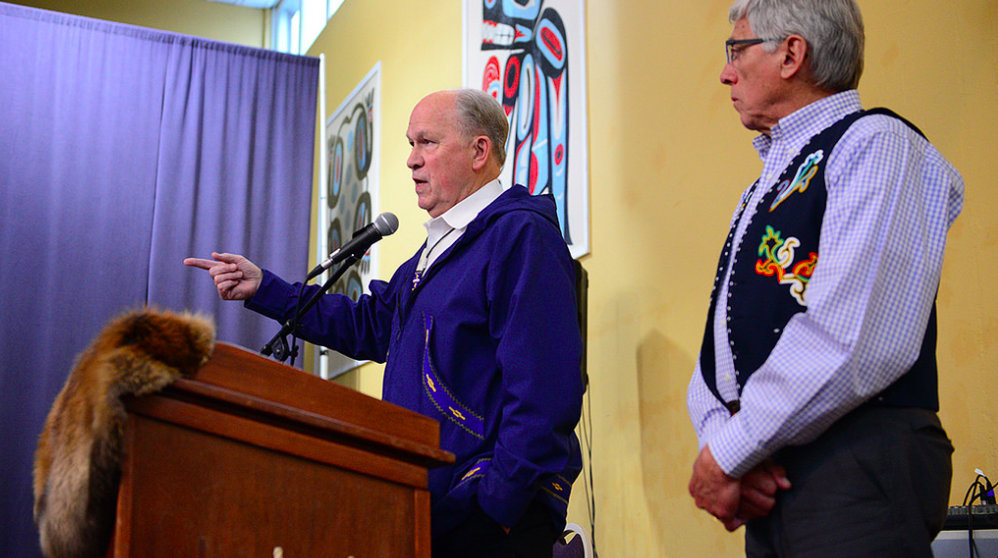
Gov. Bill Walker signed Administrative Order 300 on Sunday, with specific instructions to state departments, including an order that each department come up for a plan for addressing racism against Alaska Natives.
The order is race-based for indigenous people in Alaska to the exclusion of other races and languages. The order is part of the governor’s linguistic emergency declaration.
Every department is now required to appoint or hire a tribal liaison to work closely with the commissioner and produce a written plan for engaging tribes and something the governor calls the “Truth, Racial Healing, and Transformation (TRHT) endeavor.”
The plan will include steps to facilitate direct government-to-government relationships between each department and the 229 federally designated Alaska tribes, with specific actions departments will take in the “Truth, Racial Healing, and Transformation” process.
Additionally, the governor has ordered all signs that are created, replaced or reprinted for state and local highways, and marine signage, will contain “accurately spelled traditional Alaska Native place names.” The cost of doing this is unknown.
Metlakatla is Maaxłakxaała in Tsimshian; new signage would need to contain both spellings.
The Tlingit name for Juneau is Dzántik’i Héeni, which means Base of the Flounder’s River. It is also the name of one of the middle schools in Juneau.
Glacier Bay is Sit’ Eeti Geeyi, or Bay Taking the place of the Ice or Glacier.
Wrangell is Ḵaachx̱aana.áakʼw, while Klukwan is Tlakw Áan.
The Chandalar River is either Teedriinjik and Ch’idriinjik in Yup’ik, but there may be other variations.
Alaskans can be sure the lettering on the signs will be in the English-Latin alphabet with its 26 letters; there were no written languages in Alaska before the arrival of Russians.
The State website got things going with a bilingual welcome that is now featured and it includes an audio version that will help you with pronunciation of “Hello, how are you?”

English was made the official language of the state in 1998 by voter initiative, but House Bill 216 in 2014 made 20 Alaska Native languages also official languages, bringing the total to 21 official languages.
According to the 2007 American Community Survey, 85 percent of Alaskans speak English at home, 4.3 percent speak an Asian language, 3.5 percent speak Spanish, 2 percent speak an Indo-European language other than Spanish or English.
It is documented that 5 percent of Alaskans can speak one of the 22 indigenous languages in Alaska. About 11,000 Alaskans, for example, speak some version of Yup’ik.


