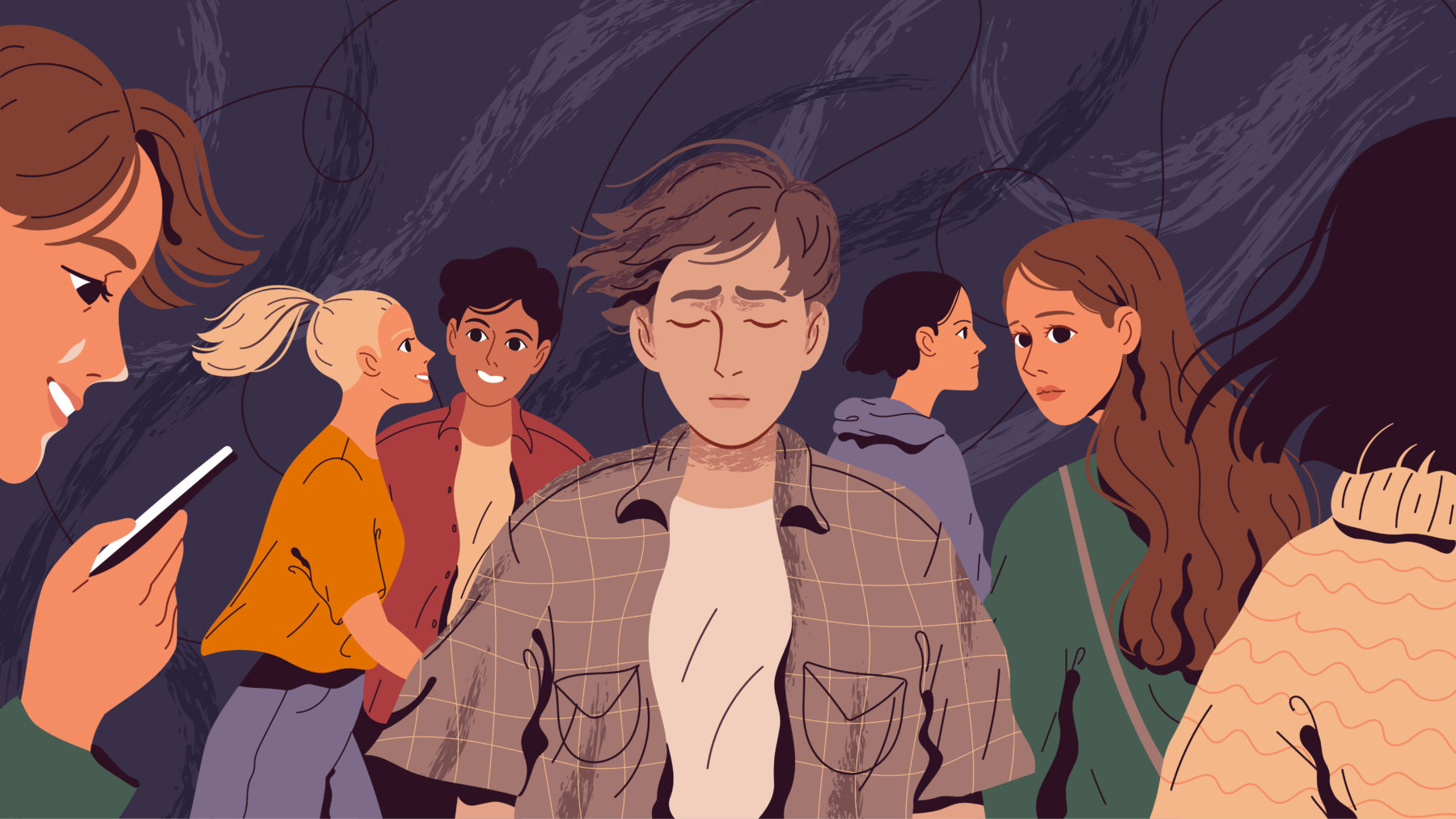
It’s official: On Tuesday, the U.S. Surgeon General declared loneliness as an epidemic in America.
Covid is so 2019. Loneliness is the new health concern.
“Our epidemic of loneliness and isolation has been an underappreciated public health crisis that has harmed individual and societal health. Our relationships are a source of healing and well-being hiding in plain sight – one that can help us live healthier, more fulfilled, and more productive lives,” Dr. Vivek Murthy said in a statement.
This is not new for Murthy, who has spoken to the topic before. In September, he also called loneliness an epidemic during remarks to management students at Yale University.
“Given the significant health consequences of loneliness and isolation, we must prioritize building social connection the same way we have prioritized other critical public health issues such as tobacco, obesity, and substance use disorders,” Murthy said. “Together, we can build a country that’s healthier, more resilient, less lonely, and more connected.”
“We expand circles of concern and advocacy by building relationships and getting to know people. That’s how we address deep inequities, pandemics, and poverty… We are talking fundamentally about the foundation of human society. It’s built on relationships, and that founding is eroding,” he said.
But Murthy is also talking about his own loneliness. In a column in the New York Times, he told the story of a patient who won the lottery and moved into a beautiful house in a gated community, only to be consumed with loneliness.
A patient of mine once shared with me a most unusual story. He had worked for years in the food industry with a modest salary and humble lifestyle. Then he won the lottery. Overnight, his life changed. He quit his job and moved into a large house in a gated community.
“Yet as he sat across from me, he sadly declared, ‘Winning the lottery was one of the worst things that ever happened to me.’ Wealthy but alone, this once vivacious, social man no longer knew his neighbors and had lost touch with his former co-workers. He soon developed high blood pressure and diabetes,” Murthy wrote.
“I thought about his story in 2017 when I found myself struggling with loneliness. My first stint as surgeon general had just ended. I was suddenly disconnected from the colleagues with whom I had spent most of my waking hours. It might not have been so bad had I not made a critical mistake: I had largely neglected my friendships during my tenure, convincing myself that I had to focus on work and I couldn’t do both,” he wrote in the New York Times.
“Even when I was physically with the people I loved, I wasn’t present — I was often checking the news and responding to messages in my inbox. After my job ended, I felt ashamed to reach out to friends I had ignored. I found myself increasingly lonely and isolated, and it felt as if I was the only one who felt that way. Loneliness — like depression, with which it can be associated — can chip away at your self-esteem and erode your sense of who you are. That’s what happened to me.”
Murthy, a doctor and vice admiral in the United States Public Health Service Commissioned Corps, has served as the 19th and 21st Surgeon General under Presidents Barack Obama, Donald Trump, and Joe Biden.