
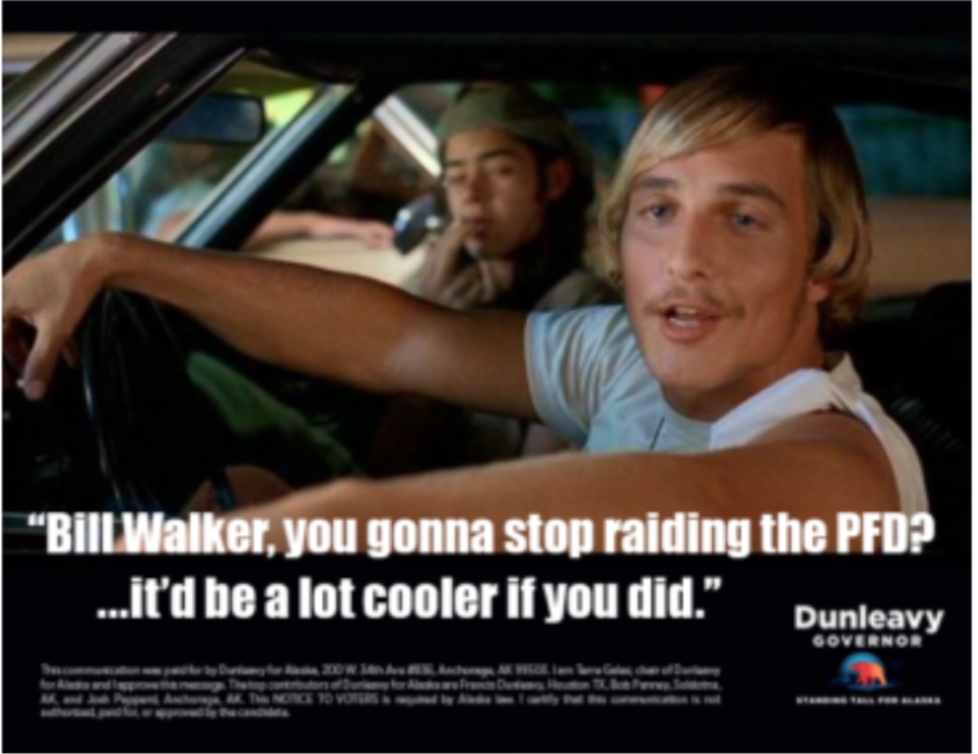
The use of artificial intelligence in spicy political commentary is all the rage this year. As the general election nears, California Gov. Gavin Newsom has signed several bills that crack down on usage false images or videos in political ads seen in California. Two of the bills relate to the use of movie star images in memes or artificial intelligence. The target of one law is the “deepfake,” in political commentary. Deepfakes are images or sounds that are so real that people cannot distinguish them from reality.
The new laws took effect Tuesday in California, where it’s now illegal to publish deepfakes that pertain to elections 120 days before Election Day and 60 days after an election.
The use of funny memes in political advertising has Alaska origins. In 2018, the campaign of Mike Dunleavy for Governor used pioneering memes to poke fun of then-Gov. Bill Walker for stealing half of Alaskans’ Permanent Fund dividends. In 2016, Walker had vetoed half of the dividends owed to Alaskans and since then, Alaskans have never received their full statutorily set dividends. Walker was upheld by the courts in his veto, but the question of not following the law is still hotly debated in the state.
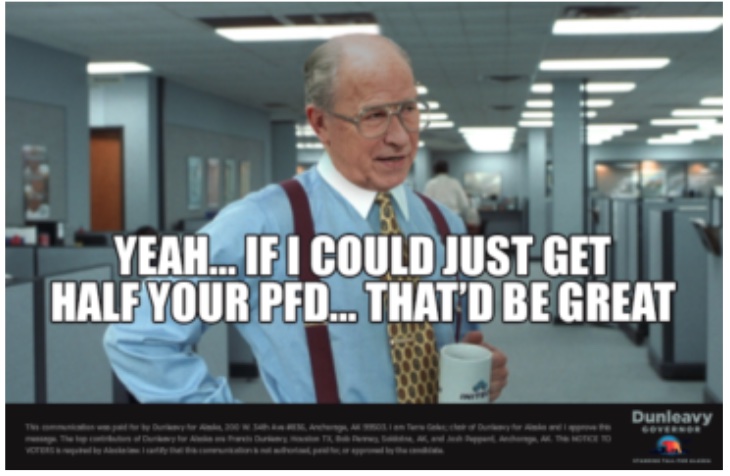
Images such as the one above, with Gov. Walker’s head tacked on the body of the obnoxious character Bill Lumbergh from the 1999 comedy film “Office Space,” might be covered by one of the Newsom laws against use of deepfakes. He signed a bill pertaining to film industry and movie actor image rights. This “Office Space” meme has gone around for years in various iterations, with people adding a “helpful” suggestion before the phrase, “That’d be great.”
The new California says that use of deep fakes or likenesses when used for satire or parody is allowed, but it’s unclear how that will be interpreted. Will regulators limit free speech in California when conservatives do satire, but allow liberal satire of conservatives to flow freely? Granted, there’s a saying: “Democrats can’t meme,” which points out a problem Democrats have, which is a lack of a sense of humor. Thus, the new law is likely to impact conservative commentators the most.
The California meme law gives courts power to stop distribution of materials a judge considers over the line and the creator or distributor (Facebook, X) of such materials may suffer civil penalties.
But that big gray line is where the lawsuits will no doubt take place, as social media platforms like Facebook and X will be forced to police content more carefully and make certain these funny fakes are not visible within the borders of California. Also, ads that use AI images must place a disclosure statement on the ads, according to the new law.
It will be up to judges, in other words, to determine how much free speech politically minded Americans can produce and enjoy. It will be judges who decide if something is funny, is clearly fake, or if an image or message is parody or satire.
“Safeguarding the integrity of elections is essential to democracy, and it’s critical that we ensure AI is not deployed to undermine the public’s trust through disinformation -– especially in today’s fraught political climate,” Newsom said in his remarks. “These measures will help to combat the harmful use of deepfakes in political ads and other content, one of several areas in which the state is being proactive to foster transparent and trustworthy AI.”
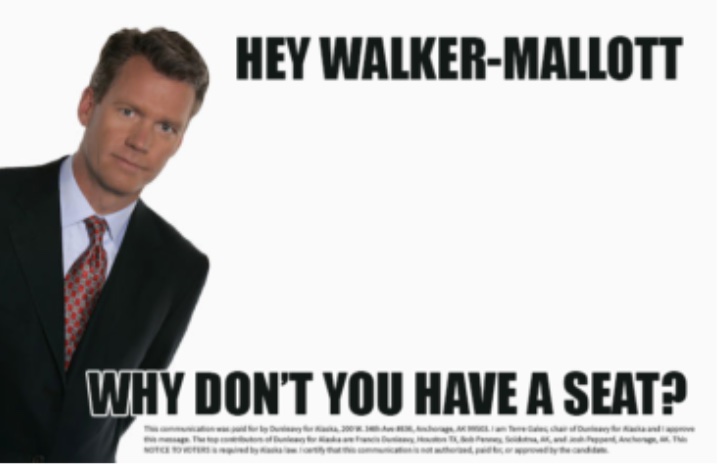
California had already banned the use of manipulated videos and pictures related to elections. Images such as this next one, created by the Dunleavy campaign in 2018, might be covered by the California law because it has Gov. Bill Walker’s head on the body of a video game warrior character. Some may say it’s satire or parody, while others — those who support the candidate — may claim it looks real.
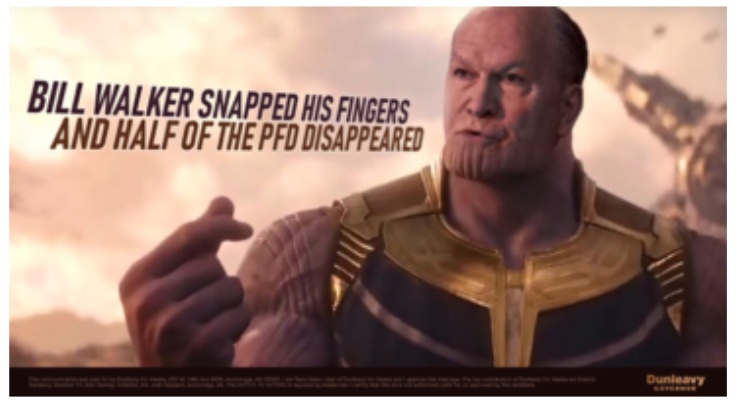
The California law requires social media companies to develop protocols for Californians to report content that has not been blocked or properly labeled or that is out of compliance with the law. Thus, a new regulatory arm covering free speech has been birthed by Gov. Newsom. Candidates who are targeted by such deepfakes can now sue the social media companies that have this material on them, if it can be seen anywhere in California.
In response to Newsom signing the law, many popular accounts on X made fun of the law and exploded the social media site with memes and funny fake videos, many of them pointed at Newsom and all of which could be argued to be parody or satire. A few examples follow:
The new California laws are being replicated by legislatures around the country. In Alaska, a measure was introduced by Rep. Sarah Vance that would have banned “deepfake” pictures, videos, or audio clips that were used to influence an election, unless it was accompanied by a disclaimer. The measure was voted down in the House but may come up again.


