
By BRENDA JOSEPHSON
Last week’s Palmer Food Security Workshop was a “smashing success,” according to Sen. Shelley Hughes, who said that the event’s attendance was higher than expected and that the presentations received thousands of views online.
To achieve food security in Alaska, producers must overcome unique challenges due to the region’s climate, production costs, and transportation. Sen. Hughes, chairwoman of the Food Strategy Taskforce, aims to establish a culture of strategic planning, community collaboration, and long-term solutions to increase agricultural productivity. She hosted the Palmer event to connect food production novices with local experts to inspire learning and discovery, promote self-sufficiency, and encourage people to seek food production opportunities.
Hughes expressed optimism that the Palmer Food Security Workshop will become an annual event and that other Alaska communities will also have similar low-cost gatherings to foster networking in support of local agriculture.
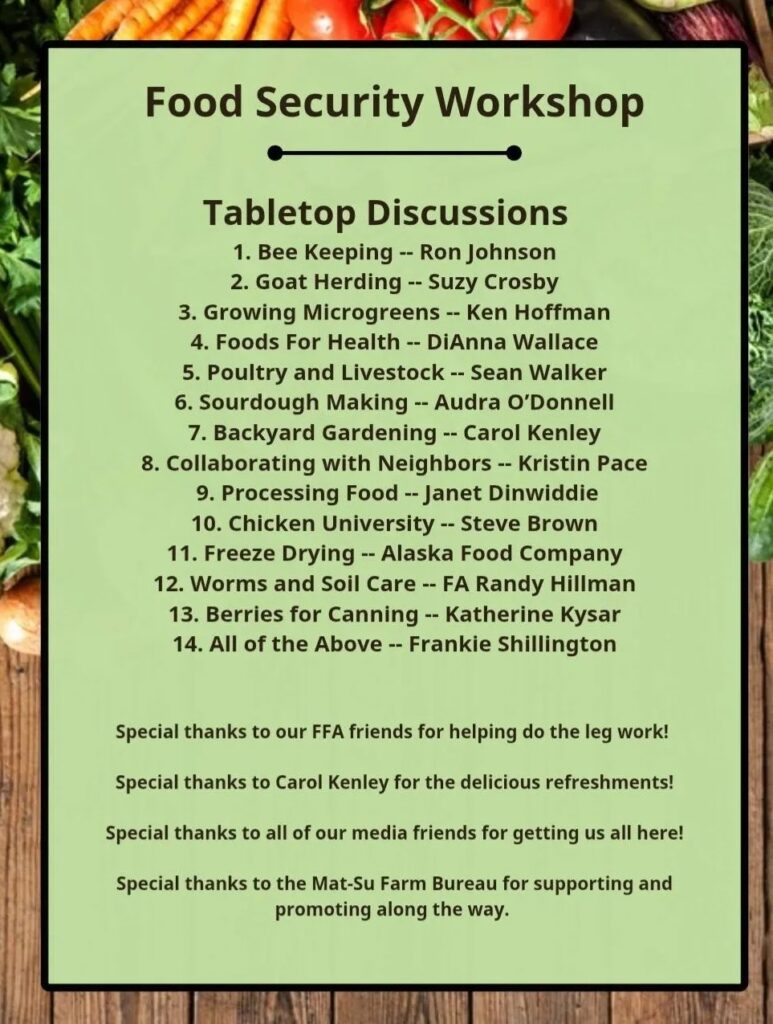
The family-friendly event kept children busy with activities while adults listened to presentations and rotated among a range of table topics covering beekeeping, livestock rearing, egg production, gardening, microgreen cultivation, soil health, food processing, freeze drying, canning, and more.
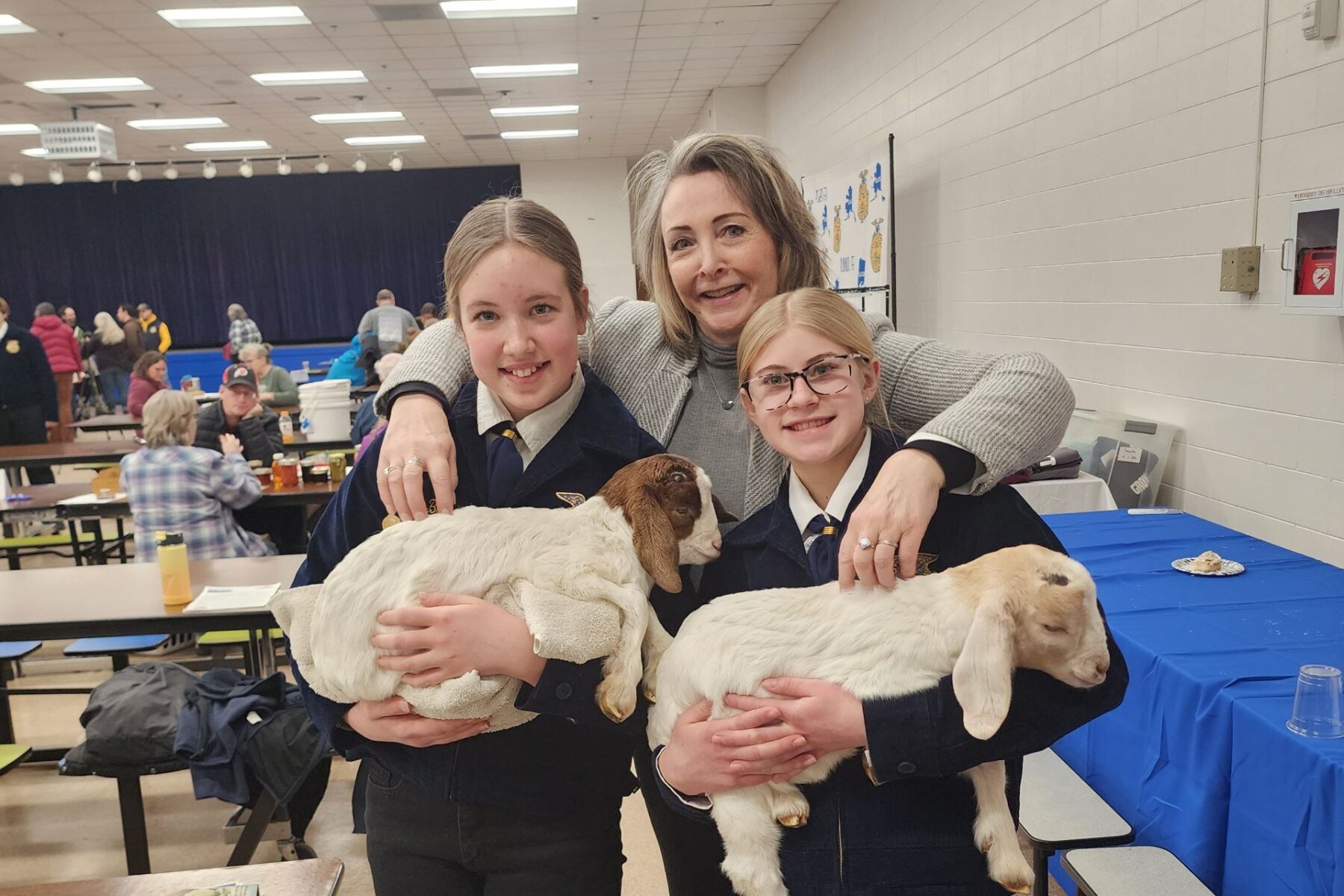
Throughout the event, smiles were seen, thanks in part to Future Farmers of America students Isabelle Ockerman and Tylynn Sturdivant, who shared two irresistible baby goats for everyone to enjoy.
Invited speaker Janet Dinwiddie of Pyrah’s Pioneer Peak Farm addressed the importance of increasing in-state food production, pointing out that existing food production only meets a fraction of the population’s sustenance needs. She backed her claim with data, demonstrating that at current production rates, Alaska would only have a few days’ supply in the case of a food chain disruption.
Pyrah’s Pioneer Peak Farm is producing a variety of fruits and vegetables on the 270-acre farm, as well as offering prepared foods. Dinwiddie intends to expand her operation to establish a processing building on the property so that community growers could utilize the facility to turn their crops into a commodity for redistribution and long-term storage. Dinwiddie stated that her vision is “to create a processing hub for the community,” adding that she is “hoping it will serve as a model for other communities around the state.”
Hughes noted that she received “tremendously positive” feedback from the workshop, which she attributed to the organizational efforts of her aide, Eleilia Preston, who she said excelled at the event’s coordination. However, she stated that putting everything into action was time-consuming, and although she is happy to promote the next event, her office can’t be the one to coordinate it next time.
The Mat-Su Chapter of the Alaska Farm Bureau is interested in hosting the next workshop, according to Ken Hoffman, Executive Director.
Hoffman spoke at the event about his personal experience turning his vegetable-growing hobby into a business and also led a table-topic discussion on cultivating microgreens. Afterward, he said, “The workshop was excellent, with experts presenting on a variety of topics. I’d like to see it become an annual or semiannual event. Based on the attendance, it was clear that the community wants this type of event.”
Hoffman also indicated that a post-harvest workshop, before Thanksgiving, would be ideal timing, allowing the community to celebrate the bounty and plan for the next growing season. If you are interested in learning more about the Palmer food security workshop, contact Ken Hoffman at (907) 841-2593 or via email at [email protected].
For information about Alaska’s Food Strategy Taskforce, contact Sen. Hughes’ office at (907) 465-3743 or via email at [email protected].
Brenda Josephson is a Haines resident. Her writings are featured in Must Read Alaska’s Foodies and Forages column.


