In Alaska’s legislative budgeting cycle, nothing is final until the last gavel slams down, and the bill goes into law — or not.
The controversial Senate Bill 140, passed by the House and concurred with by the Senate, was rejected by Gov. Mike Dunleavy on Tuesday, and that means the Alaska Legislature must either come up with a better bill, or the governor will veto SB 140. The Legislature has 14 days to send him a new, improved bill — one that has at least some of his priorities — or he said he will veto this one.
He wasn’t bluffing. A headcount shows that he has the votes to sustain a veto. The Legislature would need 40 votes, and is short at least three to override his promised veto.
There are other bills can serve as vehicles for some of the good measures that were in SB 140, Dunleavy said today.

Speaking of slamming, Dunleavy lit into the NEA teachers’ union for killing the teacher incentive bonuses he had wanted in the bill. He criticized the educational establishment for not supporting the great outcomes now being proven in charter schools, another aspect that was axed by the final bill version.
Dunleavy said the section of the bill that was to help improve reading was wholly inadequate, since reading scores in Alaska schools are at crisis levels. Alaska ranks 49th in education, and Dunleavy was hoping for major education reforms in the bill that went sideways before it got to his desk.
Dunleavy spent much time at the podium reading parts of an Anchorage Daily News editorial that supports his approach to education funding and reform.
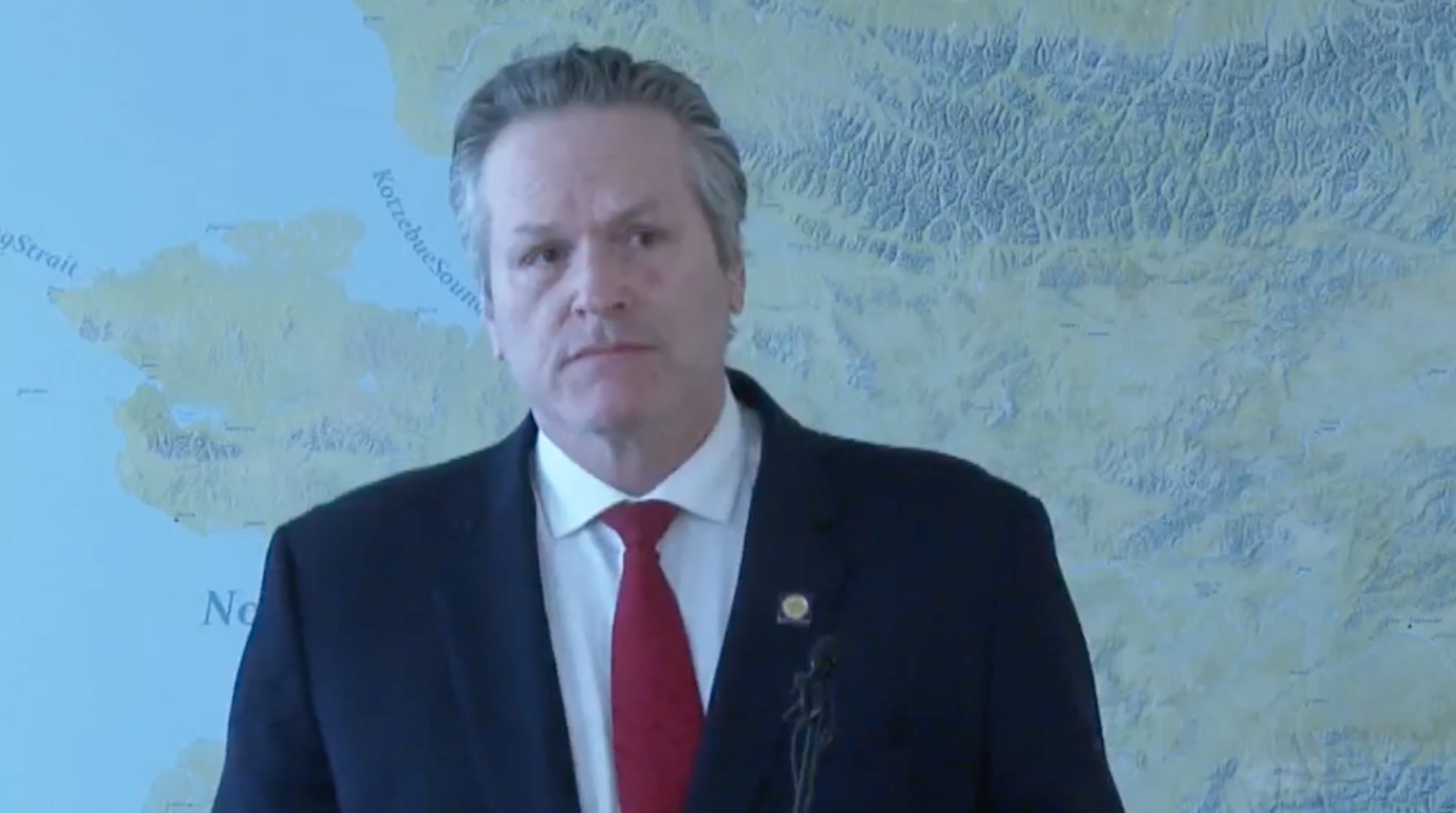
After holding forth for nearly an hour in his Anchorage conference room, Dunleavy said that he appreciated the House and Senate for working on education so early, but that they send hm a three-legged horse that is “not going to run very far.”
While the governor did not actually put the veto pen to the bill on Tuesday, he made it clear he will do so, rather than let it go into law. If the education establishement wants an increase to the basic funding formula, he said, they are going to have to “help get these items across the finish line.”
He thanked the House for putting together the omnibus bill.
“I understand why the House voted to pass this bill out, because many believed it was the best thing they could get. I get that,” he said.
The final bill version voted on had been negotiated by Rep. Jesse Sumner of Wasilla in secret meetings with the Senate and Democrats, and sprung on the unsuspecting House majority.
Alaska Democratic Party took credit for the bill passing with a large increase to the Base Student Allocation. Posting on X/Twitter, the party wrote: “This major victory would not have been possible without the unwavering and unequivocal support of Democratic elected officials. Republicans in the Alaska State House fought us every step of the way until they saw it as a political win – but we never stopped fighting.” They didn’t mention Rep. Sumner’s work or give him credit.
However, it was the Republicans in the House that voted for the BSA increase of $680 per student, with the exception of two legislators, who balked at the flawed bill — Rep. David Eastman and Rep. Mike Prax.
Dunleavy said, “The bill is incomplete. Why not fix it? I think there were a number of legislators who thought this was the best they were going to get. I don’t think so.” He suggested his office and legislators work together and get a much better bill, and that there are two weeks to do so.
During questions from reporters, Dunleavy said, “There’s going to be a substantial BSA, there just is,” signaling that he is willing to add to the basic formula for spending, but he also is demanding the support for reading programs, charter school options, and teacher incentive pay.