
FERRY SYSTEM TOO COSTLY TO RUN AS CURRENTLY OPERATED
The top takeaway from the 2020 budget proposal by the Dunleavy Administration, which was rolled out today, include consolidations and efficiencies, and also the elimination of major programs:
Overall, state spending would be $4.6 billion, which is $1.6 billion less than the budget presented in December by former Gov. Bill Walker.
Education: $280 million reduction to the base student allocation. The BSA would be reduced by $1,100 per student, going from $5,900 to $4,880. Only 50 percent of state dollars goes into classrooms now, and the other 50 percent is used for school administration.
Medicaid: $270 million in cuts. The Department of Health and Social Services is in the process of negotiating with the Centers for Medicaid and Medicare Services for greater percent federal reimbursement for many services. CMS has visited Alaska and met with DHSS Commissioner Adam Crum about restructuring. Some of the reductions will come with reduced reimbursement rates. Alaska reimburses at a higher rate than any other state in the country. There is no proposal to eliminate coverage for any population.
Ferries: $98 million. Alaska Marine Highway System takes a 65 percent cut. Service would remain through October of this year, and a marine consultant would be contracted to come up with a divestiture plan. Currently, the state subsidizes each passenger’s ferry mile with $4.58 of public money, whereas road miles only require 2 cents per mile subsidy. 2018 passenger capacity was 42.6 percent and 51.6 percent for vehicle capacity.
University: $155 million reduction in general funds. The Board of Regents will be asked to restructure, possibly focusing on research at the Fairbanks campus, and teaching at the Anchorage campus. University of Alaska Southeast would be a hub for the community college level, and $20 million will be added in for community campuses, such as Ketchikan and Kenai. The idea is to return them to the community college model.
Corrections: $32 million reduction. Save $12.8 million by moving some long-sentenced prisoners out of state. Save another $6 million by closing a wing at Wildwood. Inmate cost in Alaska is $168 per day. 500 sentenced inmates would be sent out of state.
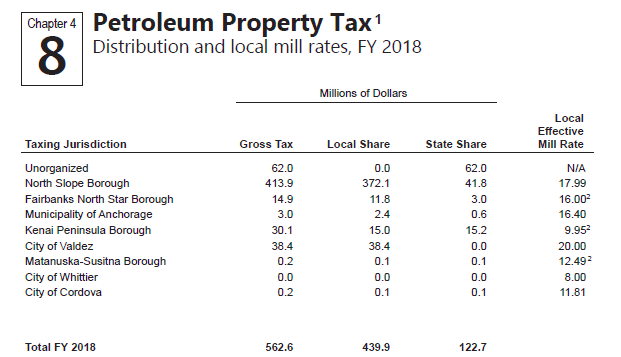
North Slope Borough Special Tax: The Dunleavy Administration seeks to repeal a law that gives over $400 million in property taxes from the Trans Alaska Pipeline to the North Slope Borough. That money would go into the General Fund. The North Slope Borough is awash in money and has five years of reserves, enough time for new oil to come from the Willow and Greater Moose’s Tooth fields, as well as the National Petroleum Reserve Alaska. The borough has about 9,000 residents.
Alcohol and Marijuana Control Board: Repeal board and have the Department of Commerce manage the issues.
State Council on Arts and Humanities: Repeal.
Public Broadcasting: Zero out the $3.4 million funds.
Revolving loan funds: Eliminate all but commercial fisheries.
Student loans: Eliminate program.
WAMI program: Eliminate program.
Live Homework Help: Eliminate.
Best Beginning Program: Eliminate.
Early Childhood and Pre-K: Eliminate.
Curriculum Fund: Repeal.
Power Cost Equalization: Eliminate special fund and roll into General Fund, then give out to communities. The program is not reduced, but the special fund is eliminated. This will be a multi-year effort to look at every designated fund established by statute and determine if that dedication should be repealed. Intended to increase the flexibility of state budgeting and decrease stakeholders having their own fund.
Pioneer Homes: Raise rates to cover cost of service. New customers will pay actual costs. Current residents will be grandfathered in. Payment assistance program will be put in place for current residents, based on need. Intent is no one removed from homes.
State Human Resources and Procurement: Consolidate all departments’ HR and procurement . Put under Department of Administration.
Investigators: State’s over 100 investigators — for everything from fraud, crime, to environment, moved to Department of Law as part of a new statewide investigative unit.
Travel: Reduce state travel budget by 50 percent across departments.
Public Safety: No increases to troopers at this time, since the unit has 40 unfilled positions. The reduction to Walker’s proposed increase is due to no additional trooper positions until Public Safety fills its existing vacancies.
Actual Personnel Reduction: Over 620 State positions eliminated, plus 320 in the ferry system.
Alaska Oil and Gas Conservation Commission: Moves to Department of of Commerce from Department of Administration.
Rural Airports: Reduce number of public airports owned or funded by the State, especially air strips where there is 0 population.
Property Disposal: Possible sale of some of the 1,800 structures it owns.
Exempt positions: Some fully exempt employees would be placed into partially exempt services and placed on salary schedules. This will be done through an “Exempt Position Reform Bill,” capping exempt job salaries at $300,000. Creation of exempt positions would be subject to approval of the Office of Management and Budget.
Permanent Fund Dividend: The funds for paying the Permanent Fund dividend is a separate appropriation bill. The governor does not see this as an appropriation, so it is not part of the proposed operating budget.
This story will be updated. Check back.


