
LEGISLATURE GETTING MORE VARIED, BUT POWER SHIFTS TO VALLEY
Although Must Read Alaska doesn’t subscribe to Identity Politics Monthly, we love demographics.
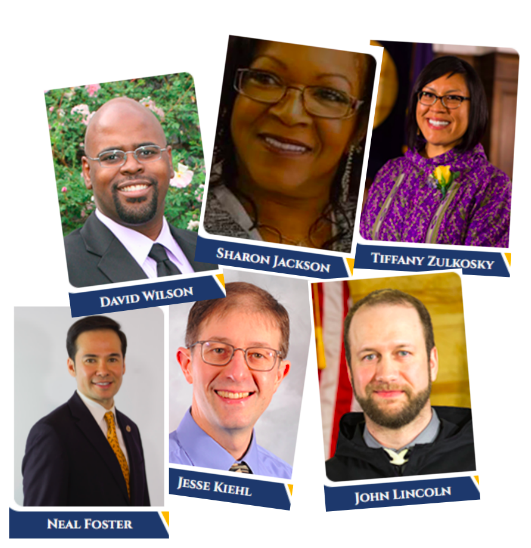
It’s worth noting on the eve of Martin Luther King Day that the Alaska Legislature is more diverse than at any point in its history.
By the numbers, (keeping in mind that MRAK didn’t do a DNA test on any of them):
- African-Americans: 2-Senate (10 percent), 1-House (2.5 percent)
- Native Alaskans: 2-Senate (10 percent), 4-House (10 percent)
- Japanese-Americans: 1 Senate (5 percent)
- Women: 6-Senate (30 percent), 17-House (42.5 percent)
- Jewish: 1-Senate, 2-House
The first Senate in Alaska in January of 1959, consisted of 19 men and one woman, Irene Ryan. In the House, three women served in that session.
By the 10th Alaska Legislature, in 1977-79, one woman served in the Senate and three served in the House.
Back then, there were only two House members from Eagle River and one from Palmer. Today, two House members serve Eagle River — Reps. Sharon Jackson and Kelly Merrick. Meanwhile, the Mat-Su Valley has grown by leaps and bounds and instead of one representative, there are six — Reps. Mark Neuman, Cathy Tilton, DeLena Johnson, George Rauscher, Colleen Sullivan-Leonard, and David Eastman. Ketchikan has lost representation; it has just one representative, down from the two it had in 1979.
Most of the racial diversity is in the Democrats’ caucus. Although Republicans offered a diverse slate in 2018, in districts that were heavily Democrat, the candidates didn’t do as well with liberal voters.
But the Dunleavy Administration has picked up both Ceezar Martinson and Stanley Wright, Republican African-Americans who ran in Democrat-leaning districts in Anchorage and lost to Caucasian candidates.
Republican voters typically reject identity politics, preferring merit and experience.


