
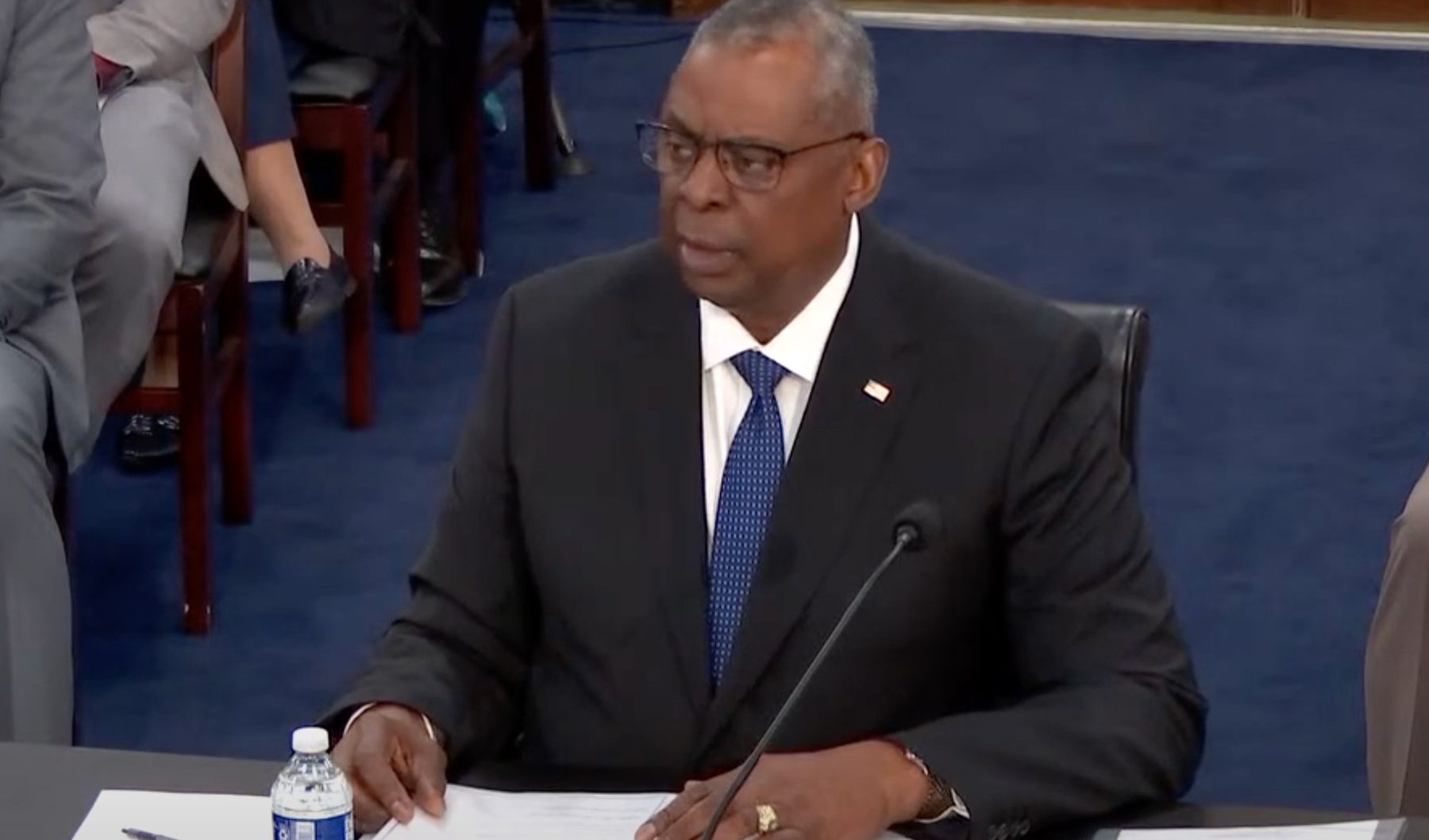
After spending nine days in the hospital, three of them in the intensive care unit, Secretary of Defense Lloyd Austin has revealed what “elective procedure” occurred in December that led to his readmission on Jan. 1: Surgery for prostate cancer that resulted in an infection.
As part of Secretary Austin’s routinely recommended health screening, he had regular prostate specific antigen surveillance, typical for a man of his age, officials said.
Changes in his laboratory evaluation in early December, 2023 identified prostate cancer, which required treatment, Walter Reed National Military Medical Center announced on Tuesday afternoon.
On Dec. 22, 2023, after consultation with his medical team, he was admitted to Walter Reed National Military Medical Center and underwent a “minimally invasive surgical procedure called a prostatectomy” to treat and cure prostate cancer.
He was under general anesthesia during this procedure, but this was not revealed to either the president or the public from the Dec. 21 surgery until Jan. 9. Secretary Austin recovered uneventfully from his surgery and returned home the next morning, said Dr. John Maddox, Trauma medical director, and Dr. Gregory Chesnut, Center for Prostate Disease Research of the Murtha Cancer Center.
“His prostate cancer was detected early, and his prognosis is excellent,” Maddox said. Austin went home to recover but developed intense pain and nausea.
On Jan. 1, Secretary Austin was admitted to Walter Reed National Military Medical Center with complications from the December 22 procedure, including nausea with severe abdominal, hip, and leg pain. Initial evaluation revealed a urinary tract infection. On Jan. 2, the decision was made to transfer him to the ICU for close monitoring and a higher level of care. Further evaluation revealed abdominal fluid collections impairing the function of his small intestines. This resulted in the back up of his intestinal contents which was treated by placing a tube through his nose to drain his stomach. The abdominal fluid collections were drained by non-surgical drain placement. He has progressed steadily throughout his stay. His infection has cleared. He continues to make progress and we anticipate a full recovery although this can be a slow process. During this stay, Secretary Austin never lost consciousness and never underwent general anesthesia,” Maddox said.
Austin has been the subject of criticism because he did not reveal to the president that he was in the ICU for three days. During that time, Deputy Secretary Kathleen Hicks assumed some of his authority, but she was not informed that Austin was in the ICU.
Austin and his staff did not notify the public or Congress of either hospitalization until Friday, which left the White House and the entire military command in the dark about his serious medical condition.
Also, when the news was finally released by the Defense Department that he had been hospitalized, it first said the procedure was “elective,” but the doctor in charge clearly said on Tuesday that it was “required.”
The timeline of the events, as they are known, are at this link:


