
Despite Alaskan Republicans outnumbering Alaskan Democrats 2:1, liberal ideology appears rampant in Alaska’s public schools, government decisions, and non-profit industry. Time after time, Alaskans see ballot measures, lawsuits, and media campaigns pushing policies resembling those drafted in Portland. At the heart of the issue, like every political issue, is money.
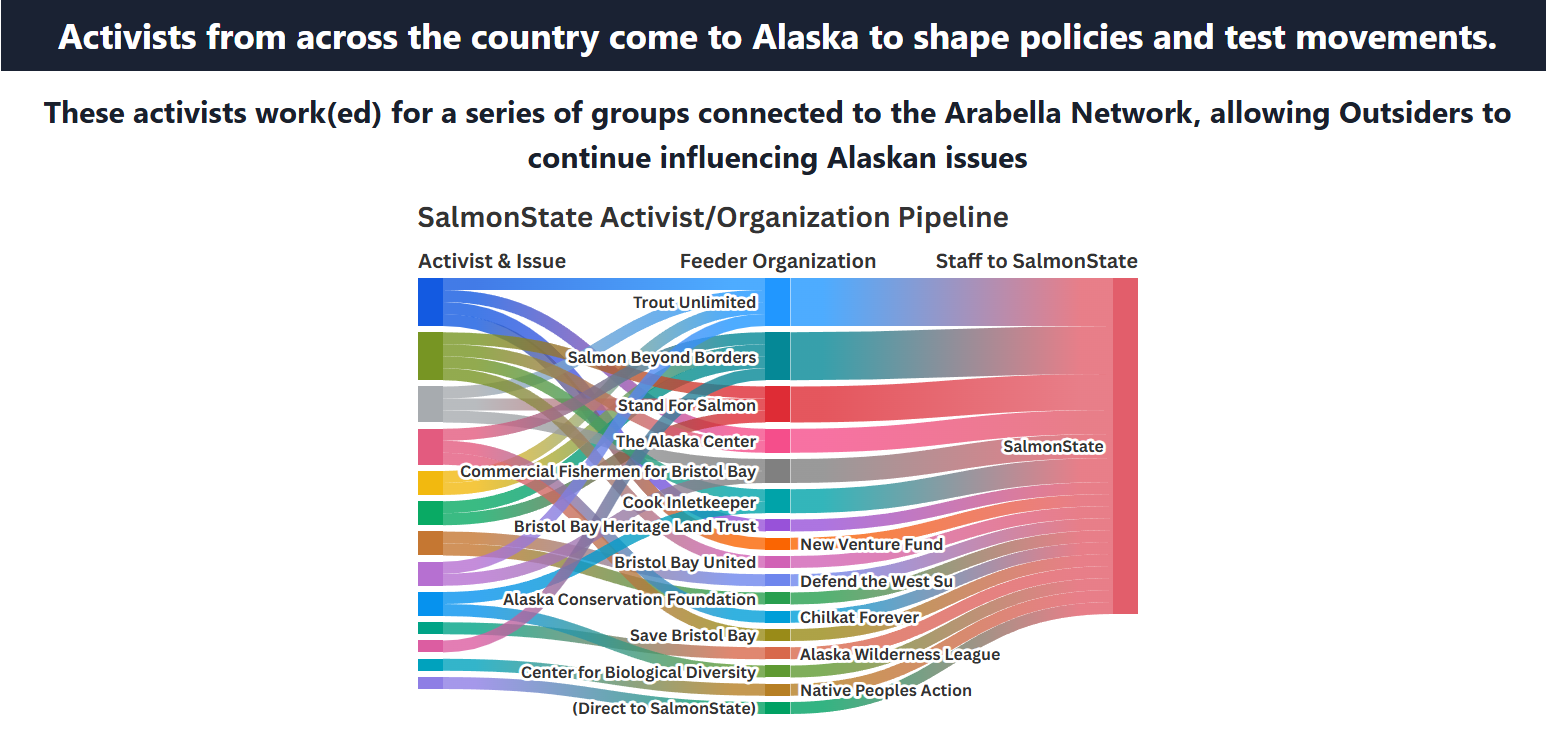
On Nov. 12, the American Accountability Foundation (AAF) launched the Alaska Influence Pipeline. This online hub traces how wealthy, out-of-state advocacy networks fund a liberal agenda in Alaska. Disguised behind seemingly benign nonprofits and nonpartisan brands, out-of-state plutocrats are pushing progressive politics into Alaska.
The Arabella Machine: Billions in Liberal Money, Now Flowing North
The Sixteen Thirty Fund, the New Venture fund, the Hopewell Fund, and the Windward Fund are few of the progressive nonprofits showing their way into Alaska. At the center of all of them is the for-profit consulting firm Arabella Advisors, a powerful D.C.-based firm that manages these nonprofits.
According to public filings highlighted by AAF, the Arabella-managed network has spent approximately $9 billion since 2006, shaping policies around the country through ballot measures, ad campaigns, “popup” groups, and media projects.
Between 2020 and 2024, entities backed by Arabella spent more than $9 million on opposing or delaying Alaskan resource development and infrastructure projects, pushing progressive ballot initiatives, and building “local” organizations that echo national talking points.
In a small population state like Alaska, $9 million targeted over a few years can overwhelm genuine local activism and drown out voices that do not have access to large amounts of money or D.C.-backed management resources.
“Alaskan” in Name Only
The Alaska Influence Pipeline flags several entities that brand themselves as Alaskan organizations but rely heavily on out-of-state funding.
For example, the Sixteen Thirty Fund and other liberal sources support the Alaska Center. This group pressures candidates to endorse an agenda seeking 100% renewable energy by 2050, higher oil and gas taxes, and changes to Alaska’s voting system. These policy positions reflect nationwide liberal demands, not the desires of the average Alaskan.
Progress Alaska is another example. Arabella-managed organizations infused Progress Alaska with $3 million to aid a campaign against energy development, mining prospects, and projects such as the West Susitna Access Road.
Although these organizations appear homegrown, with websites featuring local scenery and familiar rhetoric, their funding and strategy point back to national campaigns that treat Alaska as another battlefield, not as a unique state with unique needs.
Ballot Measures and Faux “Grassroots” Campaigns
Non-profits are not the only political devices manipulated by dark money. The Alaska Influence Pipeline also shows heavy out-of-state involvement in Alaska’s ballot initiatives. For example, the New Venture Fund played a key role in funding 2016’s Ballot Measure 1, which linked automatic voter registration to the Permanent Fund Dividend. In 2024, the Sixteen Thirty Fund poured approximately $930,000 into an initiative pushing higher minimum wages and mandated paid sick leave.
Additionally, campaigns like the 907 Initiative and “Alaskans for Posterity” launched an extensive advertising and political campaign in Alaska, but they did not openly disclose the out-of-state funding, such as funding from the New Venture Fund, that propped up their campaign.
Whose State Is It Anyway?
The reality of out-of-state money pouring into Alaska to fuel the liberal agenda raises the question of whether self-government means anything if the messaging, lawsuits, and ballot language are all being drafted somewhere between K Street and Silicon Valley.
Alaskans deserve to know who is paying for the ads and mailers they see, who underwrites the “nonpartisan” or “local” group knocking on their door, and which national networks are experimenting on Alaska’s political system.
The Alaska Influence Pipeline offers transparency to Alaskans wanting to know who is meddling with their resources, elections, and communities.
More to Come
COMING SOON: Let’s go deeper! This column outlines just the tip of the iceberg of the dark money problem. Keep watch for more articles diving deeper into the problem and what can be done about it. In the meantime, read our previous coverage below:


